









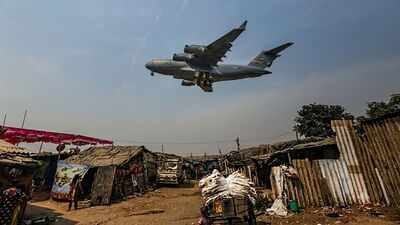
For millions of travellers, the first glimpse of a country comes through an aircraft window. Long before they experience its food, culture, economy or people, they form an opinion based on what they see while landing. In that respect, many Indian cities continue to struggle.A flight descending into Mumbai often reveals sprawling informal settlements packed tightly around transport corridors and industrial areas. Arrivals into Delhi can bring views of hazy skies, especially during winter months when pollution levels spike. Kolkata often presents a landscape marked by ageing infrastructure and congestion despite its rich heritage and cultural influence.When travellers from India land in cities such as Singapore, Bangkok or Colombo the contrast becomes particularly striking. Wide roads, orderly urban layouts, greener surroundings and cleaner skylines create an immediate impression of efficiency and planning.
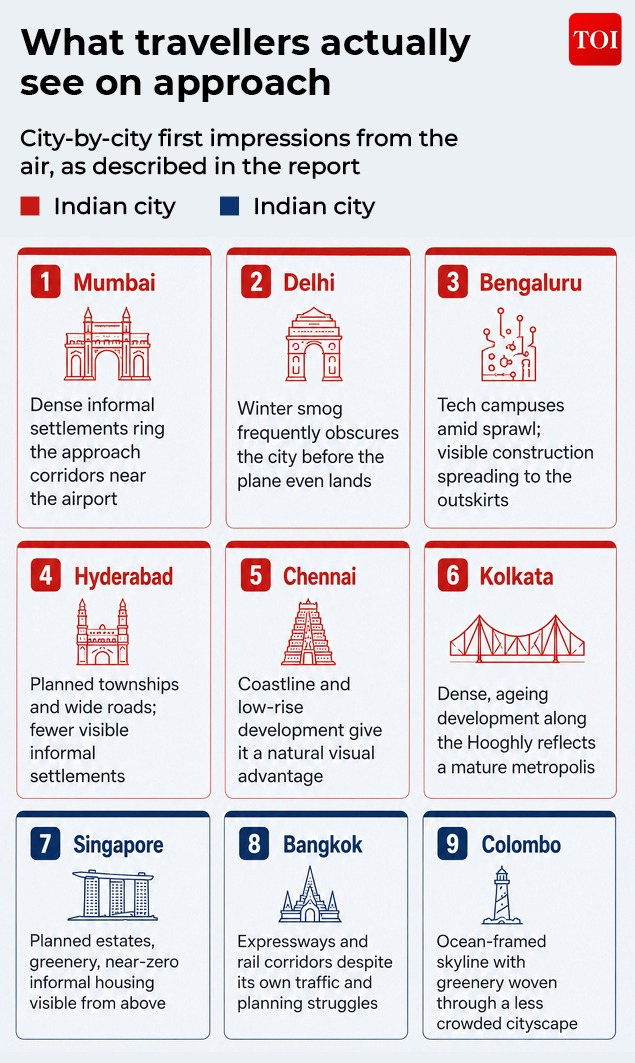
The question is not merely why these cities look better from the air, but why India’s leading urban centres have found it so difficult to achieve similar standards despite decades of economic growth. The answer lies in a combination of history, demographics, governance and economics.What travellers actually see while landingThe first impression of a city is often shaped by geography, urban planning and the location of its airport. In Mumbai, aircraft approaching Chhatrapati Shivaji Maharaj International Airport frequently pass over some of the country’s most densely populated neighbourhoods. Passengers can see vast stretches of informal settlements, railway lines, warehouses, industrial estates and clusters of high-rise buildings standing side by side. The Arabian Sea, mangroves and the city’s narrow peninsula geography add visual drama, but the contrast between wealth and poverty is difficult to miss.Delhi offers a very different view from the aircraft window. As the plane descends, passengers often see a seemingly endless spread of colonies, highways, flyovers and satellite townships stretching across the National Capital Region. During winter, however, that view is frequently blurred by a layer of smog that hangs over the city, making air pollution one of the first things many visitors notice before they even step out of the airport.
Bengaluru presents a softer landing. From above, the city is a patchwork of neighbourhoods, lakes, office campuses and pockets of greenery. The glass-and-steel campuses of India’s technology industry stand out amid the urban sprawl. Yet the city’s rapid expansion is equally visible, with construction sites and new layouts spreading steadily towards the outskirts.Hyderabad’s approach is distinct. Aircraft descend over rocky terrain, lakes, planned townships and wide road networks. The city’s Financial District and clusters of modern high-rises project a more organised urban image. Compared with Mumbai, the concentration of visible informal settlements around the airport is significantly lower, contributing to a cleaner first impression.Chennai benefits from geography. Depending on the direction of approach, passengers are greeted by the Bay of Bengal, long stretches of coastline and sandy beaches. The city largely remains low-rise, with industrial zones, port infrastructure and suburban development visible from above. The sea often gives Chennai an advantage that many inland cities lack.Kolkata tells a story of an older metropolis. Arrivals often see dense development stretching along the Hooghly River, ageing industrial areas, wetlands on the eastern fringes and neighbourhoods shaped by decades of continuous urban growth. The city may lack the gleaming skylines of some newer urban centres, but it reflects the character of a mature and densely settled metropolis.
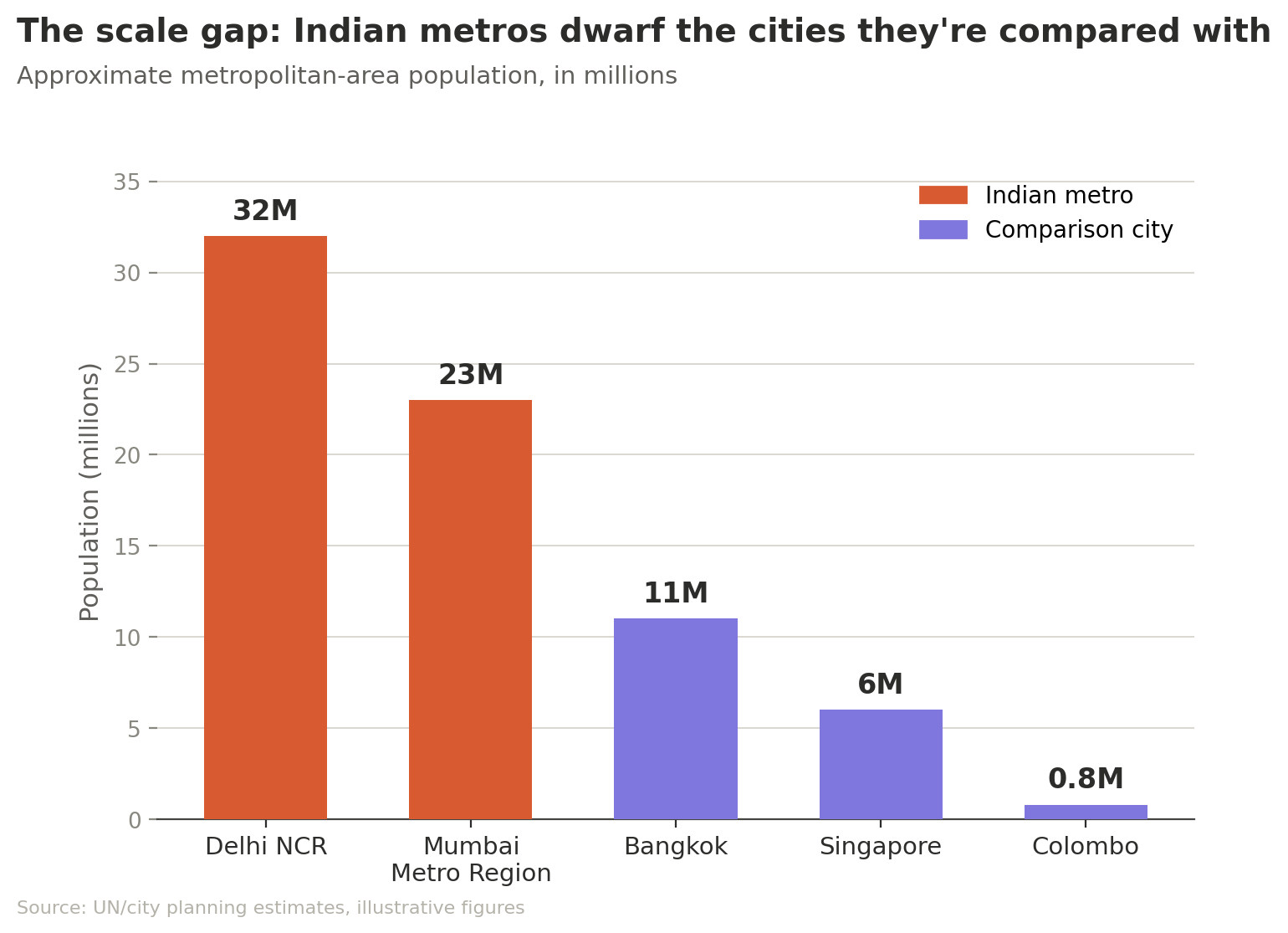
Why foreign cities often create a stronger first impressionThe difference becomes evident when travellers land in Singapore, Bangkok or Colombo. Singapore offers perhaps the clearest example of urban order visible from the air. Passengers see carefully planned housing estates, tree-lined roads, industrial zones separated from residential districts, extensive green cover and one of the world’s busiest ports operating with remarkable organisation. Informal settlements are virtually absent from the urban landscape.Colombo presents a different but equally appealing view. The city is framed by the Indian Ocean, with abundant greenery woven through residential neighbourhoods and commercial districts. Modern towers coexist with low-rise development, creating a cityscape that appears less crowded and less stressed than many large Indian metros.Bangkok combines scale with infrastructure. The Thai capital stretches across vast flat terrain, yet travellers are greeted by elevated expressways, rail corridors, clusters of skyscrapers and a network of canals. Despite its own traffic and planning challenges, Bangkok often appears more organised from the air than many South Asian cities.The comparison is not always entirely fair. Singapore has a population of around six million. Colombo is smaller still. Mumbai Metropolitan Region and Delhi’s urban agglomeration each accommodate populations that are several times larger. The scale of the challenge facing Indian cities is fundamentally different.
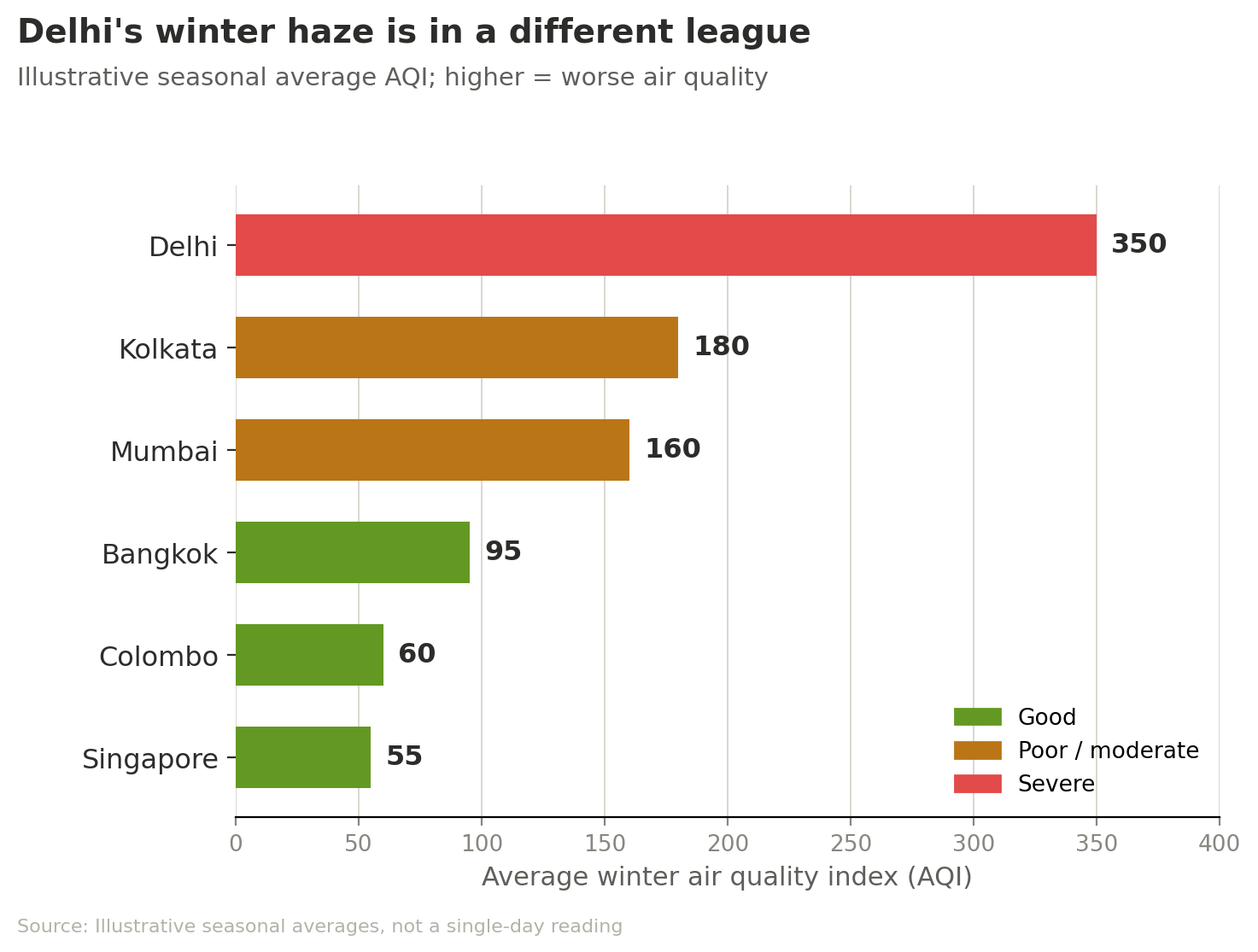
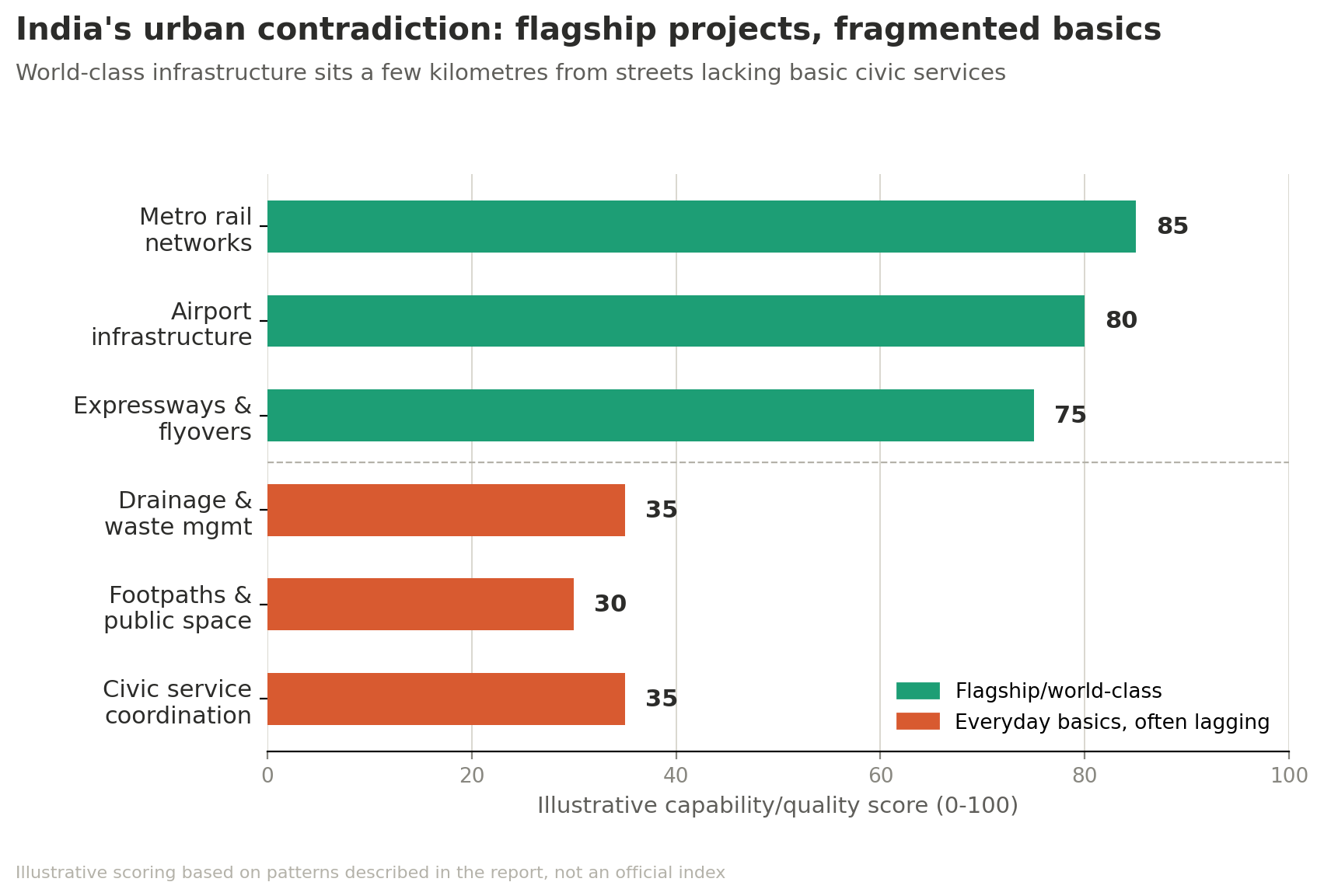
The burden of rapid urbanisationIndia’s urban population has grown at a pace few countries have experienced. Every year, millions migrate to cities seeking jobs, education and better opportunities. Mumbai, Delhi, Bengaluru, Hyderabad and Chennai were already large cities when this migration accelerated. Much of the urban expansion happened faster than authorities could build housing, transport systems and civic infrastructure.As a result, informal settlements emerged wherever land was available. Mumbai represents perhaps the most visible example. The city generates enormous wealth and serves as India’s financial capital, yet a significant section of its workforce lives in dense informal housing because affordable alternatives remain scarce.Singapore, often used as a benchmark, faced housing challenges in the 1960s. The difference is that it was able to implement large-scale public housing programmes across a small territory with a relatively limited population. India, by comparison, has had to address the needs of hundreds of millions of urban residents spread across vastly larger and more complex metropolitan regions.Population density changes everythingComparisons with Singapore are popular but not always fair. Singapore is a city-state with a population of roughly six million people. Mumbai Metropolitan Region alone has more than 20 million residents. Delhi’s urban agglomeration is even larger.Managing waste, transport, water supply and housing becomes exponentially harder as population numbers increase. Even relatively successful Indian urban projects often struggle to keep pace with demand.Thailand and Sri Lanka offer another useful comparison. Bangkok and Colombo certainly face their own traffic, flooding and infrastructure challenges. However, their overall urban populations are significantly smaller than those of India’s largest metropolitan regions. Lower pressure on civic services often translates into cleaner streets, better-maintained public spaces and more manageable urban planning.Pollution remains India’s biggest visual problemNothing shapes first impressions more than air quality. Delhi has become synonymous with air pollution, particularly during winter. Vehicle emissions, industrial activity, construction dust and seasonal agricultural burning combine to create conditions that frequently rank among the world’s worst.The issue is not limited to Delhi. Many Indian cities experience elevated pollution levels due to rapid construction, rising vehicle ownership and dependence on fossil fuels.In contrast, cities such as Singapore benefit from strict environmental enforcement, efficient public transport systems and stronger regulation of construction and industrial activity. Even Bangkok, which faces air quality concerns of its own, often presents a cleaner visual experience because pollution episodes tend to be less severe than those witnessed in northern India.The result is psychological as much as environmental. A city seen through a layer of haze appears less modern, less organised and less attractive regardless of its actual economic strength.Infrastructure is improving, but unevenlyIndia’s urban infrastructure story is not entirely negative. The country has built some of the world’s largest metro rail networks in recent years. Airports in Delhi, Bengaluru and Hyderabad compare favourably with many international facilities. Expressways, flyovers and urban transit projects have transformed mobility in several cities.Yet these improvements often coexist with visible urban disorder. A world-class airport may sit only a few kilometres away from congested neighbourhoods lacking adequate drainage, footpaths or waste management systems.This duality creates a unique Indian contradiction. The country can deliver globally competitive infrastructure projects while simultaneously struggling with basic urban services.Singapore’s development model focused on creating consistency across the urban experience. India has often concentrated on flagship projects while broader city management remains fragmented among multiple agencies.Governance mattersUrban governance is one of the least discussed reasons behind India’s city challenges. Many Indian metropolitan regions are governed by overlapping authorities responsible for transport, planning, water, housing and municipal services. Coordination can be difficult, leading to delays and inconsistent outcomes.Cities such as Singapore operate under far more centralised systems. Decisions regarding land use, housing and infrastructure can be implemented with greater speed and continuity.Indian cities, meanwhile, must navigate political transitions, competing jurisdictions, legal disputes and land acquisition challenges. While democratic complexity is a strength in many ways, it can slow urban transformation.The changing face of Indian citiesDespite the criticism, it would be inaccurate to suggest that Indian cities are standing still. Metro systems are expanding rapidly. Riverfront redevelopment projects have improved urban landscapes in several locations. Smart city initiatives, new airports and transit-oriented development plans are beginning to reshape skylines.Cities such as Hyderabad, Bengaluru and parts of Ahmedabad increasingly project a more modern image than they did a decade ago. Even Mumbai’s coastal road, metro expansion and redevelopment projects are changing parts of the city’s visual profile.The challenge is scale. Improvements that would transform a smaller country often become less visible when applied to cities of 15 million or 20 million people.The first-impression challengeThe debate ultimately reflects a deeper reality. India has become one of the world’s largest economies, but many of its cities still bear the physical scars of decades of underinvestment, population pressure and uneven planning.Visitors arriving in Singapore, Colombo or Bangkok often encounter cleaner and more orderly urban environments. Those cities benefit from advantages in scale, governance and population management. Yet India’s urban centres also perform functions and absorb migration pressures on a vastly different level.The real question is not whether Mumbai can look exactly like Singapore or whether Delhi can resemble Bangkok. It is whether India’s cities can deliver cleaner air, better housing, stronger public transport and more effective urban management while accommodating some of the largest urban populations on the planet.The answer will determine not only the first impression India gives the world, but also the quality of life experienced by hundreds of millions of Indians every day.