




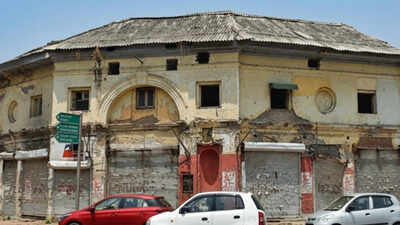
NEW DELHI In a city where flyovers can rise in months and election promises age in weeks, Gole Market has chosen the more leisurely pace of imperial Delhi. The 1921 landmark, once a bustling neighbourhood market for govt employees of the new capital, was supposed to be restored and converted into a museum before the 2010 Commonwealth Games.That was the plan in 2006. Twenty years later, the plan is still alive, which is more than can be said for many of its deadlines.According to NDMC records, the first administrative approval came in Sept 2006, with a financial sanction of Rs 6.3 crore. The project was awarded in June 2009, at a revised estimate of Rs 7.7 crore, with Aug 2010 as the deadline. The idea was to turn the circular Grade-II heritage building into a museum showcasing Delhi’s history, especially the story of NDMC and the making of New Delhi.
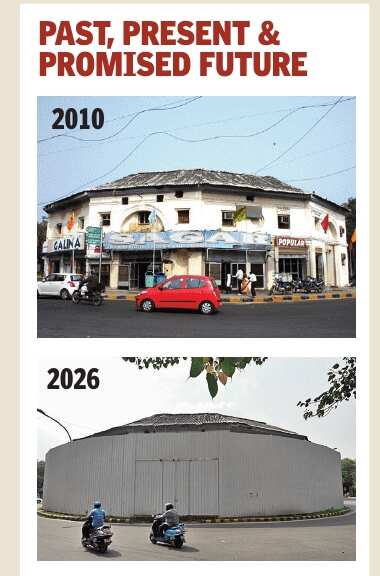
Past, present and promised future
Then began the more familiar story: relocation, litigation, revision, reconsideration, re-estimation and re-tendering. The building was declared unsafe in 2007, and traders were asked to move out. Several went to court. The legal fight lasted nearly six years before Delhi High Court ruled in NDMC’s favour in 2013, based on the council’s assurance that the structure would be converted into a museum.Some traders pursued the matter further and vacated only by 2016. “Though the court didn’t stay the decision, it stated that whenever any new development takes place here, we will be the first to be offered space. We still have that order and are waiting for completion of the food court at the museum,” said Farid Qureshi, who earlier ran a popular restaurant. Whether this gives them any enforceable claim remains unclear.By then, the project had already missed its Commonwealth Games moment. A fresh conservation estimate pushed the cost up to Rs 18.1 crore. Under the Smart Cities Mission, consultants prepared another proposal, this time for a museum on NDMC’s history. That too remained on paper.
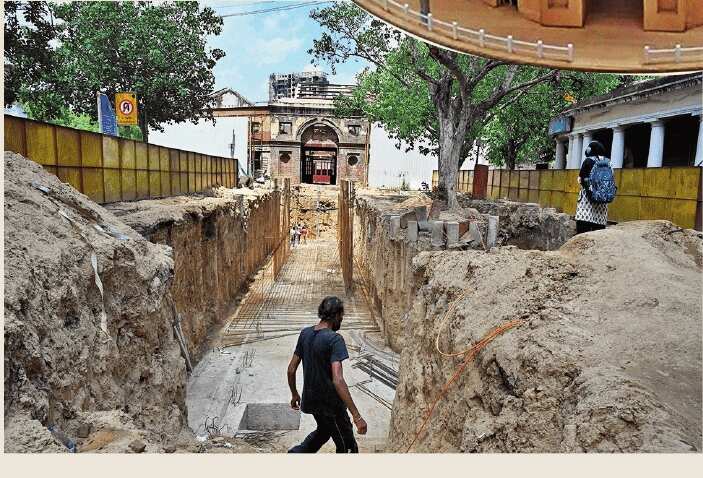
Work in progress at the subway, which will connect the market to Bhai Vir Singh Marg Photos: Piyal Bhattacharjee
In 2018, NDMC decided the work should be done in phases. A revised Rs 20.9 crore estimate was placed before the council, but was deferred. In 2020, a larger Rs 26.7 crore plan, including a subway to help pedestrians reach the roundabout safely, was prepared. It was rejected.The project finally gathered visible momentum after then LG VK Saxena inspected the site in June 2022 and directed officials to speed it up. Approvals from the Delhi Urban Art Commission and the Heritage Conservation Committee followed. Work began in Oct 2023, with Oct 2025 as the target.That became March 2026, then May 2026, and now Sept 2026. Officials say around 45% of the work is complete; site checks suggest much remains to be done.At present, civil work is under way and vertical iron slabs are being installed to strengthen the dome. The subway, estimated at Rs 1.9 crore, is also moving slowly. Barricading began around June-July 2025 near Bhai Veer Singh Marg, but work started only in Sept after traffic permissions came through. One end has been concreted, excavation continues at another, often causing traffic jams.When finished, the restored market is expected to have a glass dome over the central courtyard, galleries, a cafeteria, a souvenir shop, office space, a multimedia room, fire-safety systems, HVAC, lighting, lifts and a subway. What exactly the museum will be about has shifted over time. It has been described at various stages as a museum on NDMC, Delhi’s history, an art gallery, and even the country’s first museum dedicated to women achievers.
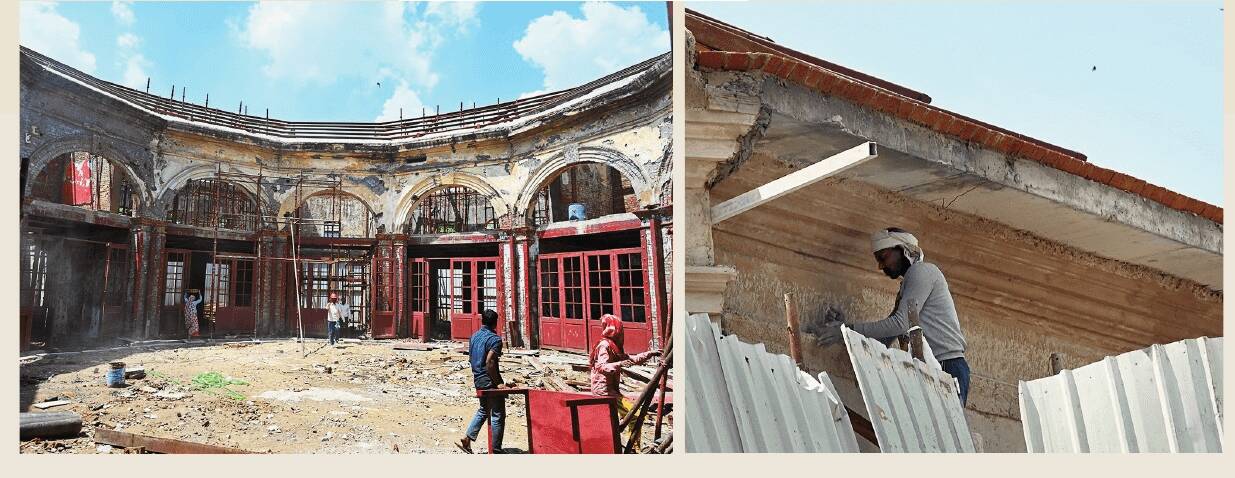
Civil work is under way, with iron slabs and gates being installed to strengthen the structure inside the complex
For the traders, this is not just a heritage story. It is a livelihood story. “Till 2006, it was a flourishing marketplace known for eateries like Galina and Sagar. People preferred it over Connaught Place because parking was easier. But after the litigation began, footfall dropped by 50%,” said Narayan Shamnani, president of the Gole Market Merchants’ Association.He said many shopkeepers lost their livelihood and the area looks deserted after barricading. Sushil Gupta, another association member, said the market once had 62 shops, besides 14 added later. “Now, only 25 are operational,” he said. Savita Gupta, who runs a grocery shop nearby, said dust from the construction site settles on goods and rodents have become a problem.NDMC vice-chairperson Kuljeet Chahal said the delay was caused by several factors, including contractor issues, procedural clearances and changes in the project’s scope.
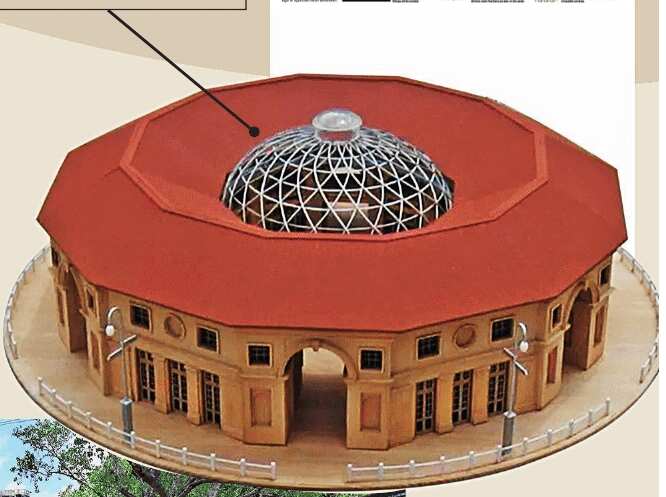
The restored market is expected to have a glass dome over the central courtyard, galleries, a cafeteria, a souvenir shop and office space
“Initially, there was a plan to develop only a museum here, but later it was expanded to include an art gallery as well. We are now closely supervising the work, and hopefully the project will be completed soon,” he said. Once the dome and structural strengthening are complete, one official said, the building will “wear an incomparable look”.For now, Gole Market remains suspended between three images: the graceful circular market Lutyens’ Delhi once had, the tired and barricaded structure it became, and the polished museum it may yet turn into. Delhi has waited 20 years. By the standards of this project, Sept is practically tomorrow.