







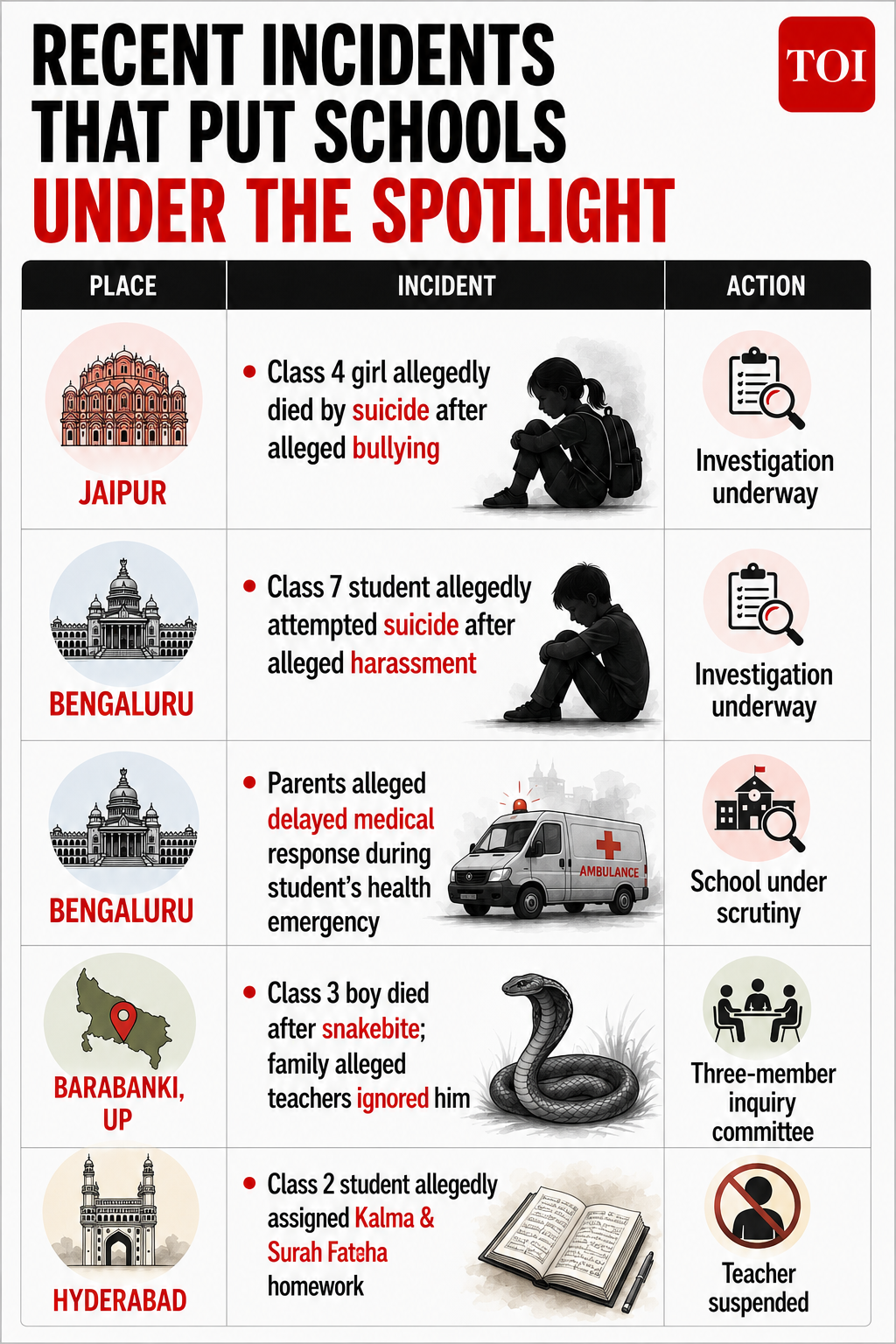
NEW DELHI: A Class 4 girl allegedly dies by suicide in Rajasthan after months of bullying by classmates and teachers. A Class 7 student in Bengaluru allegedly attempts suicide, with the family claiming persistent harassment at school. An eight-year-old boy in Uttar Pradesh dies after a snakebite, with his family alleging that teachers ignored his pleas for help.In another Bengaluru case, parents accuse school staff of delaying medical assistance after a student suffered a serious health emergency. In Hyderabad, a classroom assignment asking a Class 2 Hindu student to memorise Islamic verses snowballs into a political controversy, leading to the suspension of a teacher.Different cities. Different schools. Different circumstances.At first glance, these incidents appear unrelated as they range from bullying and negligence to classroom controversies.But taken together, they point to a common thread: schools are increasingly finding themselves at the centre of public scrutiny, not merely for academic performance but for how they respond to questions of student safety, emotional wellbeing, supervision and accountability.For decades, schools were largely seen as institutions responsible for education and discipline. Today, parents expect much more. They expect schools to recognise distress, respond swiftly to emergencies, communicate transparently and create environments where children feel safe—physically as well as emotionally.The recent headlines have reignited a debate over whether schools are equipped to meet these growing expectations, or whether gaps in systems, communication and oversight are becoming more visible than ever before.
Recent cases
A pattern across classrooms
The most heartbreaking among the recent cases emerged from Jaipur, where a nine-year-old girl allegedly died by suicide after enduring prolonged bullying by classmates and teachers. According to her family, she had repeatedly spoken about the humiliation she faced at school. The incident triggered widespread outrage.In Bengaluru, a Class 7 student allegedly attempted suicide, with the family accusing teachers of repeatedly humiliating and harassing the child.Both the cases shifted attention towards the role schools play in recognising emotional distress before it escalates into a crisis.Bullying, experts have long maintained, is rarely a single incident. It often develops over time, making early intervention crucial. But when such cases continue to surface, questions inevitably arise over whether existing mechanisms within schools are functioning as intended.The concerns, however, extend beyond emotional wellbeing.In another Bengaluru case, a student’s medical emergency sparked allegations that school authorities failed to act promptly, with parents questioning whether immediate medical attention could have altered the outcome.A similar question surfaced in UP’s Barabanki district earlier this week, where eight-year-old Anshu, a Class 3 student, died after a snakebite. His family alleged that after informing his teacher about the bite, he was neither taken to a hospital nor were his parents informed immediately. The allegations have once again placed the spotlight on schools’ duty of care during emergencies.Not every controversy has involved injury or death, though.In Hyderabad, a teacher at a private school was suspended after allegedly asking a Class 2 Hindu student to read the Kalma and Surah Fatiha as homework. The incident quickly escalated into a political flashpoint and generated widespread public debate over classroom practices, religious sensitivity and the responsibilities of schools in handling such issues.
Beyond academics
Education has changed dramatically over the past two decades.Schools are no longer judged only by examination results or university admissions. They are also expected to serve as safe spaces for children, and that expectation has expanded the role of teachers and school administrations far beyond classrooms.“Today, teachers are not only expected to teach subjects but also to guide students, support their emotional well-being, encourage good values and maintain regular communication with parents,” said Satvinder Kaur, teacher, St Francis School, Indirapuram.On the other hand, this shift has made schools more vulnerable to public scrutiny whenever something goes wrong.Parents today are often informed, connected and vocal, with social media amplifying concerns far more rapidly than in the past.Incidents that may once have remained local now become national conversations within hours, prompting demands for accountability and institutional responses.But while expectations have evolved, the question remains whether systems inside schools have kept pace.
A changing conversation around schools
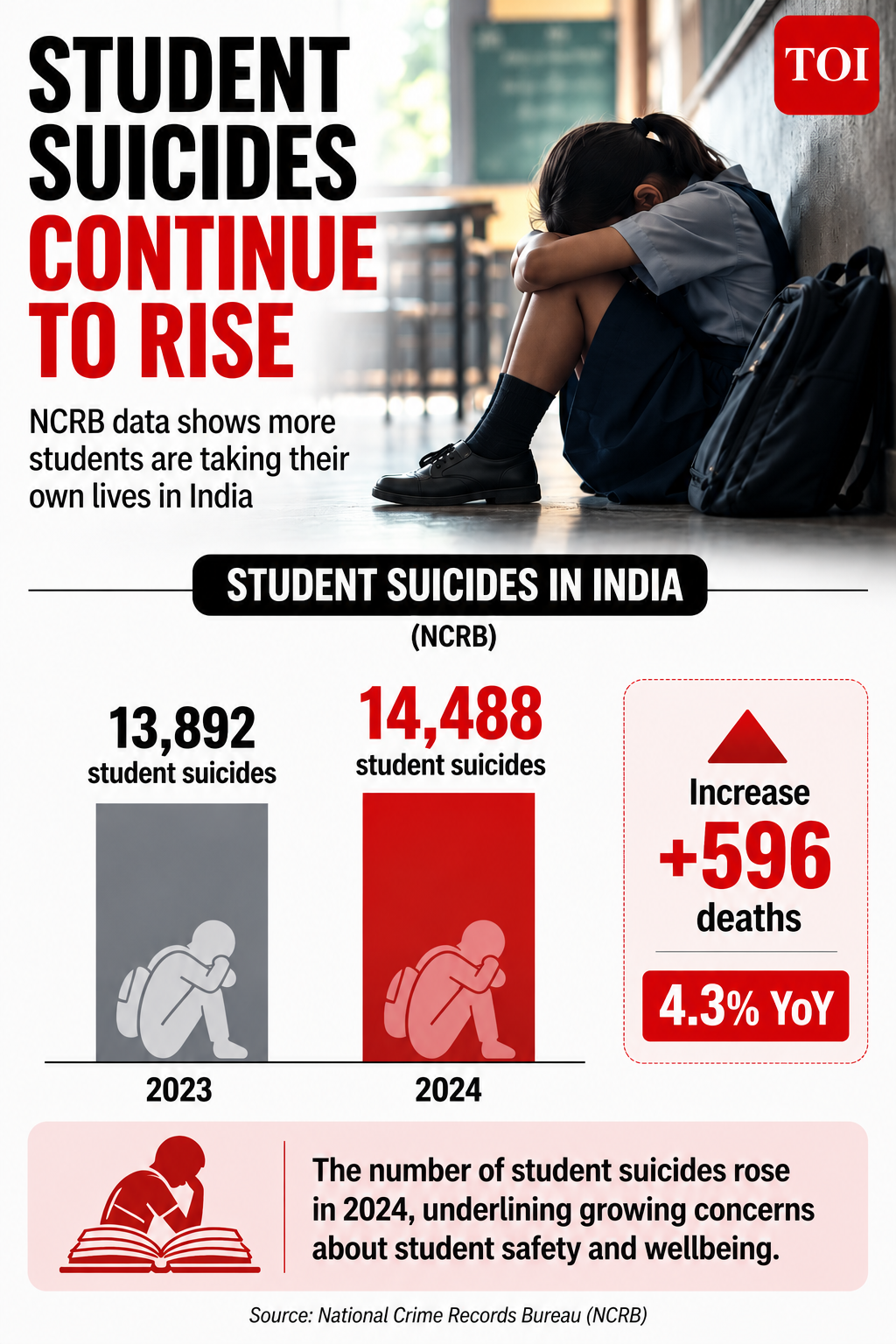
According to the National Crime Records Bureau (NCRB), 14,488 students died by suicide in 2024, up from 13,892 in 2023.
Student suicides in India
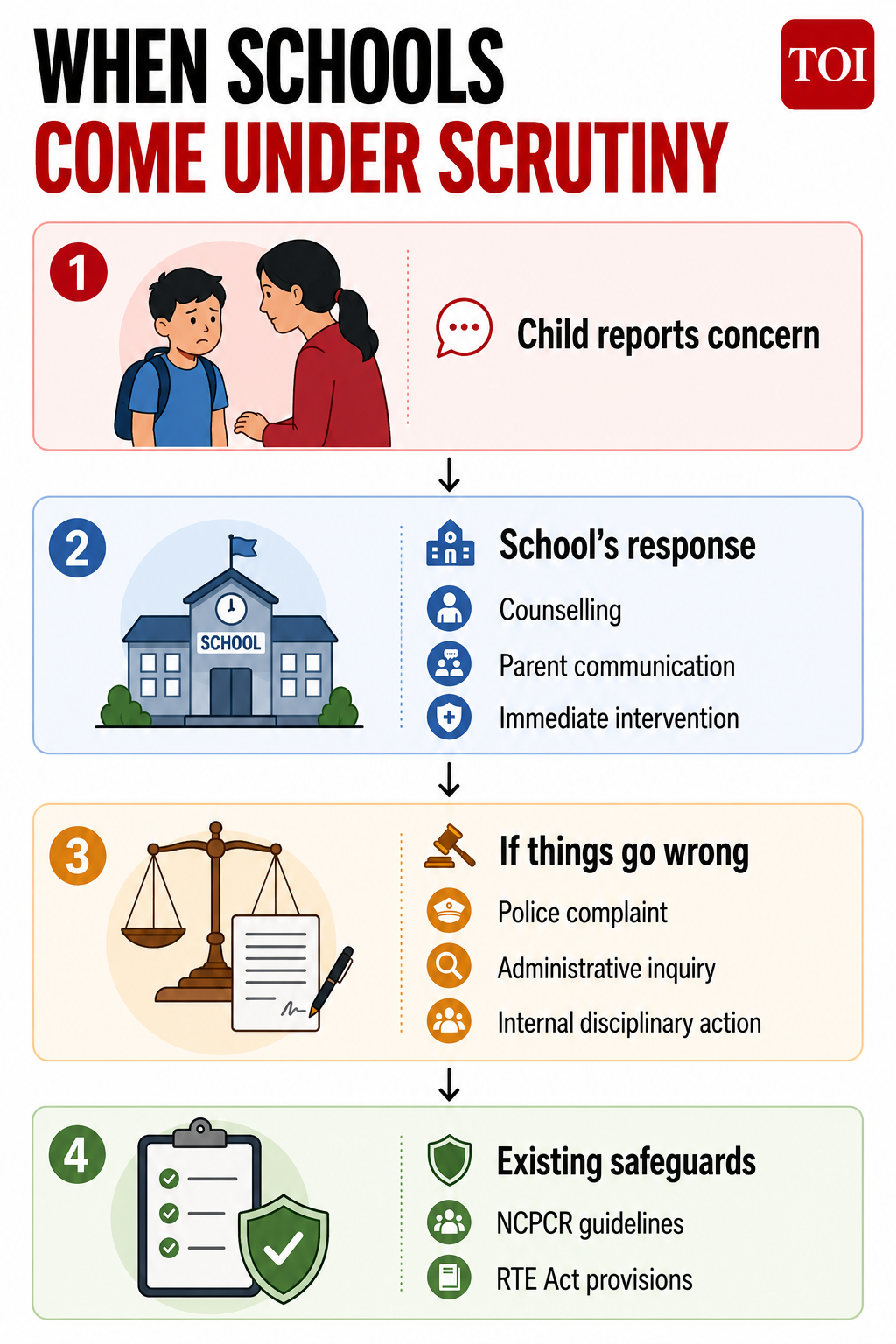
While every suicide has its own set of circumstances and cannot be attributed to a single factor, educators and mental health professionals have repeatedly stressed the importance of early identification of distress, timely intervention and supportive school environments.The recent cases, however, have also shifted attention beyond mental health alone.They have raised questions about how schools respond when children report bullying, how quickly medical emergencies are handled, whether communication with parents is prompt and transparent, and whether adequate mechanisms exist to address complaints before they escalate.Existing guidelines already recognise many of these responsibilities.The National Commission for Protection of Child Rights’ (NCPCR) 2024 ‘Preventing Bullying and Cyberbullying’ guidelines ask schools to constitute anti-bullying committees, establish confidential reporting mechanisms, sensitise teachers, provide counselling support and involve parents in prevention efforts. The guidelines also call for prompt intervention and regular awareness programmes for students. Similarly, schools are expected to have clear protocols for handling medical emergencies and ensuring student safety on campus.Yet, as the recent incidents demonstrate, questions continue to arise whenever allegations surface that those systems either failed or were not activated in time.
Expectations beyond the classroom
Parents say what they expect from schools today goes well beyond academics.“Interactions and counselling with students and parents should be conducted by schools to make everyone aware. Every school must also have a counsellor to deal with such situations,” said Swati Jain, a parent.Thus, the expectation from schools has evolved alongside changing family structures and lifestyles.With both parents often working and children spending a significant portion of their day on campus, schools increasingly become the primary adults supervising children outside the home.As a result, every incident involving alleged bullying, negligence or insensitivity tends to attract greater public attention than before.“Sometimes teachers do not listen (to complaints and grievances) at that particular moment. But my teachers make sure to follow up later. Otherwise, I tell my parents, and they intervene,” said Aadya Jain, a Class 6 student.
Accountability and the law
Beyond public outrage, such incidents also carry legal implications.Speaking to TOI, Hemangini Jain, a Delhi high court advocate, said, “We have proper laws in our country for safeguarding the students in schools. The Right of Children to Free and Compulsory Education Act, 2009, prohibits schools from physically punishing and mentally harassing students.”
When schools come under scrutiny
In several recent incidents, authorities have already ordered inquiries, while some schools have initiated disciplinary action of their own.Following the Hyderabad controversy, the teacher concerned was suspended by the school.In UP, the district administration constituted a three-member committee to inquire into the snakebite incident.In Jaipur and Bengaluru, investigations continue as police examine allegations made by the families.
More than isolated headlines
The challenge for schools, therefore, extends beyond infrastructure or examination results.It lies in building systems that can identify distress early, respond swiftly during emergencies, address complaints transparently and earn the trust of both students and parents.As recent headlines from Jaipur, Bengaluru, UP and Hyderabad have shown, public attention no longer focuses solely on what happens inside the classroom.It increasingly centres on what schools do, or fail to do, when children need them the most.While the recent cases have prompted suspensions, inquiries and investigations, they have also shifted attention to a larger question: are schools responding only after incidents come to light, or are systems in place to identify risks and intervene before they reach that stage?