






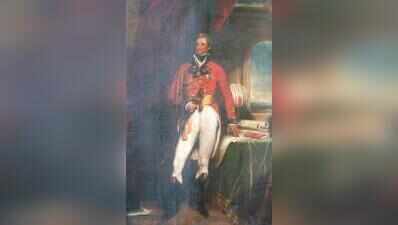
Chennai: About 200 years ago, Sir Thomas Munro, then Governor of Madras, visited Ooty at the invitation of Coimbatore collector John Sullivan, and this led to the Nilgiri Hills being declared the first hill station of the British Raj.“The sides of the hills are covered with a purple flower, the size of Bangalore geraniums, which makes them look as if they were covered with heath,” Munro wrote to his wife about the country around Kothagiri.Madras Institute of Development Studies (MIDS) recently released a souvenir remembering Sir Thomas Munro, the Governor of the Madras Presidency from 1820 to 1827, on his bicentennial memorial. The souvenir recorded details of his visit to Ooty.He reached Ootacamund on Sept 29, 1826. Before reaching Sullivan’s house, they reached the summit of Doddabetta peak, the highest in south India. “We saw over all Coimbatore, a great part of Mysore and Wynaad, and the hills of Malabar. But Ootacamund, every spot of which lay below us like a map, surprised me most. The face of the country is covered with the finest verdure, and is undulated in every form,” Munro wrote. Kurinji flower blooming in the Nilgiri Hills was also recorded during this visit.After a few months, Munro recommended that the Board of East India Company declare Nilgiris as a hill station. “Comparing money spent on invalid officials and soldiers sent on sick leave to Europe, Munro argued that these officers could be restored to health by a temporary residence on the hills instead of a voyage to Europe,” said Dharmalingam Venugopal, honorary director, Nilgiri Documentation Centre.Munro died of cholera in Andhra Pradesh on July 6, 1827, the day the Madras govt accepted his recommendation for the formation of a hill station. His visit to the hills also brought the postal system to the region long before other parts of the country.“We plan to have a commemorative meeting on the bicentenary of Munro’s visit,” he said. Munro was one of the popular colonial rulers in the Madras Presidency, as he brought the Ryotwari system, bypassing the Zamindars and middlemen, shaping the modern district framework, and initiating the first comprehensive statistical survey of indigenous education across the Presidency in 1822.