






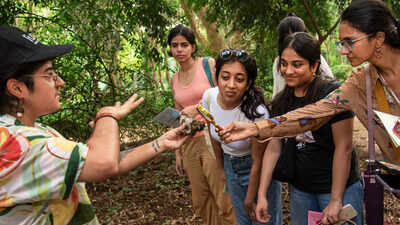
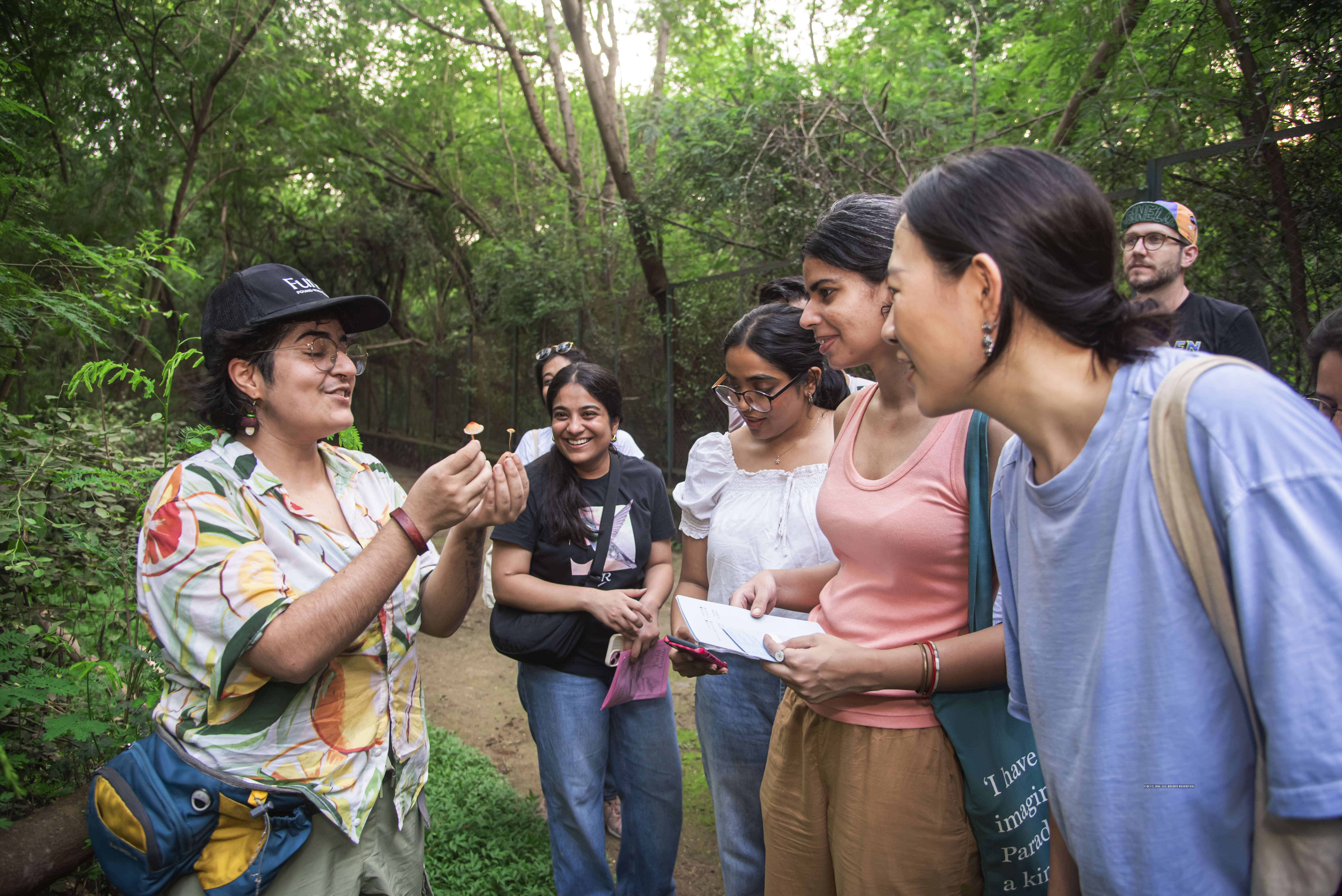
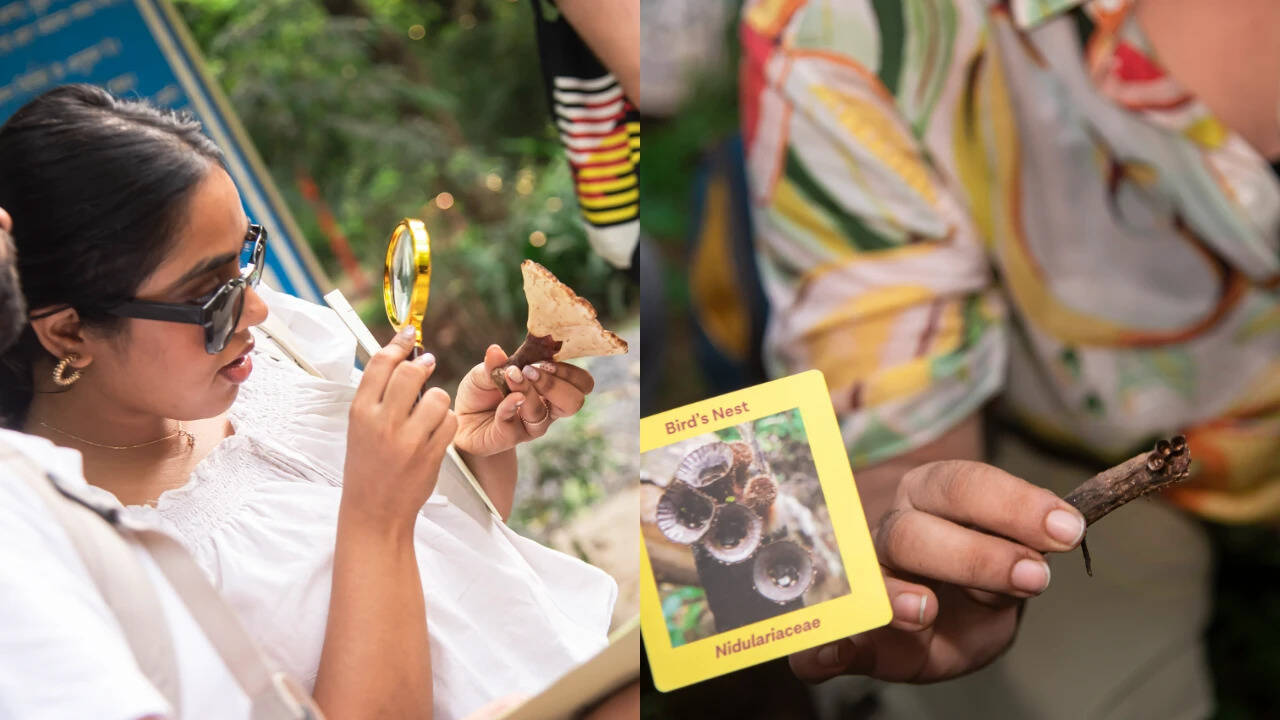
“Think like a mushroom. Think where it could live – away from the sun, where there’s leaf litter, logs or decomposing organic matter, where there’s a lot of moisture. Look into those places,” said Malavika Bhatia, also known as M, a community-taught field mycologist and forager, as they led the season’s last fungi foray, in collaboration with Shroomery, a Gurgaon-based gourmet mushroom farm, at the Hauz Khas Forest last Sunday.At 4.30 pm, around 20 people gathered, looking for fungi emerging from damp surfaces and the forest floor. With a guide zine in one hand and a cue card about a mushroom species in another, participants learnt how to spot different specimens, forage them, make a spore print and understand the mycelial world beneath their feet.‘Fungi offer us the opportunity to rethink our assumptions about life and nature’
‘Fungi offer us the opportunity to rethink our assumptions about life and nature’
“Essentially, the mushroom walks ask people to spend time with organisms they have often been taught to fear or avoid,” said M. “Many of us grow up thinking of mushrooms as poisonous, dangerous or dirty, or associated with decay. But fungi offer us the opportunity to rethink those assumptions.” They pointed out that decomposition, death and decay are not the opposite of life, but processes that make life possible. For M, the shift from avoidance to curiosity is central to the experience. “Paying attention to fungi encourages us to question our conditioning: what we find disgusting, what we find frightening, and why. Once people begin looking more closely, fear often gives way to curiosity, and curiosity becomes a pathway to a deeper relationship with the natural world,” they said.
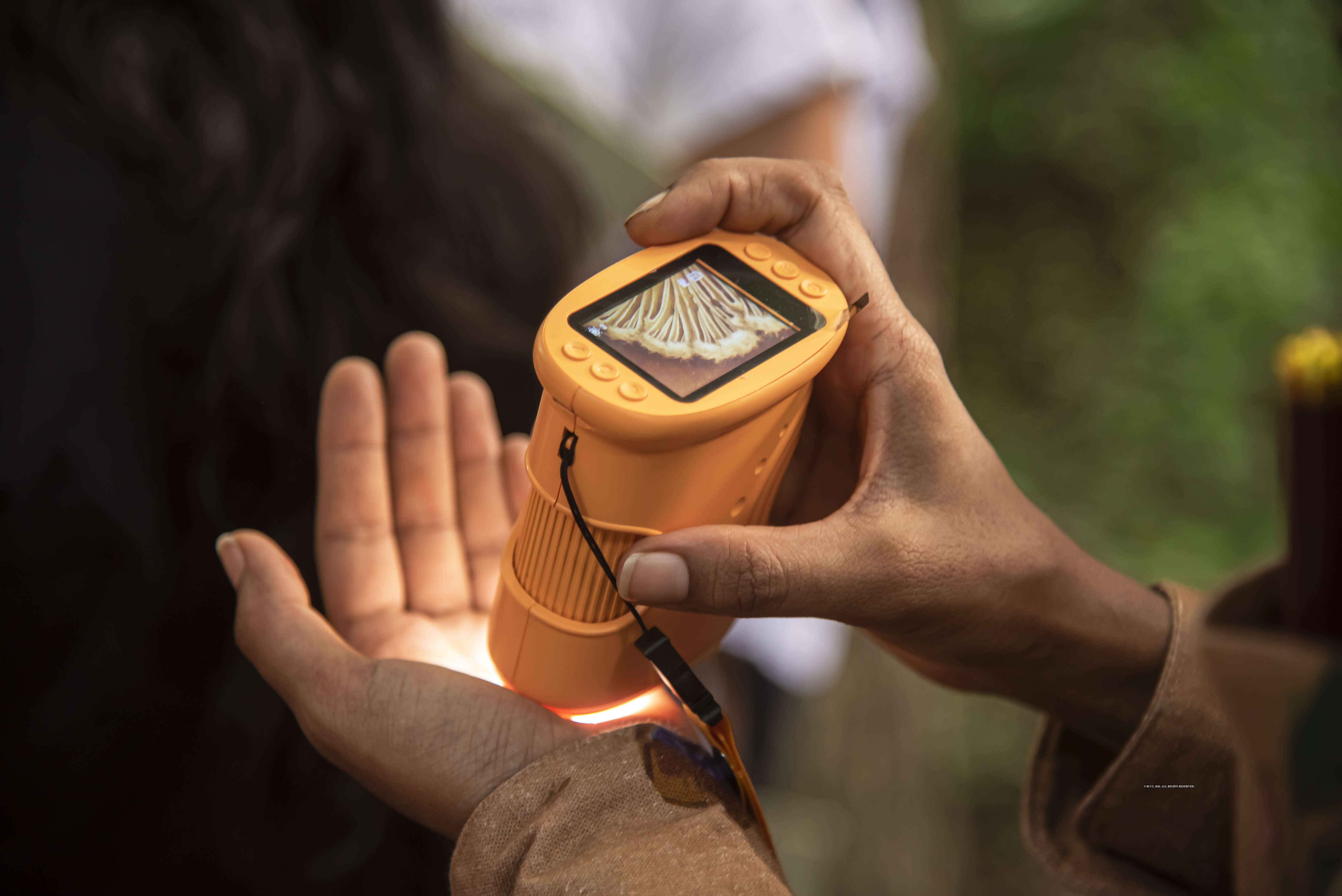
A participant observes a splitgill mushroom using a kids’ microscope
They added, “For queer people especially, the walks are an opportunity to find kinship with each other, as well as with fungi, creatures that are so often misunderstood, misrepresented, or treated as ‘other’, despite being essential to the worlds they inhabit.”
In many ways, fungi are among the foundational organisms that keep ecosystems functioning
Malavika Bhatia aka M, a field mycologist who led the foray
‘I reconnected with my inner child during the foray’What stood out was not just what they found; it was the way they looked at it. Childlike curiosity was evident among the participants. Some stopped to examine fungi closely, touch their textures, and simply stare at them, while others peppered M with questions. Joy, a participant from Taiwan who has been living in Delhi for a year, said, “I think today I totally reconnected with my inner child. It was like the whole foray was like a huge Easter egg hunt. When I think of mushrooms, I always think about Alice in Wonderland. So I think they’re magical,” she added.
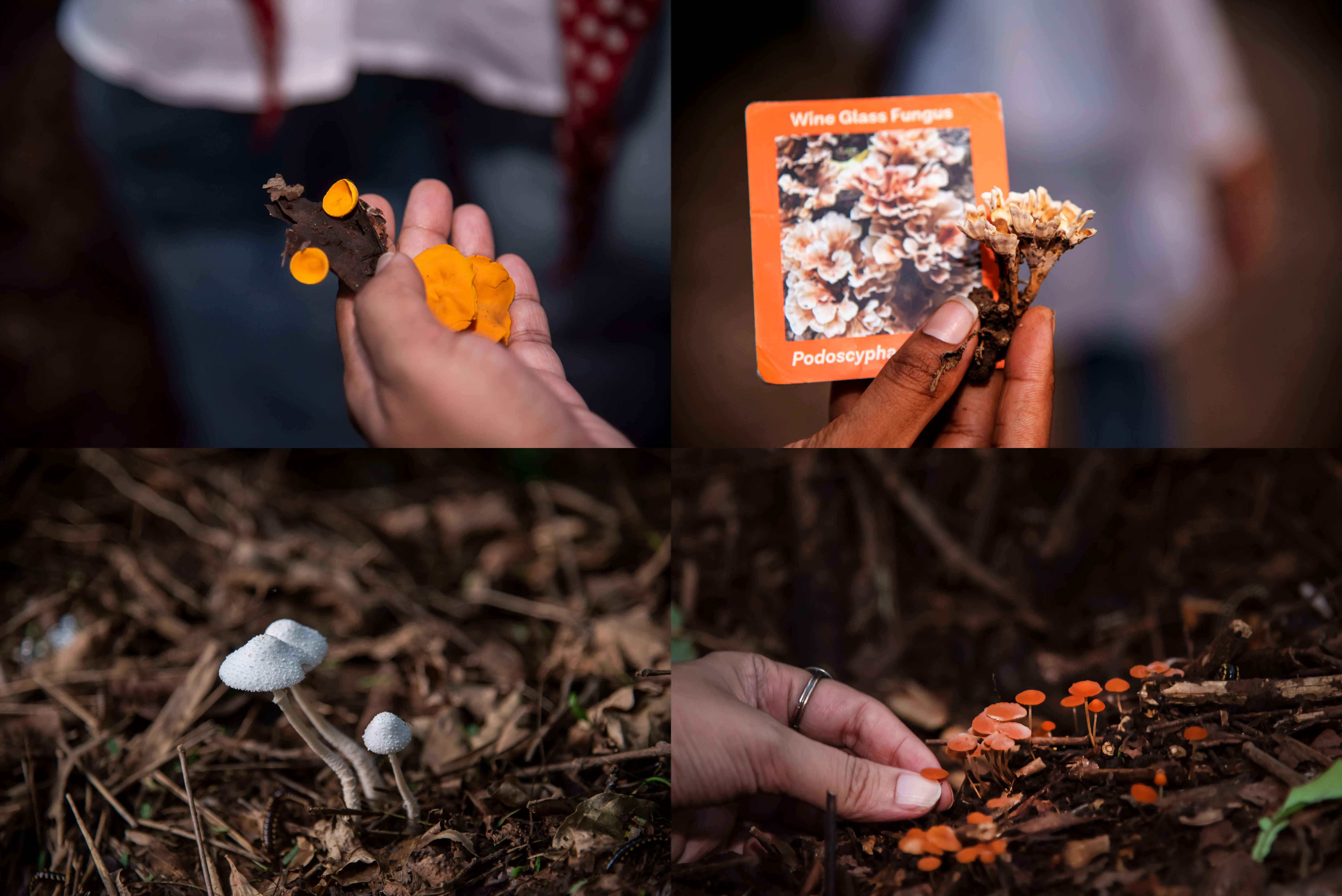
During the walk, the fungi spotters saw wood ear mushrooms, orange peel (which was a first-time spotting), reishi mushrooms, hexagonia, species like Earth star, ruby dapperling, stinkhorn in the egg stage, bird’s nest fungi and flower pot dapperling, to name a few
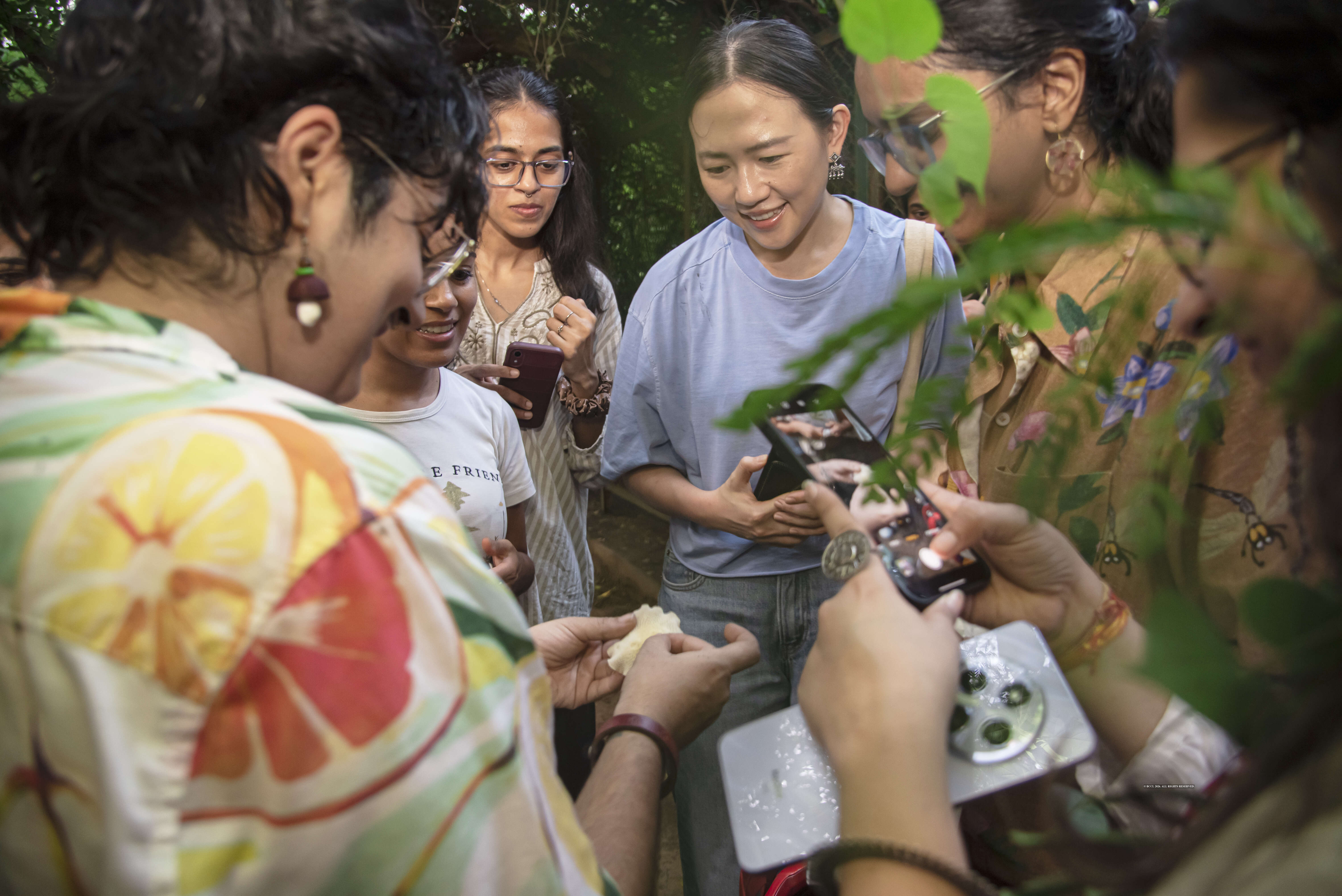
‘I reconnected with my inner child during the foray’
Simon, who has been in Delhi for a year and works with the German government, also found the experience fascinating. “I think of mushrooms mostly in a culinary sense, of course, but it’s exciting to spot them, and I think it’s also exciting to consider how they are like a secret kingdom,” he said.
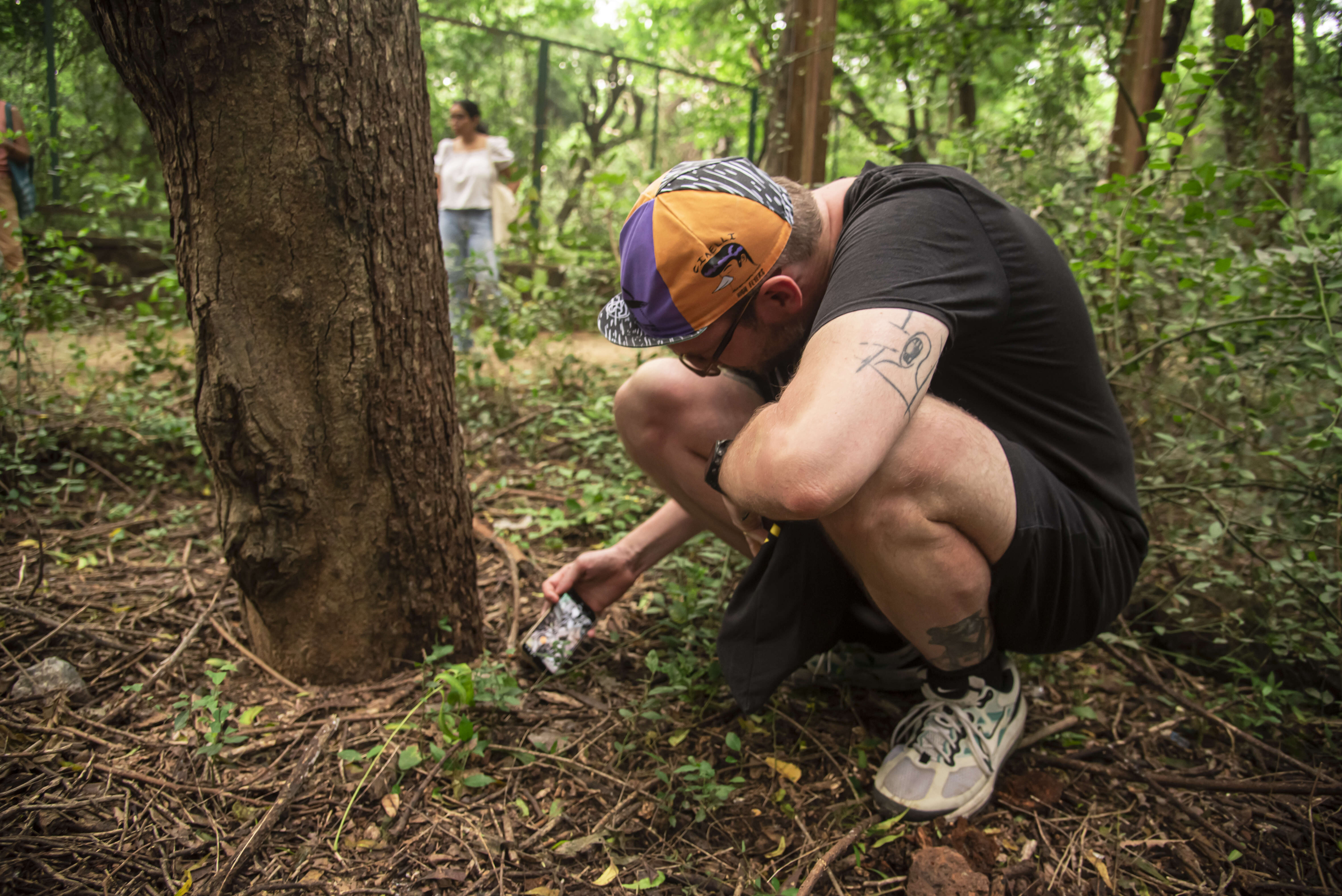
Mushrooms hold the secrets to the core of our being: Paul Stamets
For some, the forays are an inspiration for their art. Ita Mehrotra, an artist who works with forest communities in Uttarakhand, shared, “I attended a guided fungi foray at Sanjay Van earlier and then I’ve been going there on my own. As an artist, I started working with the Van Gujjar community in Uttarakhand, and then I thought, why only there? Why not explore Delhi, when there are so many city forests, which may not be there 20 years from now?”
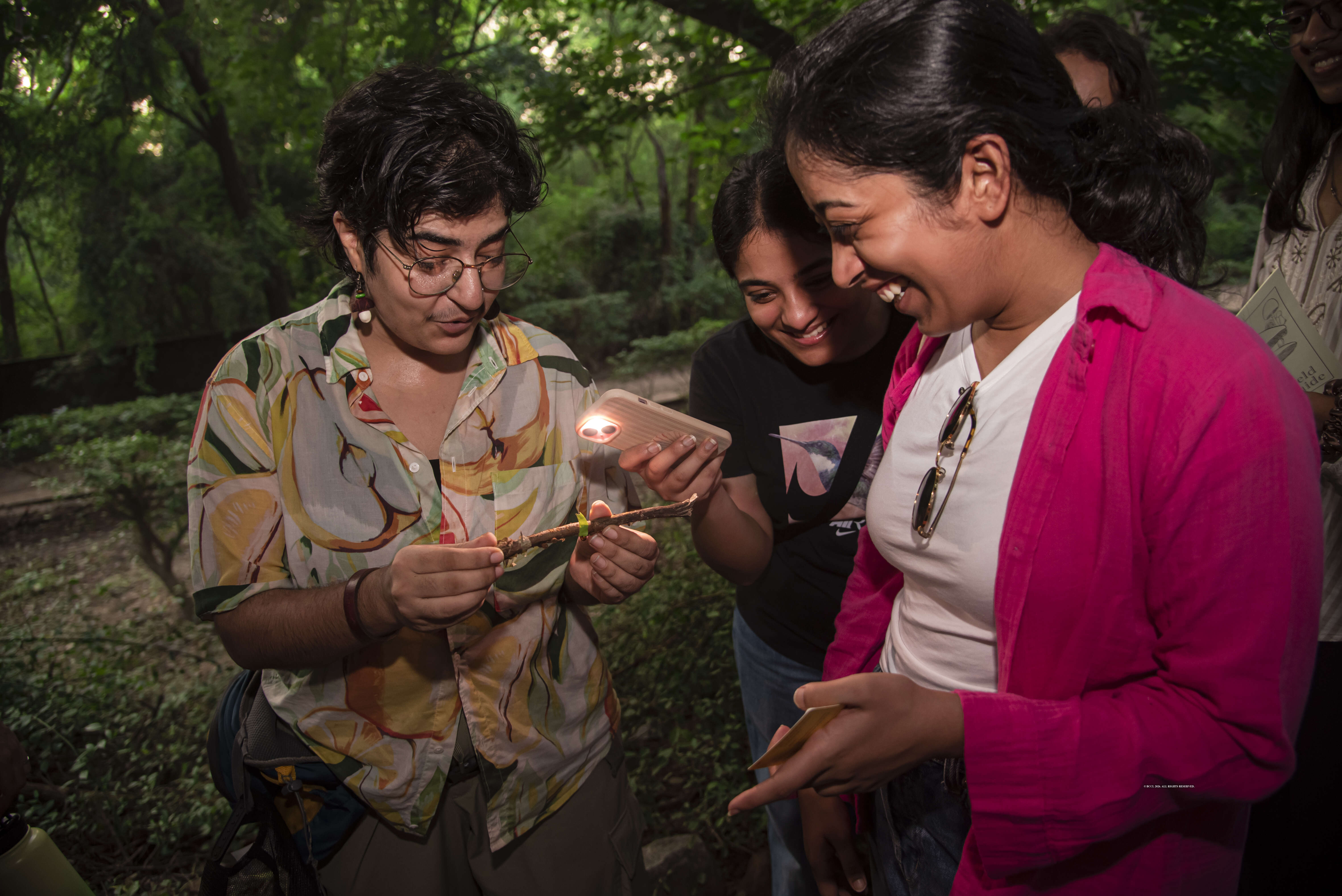
For those who missed this season’s forays, there is still some time to explore. Fungi can be spotted in the city at least until the end of September, particularly polypores
Learnings from the foray
- What’s a mushroom: The visible mushroom is the fruiting body of the fungus; its life begins from a spore, and much of the organism exists as mycelium.
- Looking for the habitat: Leaf litter, fallen wood and decaying organic matter are places where fungi can be found.
- Different species can co-exist: Fungi may compete for resources while still growing alongside one another in the same ecosystem.
- Edible or not isn’t always that simple: Not every mushroom falls neatly into these categories, and unfamiliar wild ones should not be consumed.
- Leave young mushrooms: Participants learnt to avoid foraging immature specimens, which can be harder to identify.
- Know their names: Mushrooms have different vernacular names across India – kukurmutta in Hindi, byanger chhata in Bengali, chhatri in Gujarati and khumb in Punjabi, among others.
- Spore prints reveal another layer: Participants learnt how to make a spore print and understand how fungi reproduce and disperse.
For those who missed this season’s forays, there is still some time to explore. Fungi can be spotted in the city at least until the end of September, particularly polypores