








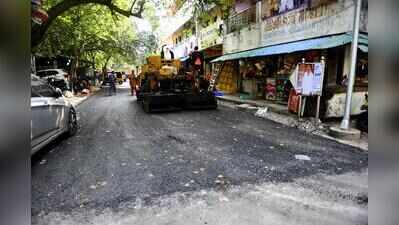
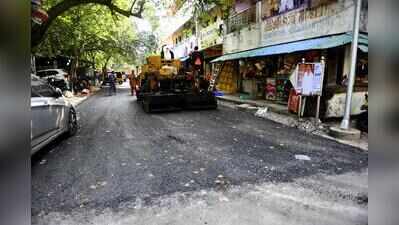
Chennai: Seven contractors have long dominated Greater Chennai Corporation’s road relaying contracts, with ownership of hot mix plants acting as a barrier to new entrants. Now, GCC is changing the rules for its 2026-27 road contracts to the tune of ₹149 crore, allowing contractors to lease plants, easing security deposit requirements and introducing online work orders, in a bid to widen competitionUnder the revised rules, bidders can use either their own or registered leased centralised hot mix plants, provided they have a valid consent-to-operate certificate from Tamil Nadu Pollution Control Board (TNPCB), or enter into an agreement with a plant owner to procure hot mix, subject to submitting an affidavit explaining the required quantity. The plant must be within 40km of GCC limits, replacing the earlier requirement of measuring the distance from Muthusamy Bridge, the city’s zero point.“There are seven contractors who own wet mix and hot mix plants who often participate in tenders through benami firms. This move will help break the cartel and make the tendering process transparent,” a senior GCC official said.Another change is that only the lowest bidder (L1) will have to furnish the additional security deposit (ASD) within two days of the first negotiation. This is intended to protect the confidentiality of financial bids. Earlier, bidders had to submit it at the tender-opening stage.For the first time, the award of contract (AOC) will be generated through the state govt’s e-procurement portal hosted by National Informatics Centre (NIC), sparing contractors from having to approach GCC officials separately to obtain work orders.GCC has allowed contractors to bid for multiple packages, subject to eligibility. However, it rejected requests to waive the mandatory TNPCB consent, citing National Green Tribunal directions. GCC will retain 2.5% of the contract amount during the three-year defect liability period, though contractors can replace it with an e-bank guarantee after completing work. No price escalation will be allowed.Urban planner and transport engineer S Naveen Kumar said, “Restricting access to critical infra to a few contractors creates a high entry barrier. Allowing registered leasing arrangements can widen the pool of bidders. Combined with digital tendering and contract awards, these measures can improve transparency and accountability, provided related-party participation and bid coordination are monitored.”R Ramarao, president of GCC Contractor’s association, said, “Open tendering should not become a race to quote the lowest possible rate. Contractors have to quote prices before procuring materials, and costs can change depending on labour availability and market conditions. When bids are 15% to 20% below the estimated project cost, it becomes difficult to maintain quality and profit margins. Contractors may then cut corners by compromising on material quality or construction standards.” He added, “Competition is healthy only when contractors have a reasonable and comparable margin to execute the work. Otherwise, the public eventually bears the cost through poor-quality roads.”The work covers 753 roads across all 15 zones spanning 167.55km. Of this, 43.86km comprises 66 bus route roads. The project is estimated at ₹149.12 crore, including ₹68.31 crore for the bus route roads. Tenders are scheduled to close on Nov 27, Dec 3 and 7.