









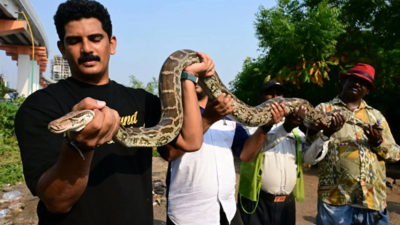
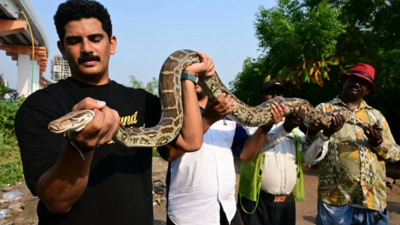
MUMBAI: Around midday last Tuesday, an Indian rock python (Python molurus) was spotted hightailing into a Pali Village grotto in Bandra. It wasn’t the only constrictor spotted in the city.Since Oct, Resqink Association for Wildlife Welfare (RAWW) has rescued 19 Indian rock pythons across MMR—11 in Mumbai and four each in Navi Mumbai and Thane—the most post-monsoon rescues of the species in the past five years. “These are only the rescue figures. We received at least 48 distress calls and sightings last week alone. Often, the snake escapes,” says RAWW founder Pawan Sharma. The organisation has rescued more than 233 Indian rock pythons in MMR since 2021.Key Highlights
- Indian rock pythons rescued across MMR since October, the highest post-monsoon rescue count in five years.
- Mumbai accounted for 11 rescues, while Navi Mumbai and Thane reported four each.
- RAWW received at least 48 distress calls and sighting reports in just one week, though several snakes escaped before they could be rescued.
- Unseasonal October rain and sharp temperature fluctuations may have disrupted winter dormancy, triggering increased movement, mating activity or hunting.
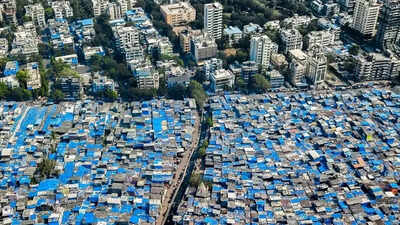
Habitat loss , mangrove destruction and construction projects across areas such as BKC and Mulund may be pushing pythons into residential spaces and drainage networks.
The snakes have turned up on bicycles, in parking lots and building corridors, and on Eastern Express Highway.Experts point to several causes. Sharma says unseasonal rains in late Oct and sharp temperature swings may have disrupted brumation, the winter dormancy of cold-blooded animals. Herpetologist Varad Giri agrees: “They’re more active during the monsoon and dormant in winter.” Unseasonal rain and warmth, he says, could signal that it’s time to mate, or trigger hormonal changes. The snakes may also be hunting.Habitat loss may be pushing them out too. Atul Kamble of Wildlife Animal Protection and Rescue Association suspects the destruction of urban forests and mangroves, and construction in once-wooded areas like BKC and Mulund. Metro operations and construction work across Mumbai have also made the underground the equivalent of a gaming arcade, especially for snakes that are highly sensitive to noise and vibration.Until a few years ago, stormwater and drainage systems were passable, if imperfect, resettlement colonies. But, Kamble says, the extensive loss of permeable spaces and the strain of a growing population have forced more runoff into the networks, causing them to flood and flush out the wildlife.He notes that people now tend to call experts rather than attack snakes, which suggests greater awareness. Or fear. Few know that the Indian rock python is a Schedule 1 animal, with the same legal protection as the tiger.Conservationists say data on how the species is responding to urbanisation is scarce. RAWW plans to propose a study to the state forest department.