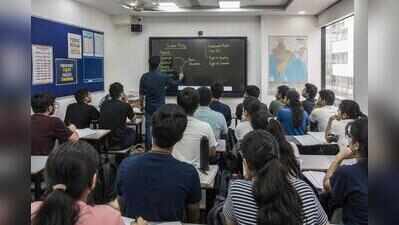



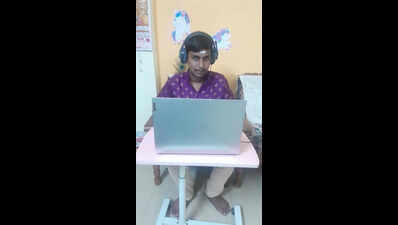
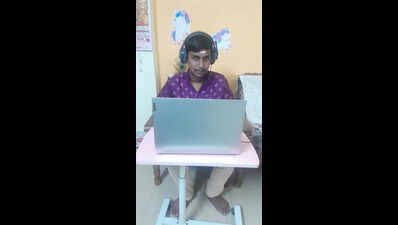
Chennai: Ashwin Saravanan, a visually challenged student, was in for double joy when the ISC results were declared on Thursday. Not only did he get 93%, scoring 99/100 in environmental studies, he achieved the feat without the help of a scribe.And all it took him was the use of a basic laptop and a non-visual desktop access (NVDA) — a free-to-use screen-reader application installed on the device that reads out what he has typed. “I started using technology from a very young age, and received training in using the mobile phone and laptop to my advantage at an NGO. I typed my answers as a fellow-student read out the questions,” he said, adding that he plans to pursue BSc honours in environmental studies.Users say accessibility to tech not only eliminated the arduous process of finding a scribe, but also made people with disabilities more self-reliant. “Finding a scribe is challenging. Even if we find one, there are criteria to be met for approval. It is always nice if we can write the answers ourselves as it makes us more independent,” Suman Gayen, an employee at Vidya Sagar. He used similar tech to complete his postgraduate exams in 2024.The story doesn’t stop with Ashwin and Suman. With TN govt allowing students with disabilities to carry computers to competitive exams, stakeholders say the usage has been growing slowly but steadily. “There are several technologies available — from electromechanical braille displays that allow conversion of on-screen text into braille for reading to augmentative and alternative communication tools for those with cerebral palsy. Only the usage has to be facilitated. Advantages are numerous as it not only helps them get jobs at top firms, but enables them to do research and reach heights they never imagined,” said Ram Kamal, managing trustee, Chakshumathi — organisation working for building inclusive digital education.It also helps create an inclusive space for children with disabilities, said Raguram, Karna Vidyalaya, an NGO that works towards empowering the visually-impaired. “The use of tech helps groom students. We have a STREAM programme (science, technology, right living, English arts and maths) where right living aids in personality grooming through technology for children with disabilities,” he added.Activists welcome the move and laud the students who have succeeded, but call for a policy-centric approach. “The policy for persons with disabilities envisions a future like this. But the onus should not just fall on NGOs. It should be the govt’s duty to make the tech accessible to all students in the field,” said S Namburajan, state general secretary, National Platform for the Rights of the Disabled.