





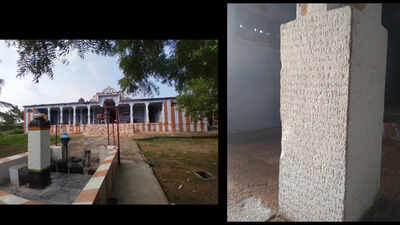
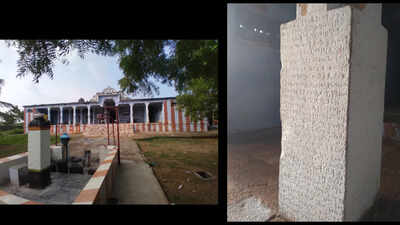
More than 4.85 crore people cast their vote in the 2026 state assembly election. But there was a time in Tamil Nadu, nearly 1,000 years ago, when 30 ward representatives were choosen in an annual election.The Uthiramerur elections (920 CE), as documented in Chola-period inscriptions, show that a different form of democracy existed at the village level.The village in Kancheepuram district was divided into 30 kudumbus (wards), and each could nominate a candidate. “The conditions were that the candidate had to be older than 35 years and less than 70 years, and must own land and a house, for which tax had to be paid properly. “The candidate also had to have some form of education and expertise in business. Those with criminal records were disqualified immediately,” says Venkatesh Ramakrishnan, history enthusiast and founder of the Madras Local History Group.
Also, the system was more of a lottery than an election, as the ballot box was a pot or ‘kudam’ where palm-leaf slips with names were placed. A young boy then picked a name from the pot. The chosen candidate, the leader, would assign roles to the remaining 29. Historian K A Nilakanta Sastri, in his book ‘The Cholas’, calls Uthiramerur the “most remarkable piece of legislation” from medieval India, but K K Pillay, in ‘A Social History of the Tamils’, called it “limited democracy” as only tax-paying landowners and upper castes in the sabha could contest.Agricultural labourers and artisans were excluded. Pillay also writes that the election was held to avoid factionalism among the elite, not to empower the common man.“It was not a fair election, but it was an election. A lot of people were excluded from standing,” says Venkatesh. “Only men were allowed to be candidates. The system collapsed after the Pandyas.While Uthiramerur elections are the most well-known, lesser-known rock inscriptions from Manur, dated 120 years earlier, also indicate that a small-scale electoral system was in place to elect the legislative council.Manur in Tirunelveli district was part of the Pandya kingdom (800 CE). “We have just 15 lines to go by, with no information on how the voting was held. But the inscriptions indicate that the criteria for becoming a legislative councillor were strict,” says Pradeep Chakravarty, author of ‘The Greatest Books of Ancient India’.“One person from each family from the original shareholders of the village and conversant with mantra brahmana, inclusive of one dharma and one of good conduct, shall take part in the deliberations, says the first point in the inscription,” says Pradeep. “It specifies that those who acquire the right of property in future by purchase or gift or dowry shall not exercise this power. The elected representatives had a legal role as well, as judges, which is why they needed to know the dharma shastras which were basically law books.” And, says Pradeep, those who disturbed the discussions would be fined five gold coins each!