










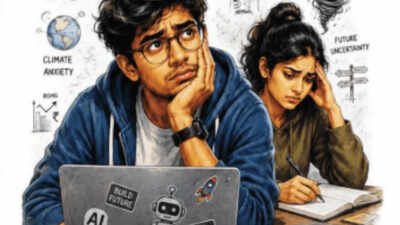
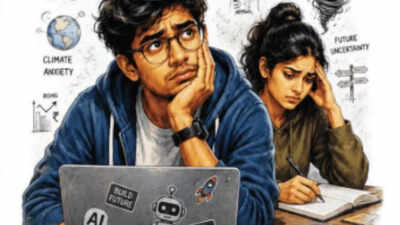
NEW DELHI: FOR this generation, education is a paradox. Good grades alone are no longer enough. Internships, certifications, leadership roles and networking have become essential parts of a competitive profile. The rise of artificial intelligence has added another layer of uncertainty, forcing students to think not only about getting a job but also about staying relevant in a rapidly changing workplace. At the same time, social media fuels constant comparison, while rising living costs, environmental concerns and the pressure to succeed early have made the journey more demanding.Yet, students acknowledge the advantages of growing up in a connected world. A smartphone can unlock lectures from leading universities, global internships and communities built around even the most niche interests. Geography is less of a barrier, career choices are more diverse and learning extends far beyond the classroom.“Technology has made knowledge instantly accessible. Students have far more career choices, professional guidance and op- portunities to learn beyond textbooks. The New Education Policy encourages creativity, critical thinking and practical skills,” said Meenu Kanwar, principal, Amity International School, Mayur Vihar. “At the same time, greater access to information has intensified competition and expectations. Students face rising stress, anxiety and pressure to succeed. The focus must be on holistic development,” she added.Parents, too, see the contradiction. “I remember cycling to the library to find material for school projects. My daughter can access the same information in seconds on her phone. Yet, I don’t think her life is easier,” said Anjali Sahoo, a parent of a teenager. “I only had to focus on marks. She is constantly thinking about internships, courses, entrance exams and future careers.”Ishmeet, a student, says that during her parent’s time, scoring above 60% was considered good. When her elder sister scored 86% in Class XII, it was celebrated. “But when my results came, even 96% felt inadequate unless you were the topper,” she said.STUDENTS SPEAK UP“I feel we have access to far more opportunities than previous generations, but we also face distinct challenges. Technology has made education accessible and opened up new possibilities. However, competition for limited seats in top colleges and desirable jobs has intensified. There is constant pressure to build strong profiles through internships, extracurricular activities and certifications, leaving little time to unwind. The fast-paced nature of life has contributed to rising stress and anxiety. Pollution and extreme weather affect health and routines. – Gursanjan Singh Natt, a second-year student of St Stephen’s College“Knowledge is more accessible than ever through online courses, digital libraries and AI tools. Students can explore diverse career paths, apply for opportunities across the world and connect with mentors and communities beyond their immediate surroundings. Digital platforms have given young people a stronger voice. At the same time, rapid technological change has created uncertainty about whether our skills will remain relevant. Social media fuels comparison, pressure and anxiety, while success requires much more than good grades. – Nishika Sahoo, pursuing economics and English at DU“Stress, anxiety and burnout have become some of the biggest challenges we face. The pressure to succeed is constant. Social media and academic expectations create a culture of continuous comparison. Resources and support systems often struggle to keep pace with a growing student population. We are also dealing with environmental challenges. All these factors make student life far more demanding than it was for previous generations. – Aalim Rehman, bachelor of journalism“Technology has made learning more accessible through online courses and educational resources. Better facilities, greater awareness of mental health and a wider range of career options mean students have more support and flexibility. However, the pressure to succeed has increased significantly. Students are expected to build strong profiles from a young age. Competition for top colleges and careers has intensified, while social media fuels self-doubt. AI can also encourage dependence on shortcuts rather than independent thinking. – Tiya Munjal, Class XI student