






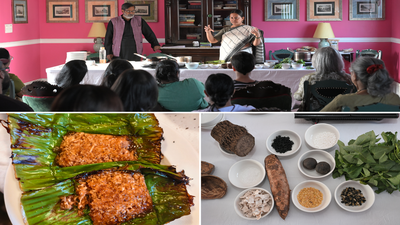
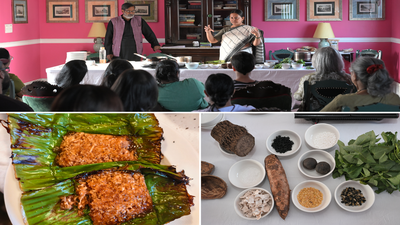
Chef Amrita Bhattacharya’s The Blue Carbon Table residency moved beyond a traditional culinary showcase to present an applied anthropological study of coastal ecosystems. Working alongside Amit Sen, whose research focuses on the “soundscapes” and visual textures of the kitchen, Bhattacharya mapped the restorative potential of mangroves, marshes, and deltas.The experience transitioned from a masterclass on blue carbon theory — explaining how these landscapes sequester carbon more effectively than terrestrial forests—to a sensory ‘Material Showcase’ of foraged and handpicked ingredients. Guests engaged with raw materials like Sting Ray liver, eel, fiddlehead ferns, and nonagire saag before witnessing their transformation into modern, sophisticated plates.The dinner menu served as a technical execution of this research, featuring climate-resilient starches and neglected marine profiles. Notable courses included Nona Chaler Jau (saltwater rice porridge), Lascar’s Crab Haleem spiked with Chui Jhal – which was the star of the table and a Surf & Turf of Sting Ray confit served with a gelatinous aam pora. By weaving the migration of taste with ethical supply chains, the residency demonstrated how moving from extraction to stewardship can be incentivised through the very food we eat.The residency was held at Glenburn Penthouse and curated by Gormei.
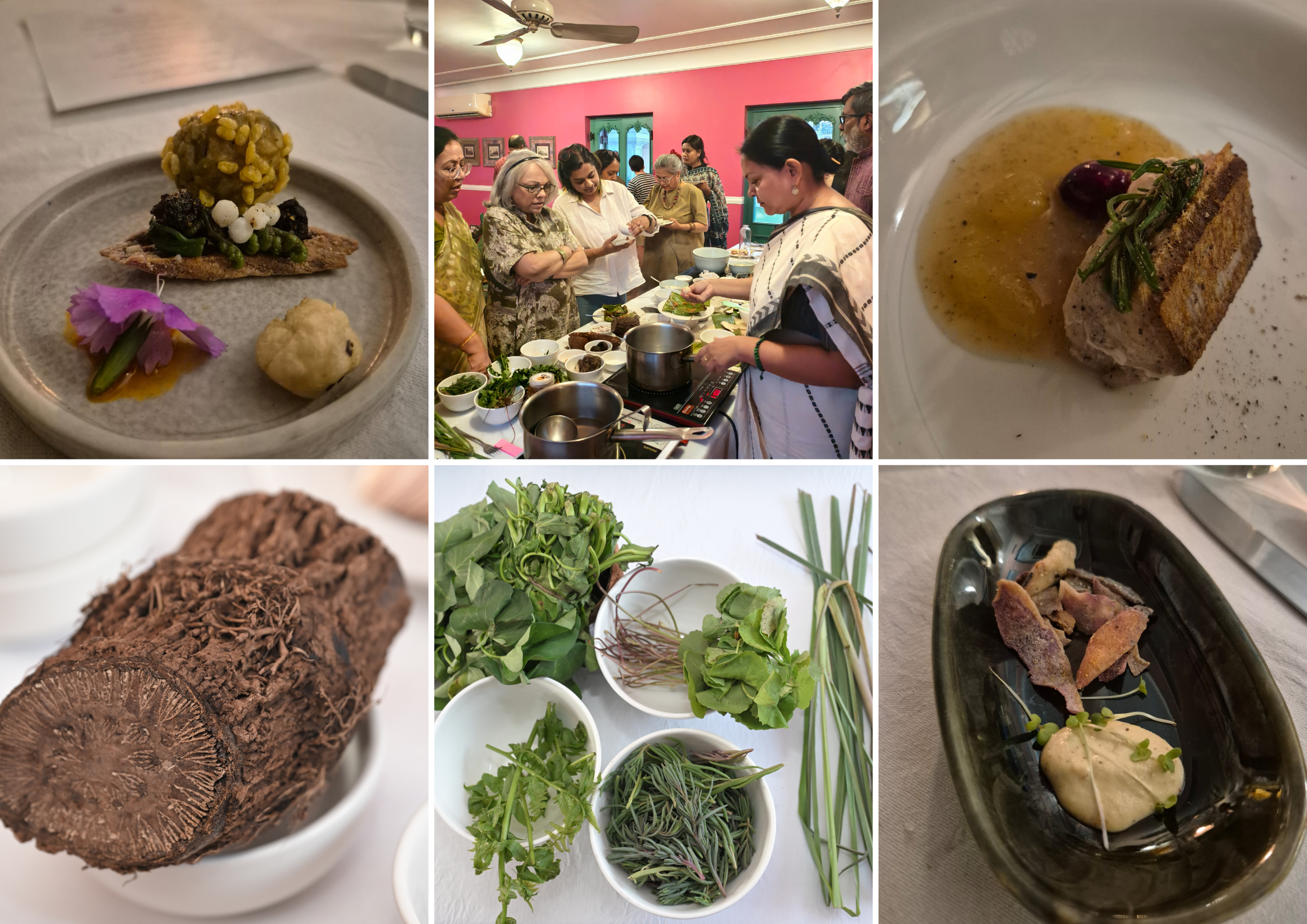
Perfect plating: > Caramelised coconut with toasted sesame seeds served in fragrant rose apple halves> Cui Jhal in Crab Haleem – Chui being the precursor to chillies which travelled to Bengal much later> Coconut ginger ale cocktails – served with slice of gondhoraj, with a fistful of grass recalling the dhani ghaas of Sundarbans and summer bael blooms> Wakame (kale) in an aromatic broth of shrimp paste balls served with kiwi bits