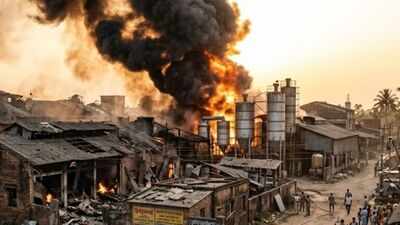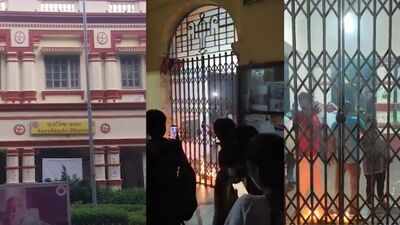








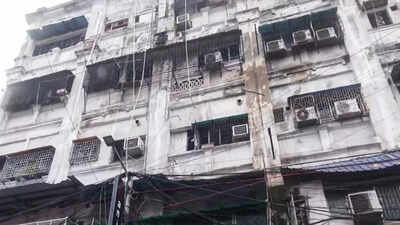
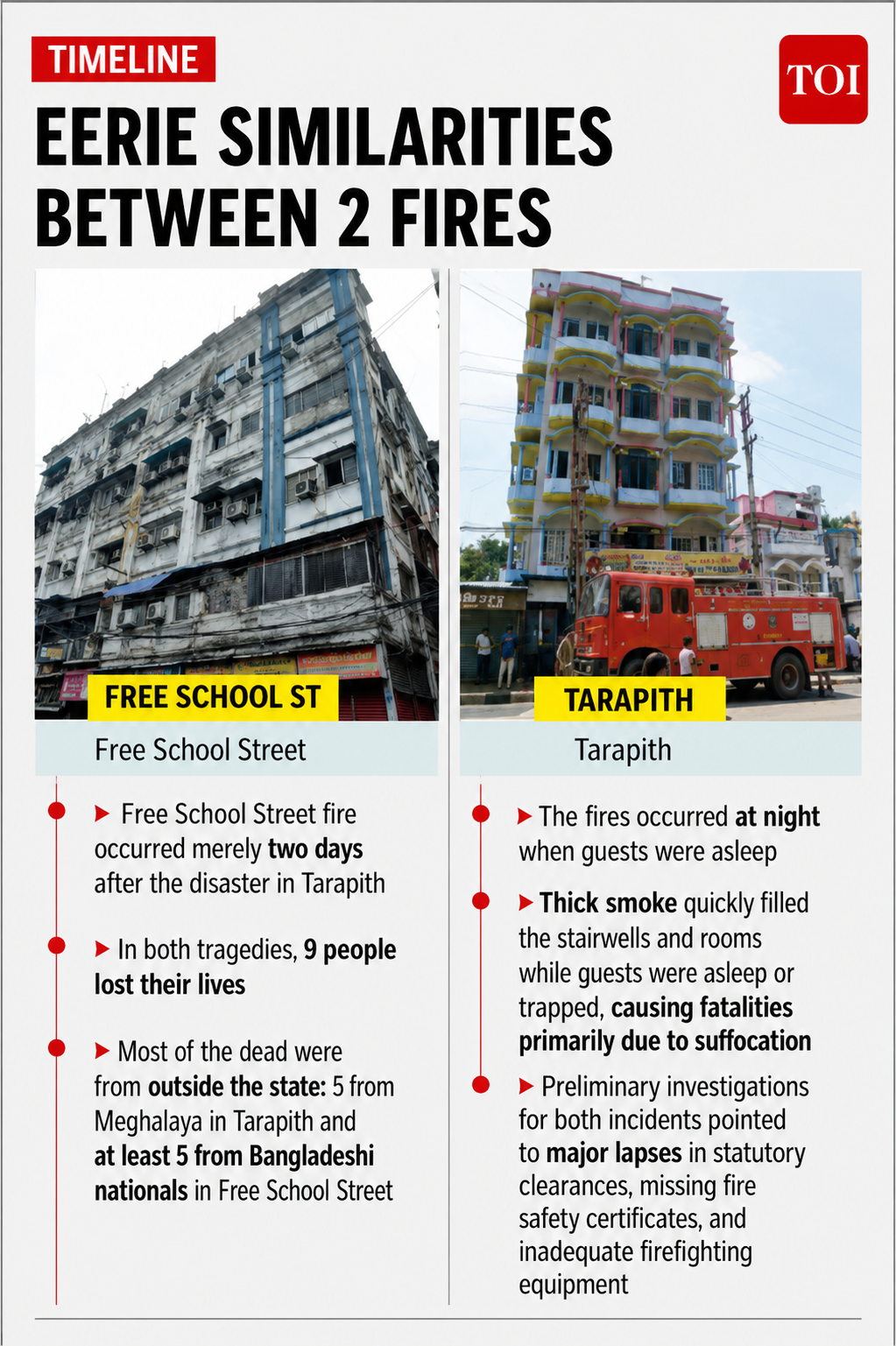
KOLKATA: When Md Ujjal, a 49-year-old trader from Khulna, found himself trapped in smoke during the Free School Street hotel fire, he had nowhere to escape. He spent nearly 40 minutes beside a grill, shouting for help and struggling to breathe as he feared the floor beneath him could collapse.A few floors away, nine people died in their rooms. Five of them were Bangladeshi nationals who had come to Kolkata, including four members of a family from Kushtia who had crossed the border for medical treatment.The tragedy has put the spotlight on the budget hotels in Kolkata’s so-called “Mini Bangladesh” — the Free School Street, Marquis Street, Sudder Street, Collin Street and Rafi Ahmed Kidwai Road belt that attracts large numbers of Bangladeshi visitors, many of them patients seeking treatment.
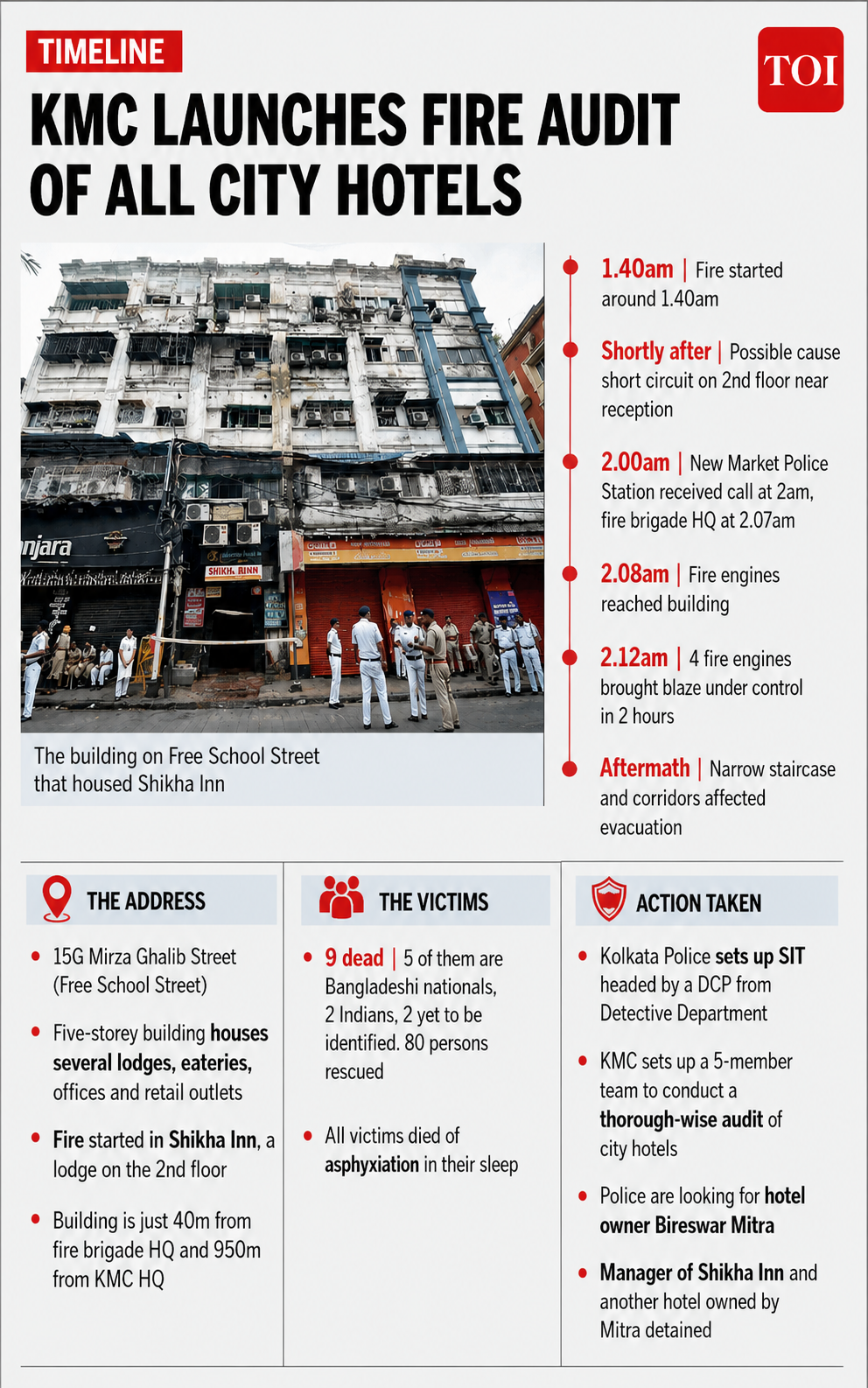
For these patients and their families, proximity to hospitals, affordability and access to a familiar support network often determine where they stay. But survivors and local visitors describe hotels with cramped rooms, narrow corridors, inadequate ventilation, no fire exits, missing alarms and, in some cases, no windows.Debdas Kumar, from Bangladesh’s Baura, was staying with his wife, who is undergoing treatment in Kolkata, at a hotel behind the gutted building.“We are on the second floor and there is no passage for escape if a similar fire happens here. Firefighting equipment, including alarms and extinguishers, are nowhere in sight,” he said.
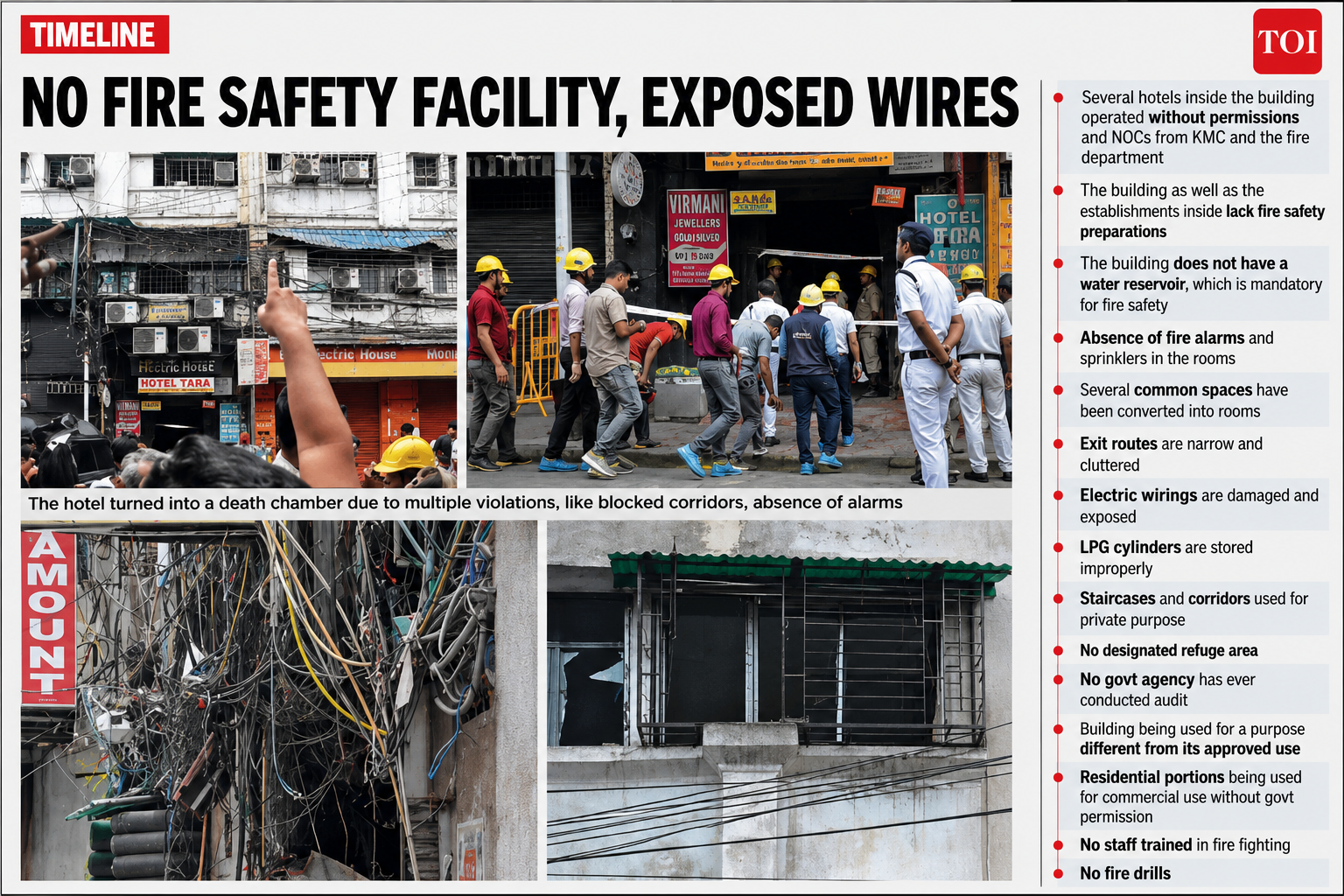
Survivors interviewed after the blaze described a pattern repeating itself across dozens of similar establishments nearby, not just inside Shikha Inn.
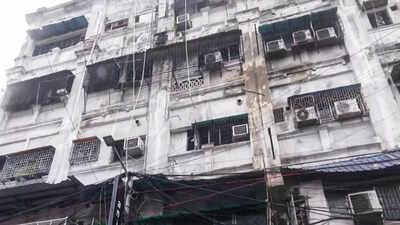
Md Azmul, from Khulna, who was staying at a nearby lodge, said the corridor was so narrow that 10 people could not escape together. The building had only one entrance and a narrow staircase, while ventilation was inadequate.“People will choke to death,” he said.
Why patients choose these hotelsThe concentration of medical visitors in the area is reflected in Kolkata’s hospital data.Desun Hospital recorded a 30-35% increase in Bangladeshi patient footfall at its Kolkata and Siliguri units over four weeks, with most patients seeking cancer and cardiac treatment, according to chairman and managing director Sajal Dutta.At RN Tagore Hospital, Bangladeshi OPD footfall had fallen from around 2,200 patients a month before August 2024 to fewer than 20 a month by the end of 2025. R Venkatesh, COO of Narayana Health (East), which runs the hospital, said arrivals had since risen nearly 20%.Peerless Hospital’s Bangladeshi OPD numbers, which had dropped from around 150 a day to fewer than 10, had recovered to about 60 a day by mid-2026, CEO Sudipta Mitra said. Manipal Hospitals’ regional director for the east, Ayanabh Debgupta, also reported a sharp increase.Ruby General Hospital reported a 30-40% increase over two months, while Charnock Hospital managing director Prashant Sharma said Bengal would continue to remain an important healthcare destination for Bangladeshis.Many patients stay for weeks for treatment, follow-ups and recovery, often accompanied by two or three family members. For those without deep pockets, the hotels around New Market, charging around Rs 500-1,500 a day, are an affordable option close to hospitals and the Bangladesh Assistant High Commission.
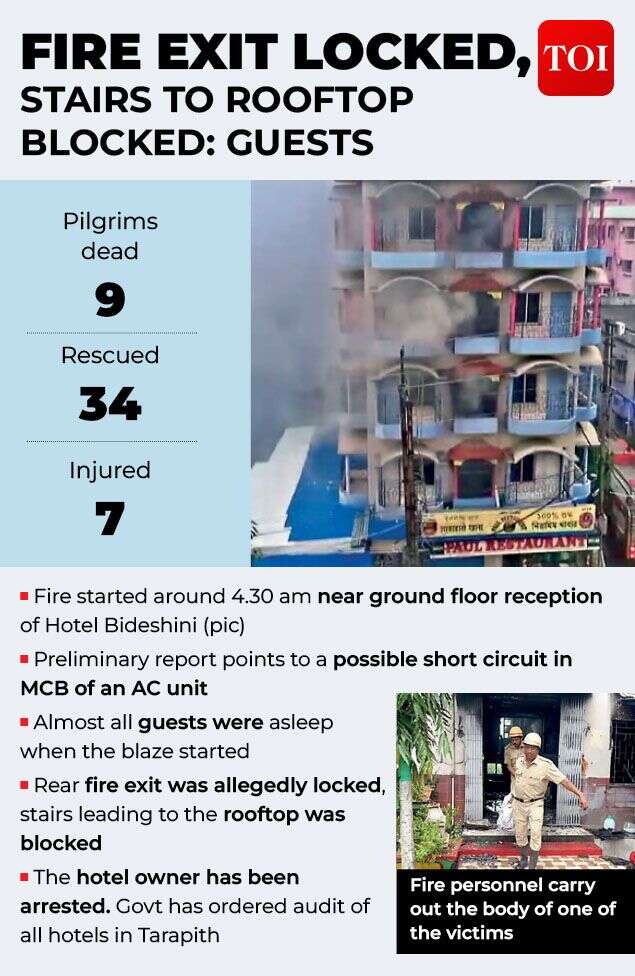
How the hotels maximise roomsThe problem is not confined to Shikha Inn.The five-storey building at 15G Mirza Ghalib Street was originally residential. Over the years, portions were converted into offices and hotel rooms as demand from Bangladeshi visitors and patients increased. Internal partitions were added to create more rooms, narrowing corridors and reducing available escape space.The building remains officially registered as residential with the KMC despite its commercial use. Two offices operated on the same floor alongside four hotels.Fire minister Kaushik Chowdhury said establishments in the building were operating without adequate fire-safety measures or necessary permits. A KMC buildings department official said rooms had been added on the second floor and rented out as guesthouses without informing the department.
KMC officials also acknowledged that Shikha Inn had a valid trade licence, but safety compliance was not verified during its online renewal.Across Free School Street, Marquis Street, Sudder Street, Collin Lane and Rafi Ahmed Kidwai Road, hotel owners estimate that 250-300 hotels, lodges and guest houses operate. Operators have admitted to adding illegal partitions, converting common areas into dormitories and covering terraces to create more rooms during peak periods.Cheap rooms, expensive riskArfin Mian Dipu, who has been visiting Kolkata since the mid-1990s, said the expansion of budget hotels had not been matched by improvements in safety.“Cramped rooms, narrow corridors, and absence of ventilation are regular features,” he said, adding that affordability forces many visitors to compromise on safety.That trade-off is particularly stark for medical visitors, who may spend weeks in Kolkata and often need accommodation close to hospitals.The Free School Street fire therefore exposed a contradiction at the heart of Kolkata’s medical-tourism ecosystem: the city is seeing a renewed flow of Bangladeshi patients, but many of those who can least afford expensive accommodation are staying in hotels where basic fire-safety safeguards may be missing.For families continuing to arrive for treatment, the choice remains between affordability and safety — a calculation that the Free School Street fire has made impossible to ignore.(With inputs from Zeeshan Jawed)