







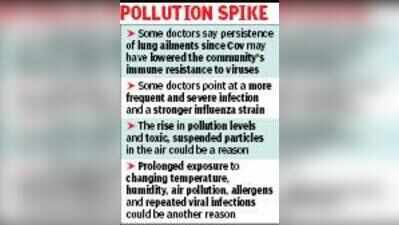
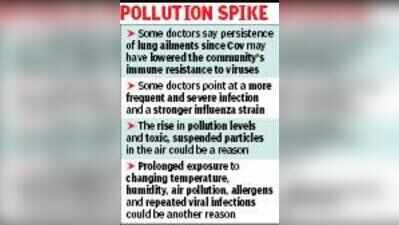
Kolkata: City hospitals saw an unprecedented rise in the number of admissions with lung diseases this year, around 6%-10% more than last year, which was an alarming spike, said pulmonologists on World Lung Day on Friday.The figure points at a rising severity and persistence of lung ailments since Covid, which might have lowered the community’s immune resistance to viruses, they pointed out. The flow of patients had not dipped since June, hospitals said.A large proportion of patients, who had minimal and very intermittent bronchospastic symptoms, had turned full-blown asthmatics, said Sujan Bardhan, consultant pulmonologist, Narayana RN Tagore Hospital. “Post-Covid, viral infections have become florid, frequent and more severe. It is likely that there has been a down regulation of the immune status and possibly new mutations in the genetic structure of viruses. There has been a significant increase in admissions with lung infections compared to that previous years, with approximately a 6%–7% increase,” said Bardhan.At Charnock Hospital, the flow of lung patients hasn’t dipped since June, when an influenza outbreak started. It now has 15 patients admitted, including several in the ICU. “There has been an 8%-10% rise in lung diseases admissions since last year. Also, the ailments have been significantly more severe than previous years. For a larger number of patients, across age groups, influenza and cough and cold infections have more frequently turned into severe pneumonia, requiring oxygen support and ICU care. Around 80% severe patients have died, which, too, wasn’t the case till last year,” said Soumya Sengupta, pulmonology head at Charnock.But he dismissed the suggestion that lung infections turned severe due to a post-Covid drop in immunity. “It could be due to more severe influenza strains that have been dominant post-Covid. In fact, Covid has helped raise awareness about influenza vaccines. We have saved many vaccinated patients who had a milder disease,” added Sengupta.At CMRI, the number of lung disease patients has increased by 25% from last year. “Influenza and other viruses during a protracted rainy season have contributed to this. These infections are now more transmissible and are spreading faster and affecting more people. Our pulmonology ICUs have consistently remained full. I recommend use of masks, hand hygiene and vaccination, while the elderly with lung ailment history need to be extra cautious,” said CMRI pulmonology director Raja Dhar.A significant proportion of these patients have a history of Covid or a similar prolonged respiratory illness during that period, according to Abhishek Kolay, pulmonologist at BP Poddar Hospital. The hospital’s chest clinic OPD has recorded an almost 20% rise in patient load over last year and a similar trend in admissions. “While the present rise cannot be directly attributed to Covid, previous respiratory infections may have led to more sensitive or vulnerable airways in some, making them more prone to repeated flare-ups under environmental conditions. Respiratory cases have remained high from summer into the monsoon, with patients presenting persistent cough, wheezing and acute flare-ups of asthma and COPD. This year’s caseload has been noticeably higher than the average patient influx earlier,” added Kolay.“Florid viral infections, especially Influenza A, have seen a sharp spike since last year, with a major chunk of the elderly and immunosuppressed population developing severe Type 1 respiratory failure, requiring invasive and non-invasive ventilatory support,” said Bardhan.“What stands out this year is that the rise in respiratory cases has not been limited to a short seasonal peak. From summer through the monsoon, we have continued to see a steady flow of patients in OPD as well as IPD,” said BP Poddar Group adviser Supriyo Chakrabarty.