










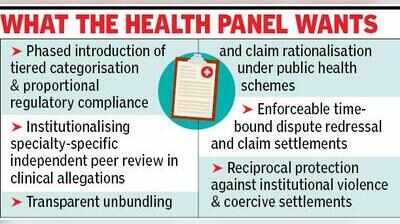
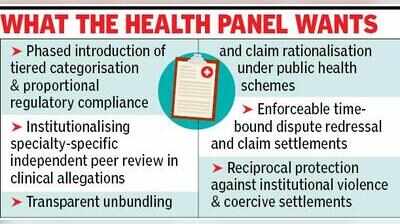
Kolkata: On Monday, representatives of small and medium clinical establishments from across Bengal submitted a detailed strategic representation to West Bengal Clinical Establishment Regulatory Commission (WBCERC), outlining a multi-tiered proposal in what they called an initiative aimed at building an ethical, transparent, and patient-centric healthcare ecosystem across the state.Addressing the growing administrative and financial pressures faced by primary and secondary care facilities, healthcare providers urged the commission to adopt a tiered regulatory compliance framework. The deputation submitted to the chairman and members of WBCERC by Association of Private Hospitals and Nursing Homes (APHNH) highlights that applying uniform mandates to both large tertiary corporate hospitals and standalone rural nursing homes imperils smaller establishments. Instead, it proposes a phased classification separating tertiary corporate institutions (Tier 1), secondary multi-specialty centres (Tier 2), and basic surgical or maternity units (Tier 3).The submission focuses on clinical accountability and medico-legal protection. Citing Supreme Court verdicts, the representatives requested that all technical clinical negligence allegations be evaluated by an independent Peer Review Committee composed of active practising specialists before any prima facie findings or interim penalties are issued.To address working capital crises and operational sustainability, the representation calls for critical reforms in public health schemes such as Swasthya Sathi and AB-PMJAY. Proposed measures include unbundling complex care packages to reimburse pre-existing comorbidities, unanticipated surgical complications, and life-support interventions like dialysis or mechanical ventilation. Additionally, healthcare providers advocated for a mandatory 30-day statutory settlement window for undisputed scheme claims alongside a monthly tripartite dispute resolution mechanism involving state health authorities, insurers, and hospital representatives.The submission also addresses supply chain integrity and pharmacy regulations. Providers emphasised maintaining a closed chain of custody for high-risk consumables—such as intravenous fluids, blood products, cold-chain biologics, and implants—to guarantee sterility and batch traceability. Where families opt to procure routine oral medications externally, the submission requests formal authorisation for informed written waivers exempting hospitals from liability arising from external procurement.Highlighting workplace safety, the organisation urged WBCERC to reinforce zero-tolerance policies against vandalism and violence under West Bengal Medicare Service Persons and Medicare Service Institutions (Prevention of Violence and Damage to Property) Act, directing all aggrieved parties toward formal statutory dispute channels.Finally, the submission highlights the achievements of over 350 NABH-accredited facilities in the state, calling for streamlined licensing incentives, joint district inspection teams featuring association representation, and strict bans on unauthorised non-regulatory personnel or videographers during hospital visits to protect patient privacy.