










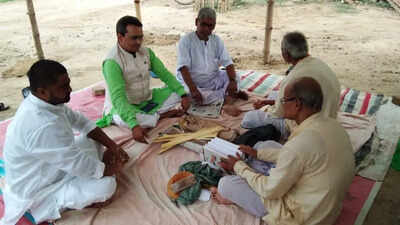
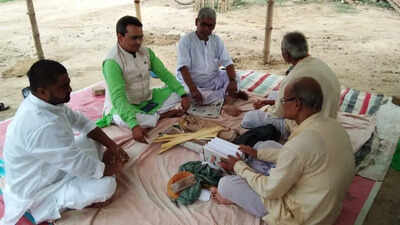
Patna: The once-celebrated Saurath Sabha — also known as Sabha Gachhi — in Madhubani district of Bihar now stands as a poignant reminder of a fading cultural institution. This 700-year-old traditional marriage gathering of Mithila, once vibrant and teeming with purpose, is witnessing a sharp decline in both relevance and participation. What was historically regarded as a ‘groom market’, drawing thousands from across the country to align family lineages, has now reportedly been reduced to a largely symbolic exercise, diminished by growing indifference.Situated in Surath village, about 6km northeast of Madhubani, the Sabha is held annually during June-July in a sprawling 22-acre mango orchard known as ‘Sabha Gachhi’. Within its shaded expanse, marriages were traditionally arranged through meticulous consultation of genealogical records, known as Panji. The presence of an old Shiva temple within the premises lends the gathering a quiet spiritual gravitas, reinforcing its deep-rooted cultural significance.At the heart of this unique institution lies the role of Panjikars — hereditary genealogists who authenticate family lineages using ancient records. Their task is both precise and profound: to ensure that there is no blood relation between the families of prospective couples up to seven generations. Patna University ancient history department’s former head Jayadeo Mishra said the Panji system is deeply rooted in a scientific understanding of genetics. Avoiding marriage within the same lineage reduces the risk of inbreeding; otherwise there are risks of genetic disorders, weakened immunity and developmental problems in children, he said. When marriages are solemnised between unrelated lineages, they promote genetic diversity and healthier future generations, he added.Yet, this centuries-old system, once a cornerstone of social organisation in Mithila, now finds itself outpaced by the rhythms of modern life. Initiated during the reign of King Harisingh Deva (1310-1324) of the Karnat dynasty, the Sabha has gradually fallen victim to the forces of modernisation. Indian National Trust for Art and Cultural Heritage (Intach) state convener Bhairab Lal Das said the advent of social media, dating apps, and contemporary arranged marriage practices has allowed families to identify suitable matches without travelling to a centralised, open-air venue, thereby diminishing the Sabha’s necessity.Das said families today place greater emphasis on personal attributes such as education, employment, and individual compatibility, often sidelining traditional lineage verification. Many are also reluctant to negotiate marriages in the informal setting of an orchard. As a result, the Sabha continues to exist, but on a much smaller and quieter scale.Concerns extend beyond participation to the preservation of the very records that underpin this tradition. Pandit Jata Shankar Jha of Samastipur said many genealogical documents are still preserved on fragile palm leaves and ageing paper, making them highly susceptible to damage from moisture, insects, and the wear of time. In the absence of systematic digitisation and archival preservation, centuries of ancestral knowledge face the risk of irreversible loss. There is an urgent need to digitise these records to safeguard Mithila’s cultural heritage, he said.