









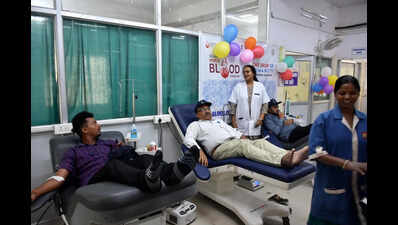
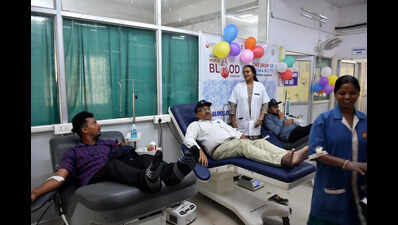
Ranchi: Nagma Khatun (name changed), whose two children suffer from thalassaemia, needing at least four blood transfusions a month, often visits several blood banks with her husband, a daily wager, to arrange units, sometimes paying hefty amounts.Activists on World Blood Donor Day on Sunday claimed families like hers are running from pillar to post to arrange blood allegedly due to inadequate hospital-led donation drives and awareness campaigns. They claimed that many govt and private hospitals do not organise periodic blood donation camps, leaving patients dependent on replacement donors.“Jharkhand high court in Dec last year directed state govt to ensure that blood is given to patients without the need to be replaced by a donor. But it is a prevalent practice at most blood banks across the state, causing harassment to patients and their relatives and jeopardising lives,” Atul Gera, founder of Life Savers Ranchi, a voluntary organisation that advocates for health rights, said.He said replacement donation allows unsafe blood to enter the system as donors may hide medical history for money. “The National Blood Policy mandates organising voluntary blood donation camps by the hospitals, but that is hardly done in the state,” Gera said.Nadim Khan, founder of Lahu Bolega, an organisation working for thalassemia patients, said, “The state needs around 10 lakh blood units every year. But less than half of that can be arranged. Out of that, voluntary blood donation accounts for a meagre 15%, while the rest is collected through the replacement method. The govt must hold more blood donation camps so that people’s lives can be saved.”Khan said O- and AB- blood were scarcely available for three months at Ranchi Sadar Hospital, Rajendra Institute of Medical Sciences (Rims) and Red Cross, while AB+ and O+ are also hard to source.The health department is considering hiring a private agency to conduct donation camps and submit collected units to blood banks. Additional chief secretary Ajoy Kumar Singh said manpower shortage prevented govt blood banks from holding frequent camps. “Blood collection is only possible through voluntary donation and camps. The agency will do this work for the department so that availability of units can always be ensured at blood banks,” he added.“The idea of engaging a private agency is welcome, but the process is moving too slowly. Immediate interventions are needed to prevent deaths due to blood shortage,” Gera said.