







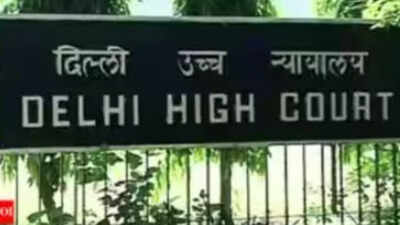
NEW DELHI: The Delhi high court has granted bail to Mohd Shahzad Kamal, an accused in a 2018 terror conspiracy case, noting that he has spent more than five years in custody and that the trial involving 161 prosecution witnesses is unlikely to conclude anytime soon.A division bench of Justices Navin Chawla and Arun Bhardwaj set aside the May 29, 2024 order of the Special NIA Court, which had rejected Kamal’s bail plea.The court clarified that its observations were limited to deciding the bail application and would not affect the trial on merits, news agency ANI reported.Kamal has been in custody since August 31, 2021, and is accused in a case relating to alleged activities of Harkat-Ul-Harb-E-Islam, which the prosecution describes as an ISIS-affiliated terrorist group.The NIA has alleged that he was involved in the conspiracy and arranged funds for terrorist activities. He has been charged under Section 121 of the IPC and Sections 17, 18, 39 and 40 of the UAPA.The prosecution case is based, among other things, on Facebook and WhatsApp chats, an alleged disclosure by co-accused Mohammad Absar, recovery of Rs 30,000 and statements of prosecution witnesses.The NIA has alleged that Kamal provided funds to the group on several occasions and was in communication with other accused persons, ANI reported.Kamal’s lawyers argued that he had already spent about five years in custody and that only the evidence of PW-42 was being recorded out of 161 witnesses cited by the prosecution.They also questioned the prosecution’s claim linking him to certain chats and argued that there was no material establishing that the phone number involved in those conversations belonged to him.The NIA opposed the bail plea, arguing that Kamal had played an active role in the alleged conspiracy and that delay in the trial, by itself, could not be a ground for granting bail in a case under the UAPA.The prosecution also argued that the court should not examine evidence recorded after the Special Court had rejected his bail plea.The high court noted that Kamal had remained in custody for more than five years and that only one of the 161 prosecution witnesses was under examination.It also noted that some co-accused, including the accused with whom Kamal was alleged to have exchanged chats, had already been granted bail, ANI reported.The Bench observed that, at this stage, there was no positive evidence showing that the alleged incriminating chats had originated from Kamal or were addressed to him. It said the issue would ultimately have to be decided after the prosecution led its complete evidence.The Bench also examined statements of material witnesses who had already been examined during the trial.Without detailing their evidence so as not to affect the trial, the court said it did not find the case to be one where the accused should continue to remain in custody when the trial was unlikely to conclude soon.On prolonged incarceration in UAPA cases, the high court relied upon Supreme Court decisions recognising that the right to a speedy trial is part of the constitutional guarantee under Article 21.At the same time, the court noted that delay cannot automatically result in bail and that the nature of allegations, the accused’s role, the stage of trial and other relevant circumstances have to be considered.The high court further held that merely because the Supreme Court has referred the issue concerning the interplay between Article 21 and Section 43D(5) of the UAPA to a larger Bench, it would not prevent the High Court from deciding the present case on the basis of the law currently binding on it.The Bench accordingly set aside the Special Court’s order and directed Kamal’s release on bail.It imposed several conditions, including a personal bond of Rs 50,000 with two sureties, surrender of his passport, a restriction on leaving the country and his native Hapur district, regular appearance before the trial court and fortnightly reporting to the concerned NIA office.He has also been barred from contacting or influencing prosecution witnesses, tampering with evidence, making public statements on the merits of the case or circulating material that could prejudice public order or the integrity of the trial.The court said the prosecution would be free to seek cancellation of bail if any of the conditions are breached.(With agency inputs)