








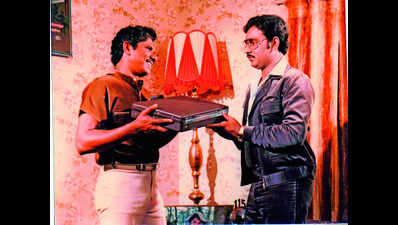
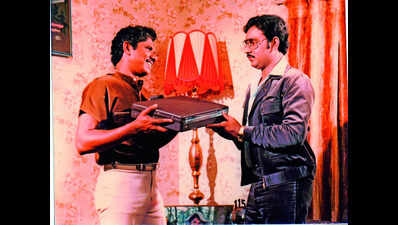
When people speak about Bharathiraja’s legacy, the conversation often begins with the actors he introduced and the heroines he transformed into stars. But perhaps, his greatest contribution to Tamil cinema lies behind the camera.For nearly five decades, Bharathiraja’s sets functioned as an informal film institute, producing a generation of assistant directors who would go on to become some of Tamil cinema’s most influential filmmakers. Long before film schools became de rigueur, aspiring storytellers learned the craft by quietly observing the director who brought rural Tamil Nadu to the big screen.The first among them was K Bhagyaraj. Starting as an assistant and writer under Bharathiraja, Bhagyaraj absorbed the importance of character-driven storytelling before developing a unique style of his own. He would later become one of Tamil cinema’s most successful writer-directors, creating a genre of middle-class family entertainers that bore little resemblance to his mentor’s rural dramas, yet carried the same emphasis on relatable characters.If Bhagyaraj represented commercial success, Manivannan embodied versatility. Beginning as Bharathiraja’s assistant and collaborator, he evolved into a director of politically charged films, packed with social satire and sharp screenwriting. His career demonstrated how Bharathiraja’s assistants were encouraged to go beyond imitation, and discover their own voice.Another prominent passout of the Bharathiraja school was Manobala. Beginning as an apprentice under the acclaimed filmmaker, Manobala eventually had a long career as a director, producer and actor. Though audiences today remember him largely for his comic roles, his grounding came from Bharathiraja’s rigorous training.The influence continued into the next generation. Directors such as R V Udayakumar carried forward Bharathiraja’s fascination with rural landscapes and native culture. Films like Chinna Gounder and Ejamaan reflected a storytelling tradition that celebrated village life while adapting it to changing audience tastes.Then came Seeman, whose association with Bharathiraja transcended cinema, tapping into ideology and culture. Like many of his contemporaries, Seeman often acknowledged the director’s role in shaping his understanding of storytelling and Tamil identity.Bharathiraja’s mentorship was unique in that he never created clones. Unlike many filmmaking schools where assistants replicate the master’s style, Bharathiraja’s protégés branched out in dramatically different directions. Some turned out to be commercial entertainers. Others specialised in political commentary, social critique or family drama. Yet, they shared a common foundation — an understanding that stories must emerge from lived experience and authentic characters.Former assistants often recall that Bharathiraja’s film sets were demanding classrooms. Every frame, location and performance would be dissected endlessly. The lessons extended beyond camera angles and screenplay structure. They involved understanding people, observing rural life and finding drama in everyday emotions.In many ways, Bharathiraja democratized filmmaking just as he did stardom. He proved that great directors need not come from filmy or urban families. Passion, a sense of observation, and perseverance mattered more than pedigree.Today, when Tamil cinema celebrates auteurs and distinctive voices, Bharathiraja’s influence can be seen in generations of filmmakers. His films changed the grammar of Tamil cinema, but his assistants ensured his impact would continue long after the credits rolled.The heroes and heroines he introduced became stars. The assistant directors he trained became institutions. Together, they form the enduring legacy of a filmmaker who was not merely a director, but a school in himself.