









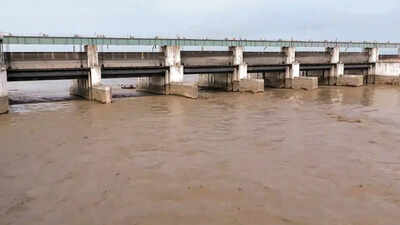
PATNA: On the other side of the India-Nepal border, the Gandak was turning into a force of destruction. Floodwaters surged through Nepal after days of intense rain and flash flooding, swelling the river system that carries water towards Bihar.Then came the test for a piece of infrastructure built decades ago: The Valmikinagar Gandak Barrage.By Wednesday night, the barrage was handling an extraordinary surge. Its 36 gates were opened as water flowing down from Nepal pushed the Gandak’s discharge to around 1.5 lakh cusecs. Yet, by the following morning, the flow had begun to fall and Bihar’s embankments had held, easing fears of a devastating inundation across several north Bihar districts.More than 4,000 people were evacuated as a precaution as authorities prepared for the worst. But the feared catastrophe did not unfold on the scale initially feared.The barrage, together with Bihar’s network of embankments and round-the-clock monitoring, became a critical line of defence as the flood pulse moved downstream.
![West Champaran [Bihar], Aug 28 (ANI): Water level of the Gandak Barrage on the I...](https://static.toiimg.com/photo/imgsize-70122,msid-133647575/west-champaran-bihar-aug-28-ani-water-level-of-the-gandak-barrage-on-the-i.jpg "Water level of the Gandak Barrage on the India-Nepal border continues to fluctuate following the flood situation in Nepal at Valmiki Nagar, in West Champaran on Friday. (ANI Video Grab)")
Water level of the Gandak Barrage on the India-Nepal border continues to fluctuate following the flood situation in Nepal at Valmiki Nagar, in West Champaran on Friday. (ANI Video Grab)
A river that once brought both life and destruction
The Gandak was never simply an irrigation river. For generations, its floods brought devastation to communities along its course.When India and Nepal signed the Gandak Irrigation and Power Project agreement in Kathmandu on December 4, 1959, the plan was explicitly built around controlling the river and using its waters for irrigation and power. The agreement provided for a barrage, canal head regulators and associated works, with India undertaking construction of the structures in Nepal’s territory.The project’s logic was simple: Instead of allowing the Gandak to periodically turn into a destructive force, regulate its waters and put them to productive use.When Jawaharlal Nehru inaugurated the Gandak-Barrage Project at Bhainsalotan on May 4, 1964, he spoke of precisely that challenge. The Gandak and Kosi, he noted, had benefited the region but had also caused enormous damage, with floods inundating entire villages. The aim of the new barrage was to ensure that the rivers brought benefits without causing the same destruction.The project was designed as much as a symbol of India-Nepal cooperation as a piece of hydraulic engineering.Under the 1959 agreement, India was to construct irrigation canals for Nepal, including the Western Nepal Canal and Eastern Nepal Canal, while also developing a power house in Nepal. The agreement envisaged irrigation benefits across Nepal as well as the Indian states of Bihar and Uttar Pradesh.
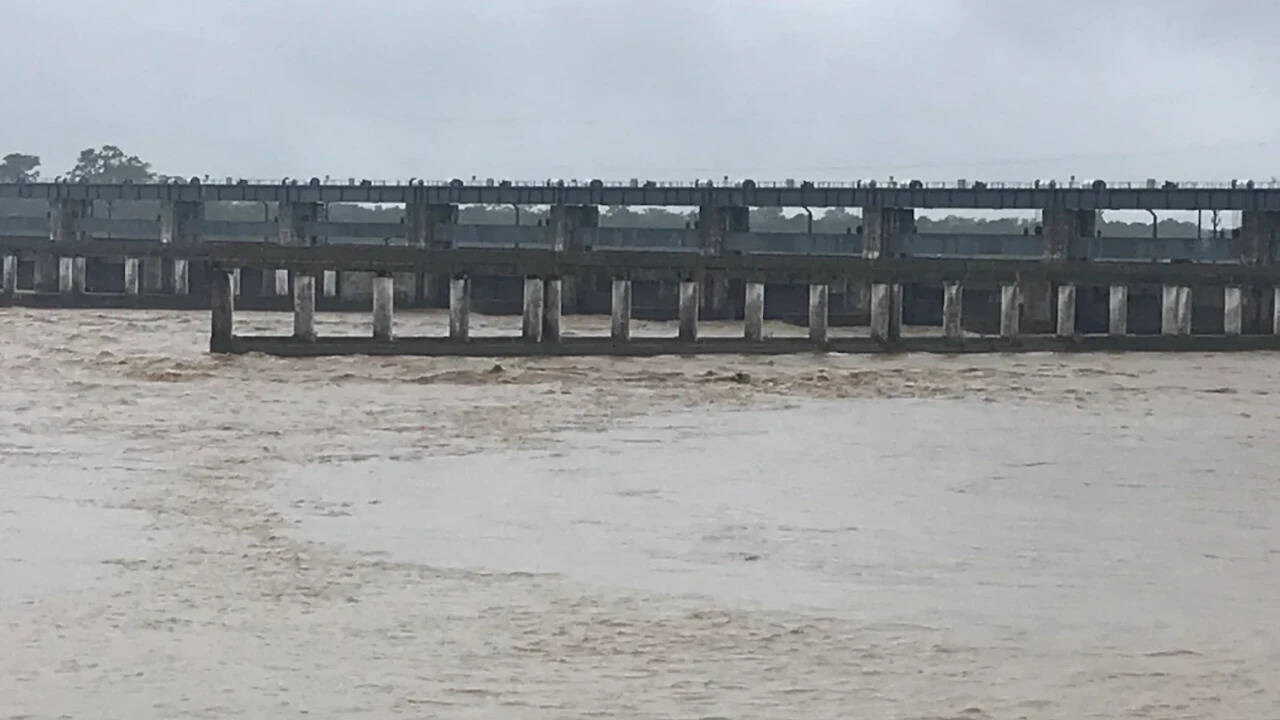
Gandak barrage
Six decades later, the river came calling again
The latest flood episode showed why such infrastructure remains crucial.After severe flooding in Nepal, water entered the Gandak system and rapidly raised the threat level in Bihar. All 36 gates of the Valmikinagar Gandak Barrage were opened to regulate the flow. The discharge reached roughly 1.50 lakh cusecs before beginning to recede.The Valmikinagar Gandak Barrage has a designed discharge capacity of up to 8 lakh cusecs. Despite the substantial capacity available, the Gandak Barrage Control Room adopted a calibrated and technically managed release strategy, regulating the discharge in controlled increments in response to changing inflows.This measured approach helped moderate the downstream flood pulse and gave authorities additional time to monitor vulnerable embankments and undertake precautionary evacuations.Eight districts in Bihar were kept on alert, with officials maintaining surveillance of vulnerable embankments. More than 5,000 people were shifted from low-lying areas as a precaution in the initial phase.
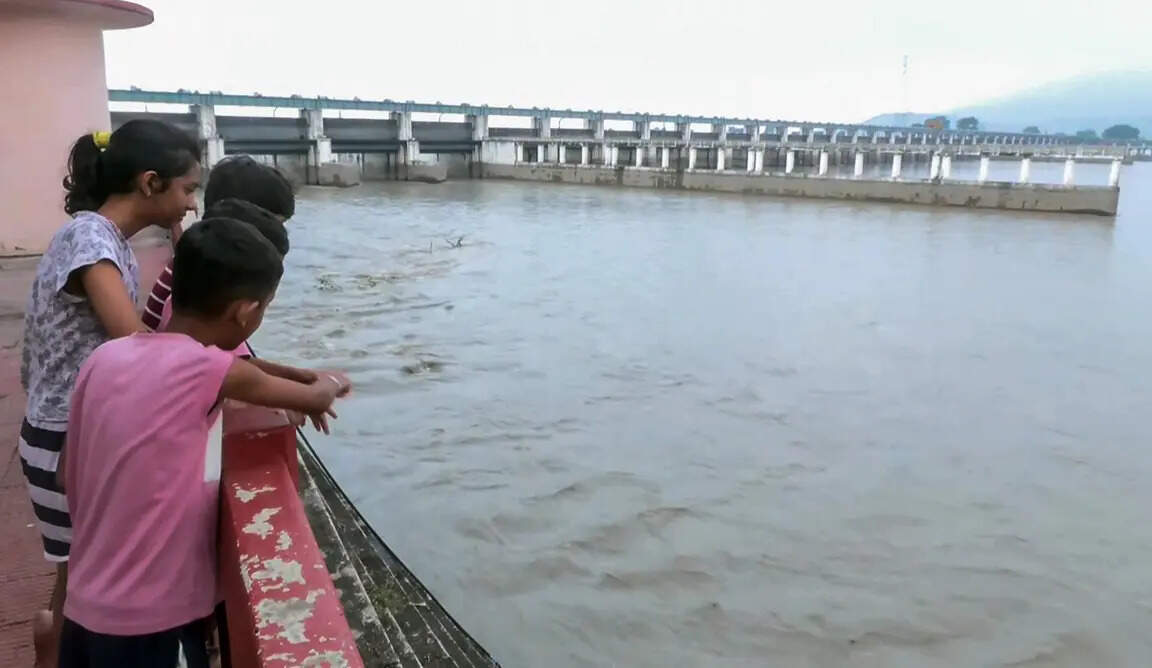
Children at the Gandak Barrage look at the water spate of the Gandak River as water levels of the river continue to fluctuate due to the flood situation in Nepal, in West Champaran on Saturday.
The crucial point was not that the barrage magically stopped the floodwater. It could not. The water still had to pass downstream.Its importance lay in regulation — giving authorities a massive control point through which the incoming surge could be managed rather than allowing an uncontrolled wall of water to move downstream.
An old agreement, a modern flood challenge
The 1959 agreement anticipated precisely the need for cooperation over a river that does not recognise political boundaries.It gave India the authority to execute and maintain project works while preserving Nepal’s sovereignty over its territory. It also established arrangements for irrigation, power generation, water withdrawals and sharing shortages.Today, the same cross-border geography makes flood management increasingly complicated.The latest disaster in Nepal sent a surge through the Gandak system, while Bihar had to prepare for the consequences downstream. On August 27, the discharge at Valmikinagar peaked at about 1.50 lakh cusecs before declining. By August 28, the flood threat had receded as the flow fell, with officials saying the situation was under control.The episode is therefore less a story about an old barrage defeating a flood and more a story about infrastructure buying time.Time to open gates.Time to monitor embankments.Time to evacuate villages.Time for the surge to pass.And, ultimately, time for Bihar to avoid the kind of river-driven disaster that once repeatedly ravaged entire settlements.
‘They only benefit and not cause damage’
When Jawaharlal Nehru attended the inauguration of the Gandak-Barrage Project at Bhainsalotan on May 4, 1964, he captured the paradox that had defined the Gandak and Kosi for generations.“These two rivers, the Kosi and the Gandak, have benefited us greatly and at the same time harmed us a great deal too,” Nehru said.“Floods have ravaged the surrounding areas inundating entire villages. Now we want to make arrangements to see that they only benefit and not cause damage.”That, in essence, was the philosophy behind the Gandak project.Nehru explained that the barrage would regulate the river’s waters and channel them through canals to agricultural fields. “So, a barrage will be built to dam the waters which will then be supplied through canals to fields all over Bihar, Uttar Pradesh and Nepal on the other side,” he said.The project, he added, was not just about controlling water. It was also about transforming the river into an engine of development through irrigation and electricity.“Apart from supplying water for irrigation this river valley project will generate electricity which is a symbol of the new age,” Nehru said.He also described the project as a symbol of cooperation between the two neighbours, saying: “Both Nepal and India stand to gain.”“That is why I am very happy that this auspicious task is being inaugurated by the King of Nepal. It becomes a symbol of Indo-Nepalese cooperation by which both countries stand to gain.”More than six decades later, those words have acquired an unexpected contemporary relevance.The barrage built to ensure that the Gandak’s waters would “only benefit and not cause damage” found itself once again at the centre of Bihar’s response when floodwaters came rushing downstream from a disaster-ravaged Nepal.
The scale of the disaster upstream
The latest episode also underscored just how severe the situation was on the other side of the border.As flash floods swept through Nepal, rescue teams led by Nepal Army personnel intensified operations to locate hundreds of people missing from flood-hit hydropower projects. At Upper Trishuli-3A, rescuers located the crown head of a tunnel and began widening an opening to send personnel inside with oxygen cylinders.The Independent Power Producers’ Association Nepal said 537 workers and staff were unaccounted for across nine projects, while Nepal’s disaster management authority, NDRRMA, put the number of missing hydropower workers at 933.By Sunday, the death toll had risen to 810 — 794 in Nepal and 16 reported in Tibet — while 3,048 people were missing across the two countries. NDRRMA listed 2,502 people missing and Tibet another 546.The disaster also had a significant Indian dimension. The Ministry of External Affairs said 149 Indian nationals had been rescued in Nepal. Its latest missing-person tally listed 275 Indian nationals as missing and another 128 people of Indian origin as uncontactable.Against that backdrop, the surge in the Gandak was more than another rise in a river level. It was the downstream consequence of a disaster unfolding across the border.And when the Gandak rose, the decades-old India-Nepal project once again found itself at the centre of Bihar’s fight against the water.The river still flowed. The floodwaters still came.But the barrage bought Bihar something invaluable in a flood emergency — time.