


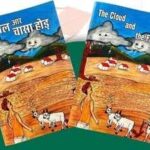



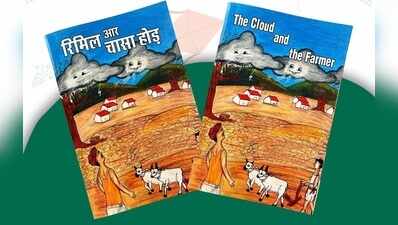
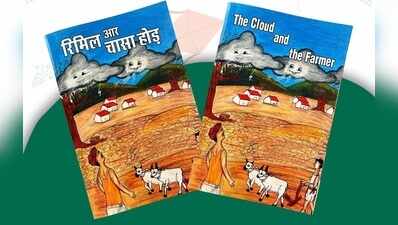
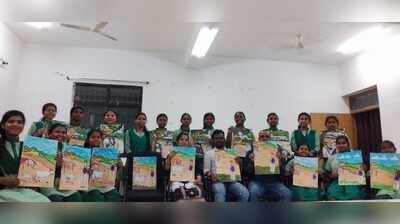
Ranchi: A Santhali language storybook created entirely by students of Jharkhand’s Kasturba Gandhi Balika Vidyalaya (KGBV) has been selected for the IBBY-UNESCO collection of remarkable books for young readers in indigenous and endangered languages.Curated jointly by UNESCO and the International Board on Books for Young People (IBBY), the global collection showcases nearly 170 books representing over 150 indigenous and endangered languages from around the world.Avinav Kumar, State Programme Officer for Quality Education at JEPC said, “This achievement is a celebration of Jharkhand’s young storytellers—showing that language revitalisation begins when children have the opportunity and confidence to tell their own stories in their own languages.”Titled “Rimil Aar Chasha Hodo” (The Cloud and The Farmer), the book highlights the unwavering resilience and grit of a local farmer navigating a drought in his village. The entire narrative and visual design were conceptualised by young students from KGBV Kanke and Potka, with the primary goal of helping children in classes 1 to 5 learn in their mother tongue.The book forms a key component of the Promotion of Appropriate Language and Academic Skills for Holistic Education (PALASH) programme. Implemented by the Jharkhand Education Project Council (JEPC), the initiative receives technical support from the Delhi-based organisation Language and Learning Foundation (LLF). Currently active across more than 1,000 schools in eight districts of the state, PALASH provides primary education to children in local tribal languages and mother tongues, aligning directly with the objectives of the National Education Policy.Developing storybooks in tribal languages is one of nine distinct study materials deployed under the PALASH framework. As a part of the programme, 20 students from KGBV Potka and KGBV Kanke gathered to author and illustrate 75 books across five tribal languages: Ho, Mundari, Santhali, Khariya, and Kudukh. The selected title was one of these 75 books created.“Seeing children from Jharkhand take their own stories and languages to a prestigious global platform like the IBBY-UNESCO collection is a truly proud moment. This recognition reflects what becomes possible when children are encouraged to read, write and express themselves in their mother tongue. Beyond strengthening foundational learning, it gives children a sense of identity and helps preserve the rich linguistic and cultural heritage of Jharkhand for future generations,” said Pallavi Sha, state manager at LLF.