










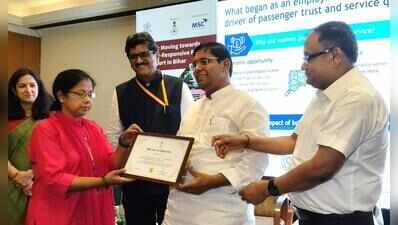
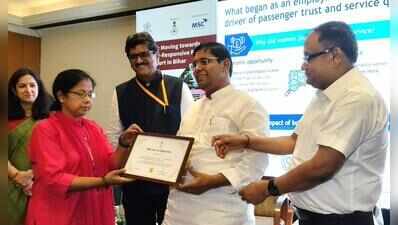
Patna: Bihar’s pink bus initiative has improved women’s sense of safety and confidence while travelling with 93% of surveyed women saying safety was the main reason they chose the service. An impact assessment covering Patna, Muzaffarpur and Gaya found that the buses received an average safety rating of 4.6 out of 5, while 56% of women said they felt more confident travelling independently after the service was introduced.Transport minister Damodar Rawat said the initiative reflected the govt’s commitment to an inclusive and gender-responsive public transport system. “The pink bus initiative embodies this commitment,” he said, adding that the service combines enhanced safety features with opportunities for women to work as conductors and drivers.Releasing the ‘Impact assessment study of pink bus in Patna, Muzaffarpur and Gaya’ at an event here on Tuesday, the minister said the govt would continue building on the initiative as Bihar modernises its transport network.Department secretary Raj Kumar said the initiative showed how targeted interventions could improve women’s mobility while creating employment opportunities. He said the assessment found that more than half of the women surveyed felt more confident travelling independently after the introduction of pink buses. He also stressed the need to improve service reliability, route planning, workforce support and digital passenger information as the network expands.The study found that students account for 47% of pink bus users, while salaried women account for 35%. Education and work together constitute 78% of women’s trips, highlighting the role of safe public transport in improving access to colleges, coaching centres, workplaces and other opportunities.BSRTC administrator Atul Kumar Verma said the initiative, launched in 2025, had strengthened accessibility and livelihoods while providing women with a safer travel option. He said passengers gave the buses an average safety rating of 4.6 out of 5.The initiative has also reduced travel costs. Women reported a 28% to 35% reduction in daily expenses after shifting from autos and e-rickshaws to pink buses. About 60% of commuters reported lower costs, while 27% of families said they were more willing to allow women to travel independently.The report, however, identified gaps. Irregular timings were the biggest barrier for 39% of women, followed by limited route coverage at 21%. Nearly 48% of commuters said they did not know pink bus timings, with many relying on WhatsApp groups or waiting at stops.The assessment recommended better route planning, fixed timetables, live bus tracking, stronger emergency response, improved training and better facilities for women employees.