




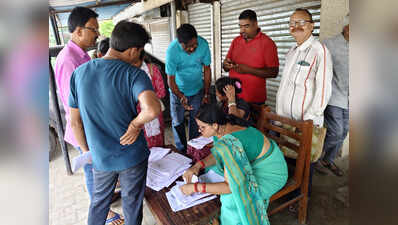
Daltonganj: Distribution of enumeration forms under the Special Intensive Revision (SIR) of electoral rolls has achieved near-total coverage in the remote and once Maoist-dominated Burha Pahar region of Garhwa district, but digitisation of filled forms continues to trail the target, official data showed.The Burha Pahar region comprises 55 polling booths spread across Bhandariya and Bargarh blocks, which form part of the Daltonganj assembly constituency. The constituency has the highest number of booths in the district at 426.According to official figures, form distribution reached 99.85% in Bhandariya’s 33 booths and 97.15% in Bargarh’s 22 booths, reflecting a performance comparable to urban and easily accessible areas.However, digitisation of forms remains a challenge. Data showed that digitisation stood at 67.82% in Bhandariya and 68.20% in Bargarh, leaving the exercise roughly one-third short of the July 16 benchmark.With the July 29 deadline approaching, officials will need to maintain an average progress of about 3% daily to achieve full digitisation.Electoral registration officer (ERO) of Daltonganj assembly constituency and Sadar subdivisional magistrate Sanjay Pandey attributed the slower pace to the area’s geography.“The terrain is extremely rugged and undulating. Surface connectivity remains challenging, and network access is also a major issue. Our 55 booth level officers are making efforts to accelerate the digitisation process,” Pandey said.Palamu deputy commissioner Dilip Pratap Singh Shekhawat directed officials to ensure timely completion of the exercise. An official communication warned against any laxity in carrying out SIR work.Officials said election-related activities are now proceeding smoothly in the region following the decline of Maoist influence. Once known for low voter turnout of around 30%-35%, the area has witnessed growing electoral participation.Locals, including those living on the foothills of Burha Pahar and neighbouring hills, are increasingly becoming aware of their democratic rights, sources said. Parish priests are also encouraging eligible community members to cooperate with SIR teams.