








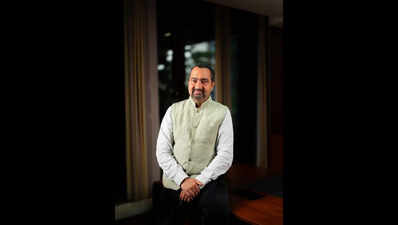
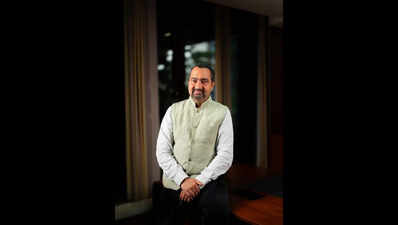
On April 30, N Kamakodi, MD & CEO of City Union Bank, will step down from the 121-year-old institution. His departure brings the curtain down on a 15-year journey that saw the private sector bank transition from manual processes to a tech-driven model, while retaining a focus on asset quality and disciplined expansion. Over these years, the bank navigated change with consistency—preserving its conservatism even as it modernised. In an interview, Kamakodi, a third-generation member of the bank, reflects on his early years, challenges from sectoral crises, the arc tech transformation, and the road ahead. Excerpts:Describe your early years at CUB. What were the key challenges?When I joined in June 2003, the environment was challenging. The economy had come through a slowdown, and tighter prudential norms—especially around NPAs—had pushed asset quality across the banking system into double digits. We were no exception. Our tech journey had barely begun. We had around 125 branches, many in rural areas without even basic connectivity such as optical fibre. Several branches still operated on physical ledgers, while others had rudimentary, standalone computerisation. Core banking was yet to be implemented. We had expanded our branch network for nearly a decade without increasing headcount. The same employees handled higher volumes, and many senior executives—who had joined well before I was born—were deeply rooted in traditional systems. Adapting to technological change was a generational challenge. So, the task was not just operational—it was cultural. Authority had to be earned. It took nearly a decade to align the organisation and bring everyone along on the transformation journey.How did your father’s passing affect you and the institution?My father, who was the chairman of CUB, passed away in a road accident in Nov 2004. The loss left a lasting impact—some scars remain even today. But institutionally, his foresight stood out. He had put in place a strong succession framework and embedded decision-making processes. The bank continued to function with remarkable stability. In fact, for nearly a decade after his passing, decision-making within the bank was guided by a simple question: “What would he have done?” That level of alignment and clarity was extraordinary. His greatest legacy was building an institution that could function seamlessly even in his absence.How did CUB navigate disruptions over the past two decades?The bank has navigated wars, economic crises, and industry downturns, ingraining a strong risk management culture. After 2003, we faced several disruptions—the 2008 global financial crisis, the AQR phase, commodity shocks, demonetisation, GST, and Covid. Each phase reinforced our calibrated approach. One example was the reversal in the 10-year bond yield cycle in 2004. Many banks were caught off guard. We recognised losses early and exited positions, avoiding larger setbacks. Similarly, during the corporate lending boom, we stayed away. Even one large default could have wiped out annual profits. This proved critical when corporate stress peaked post-2014.The bank was long seen as TN-centric. How has its geographic identity evolved?We are proud of our roots. When we opened our 975th branch in Kashmir, we described our journey as “from Cauvery to Kashmir.” While TN remains our stronghold, most incremental expansion is now outside the state. We have built a presence across southern states and gradually in northern and western India. Our strategy has been to enter markets with strong business linkages to TN. This helped us establish a presence in places such as Ludhiana, Rajasthan, and Maharashtra, where customers were already familiar with us. Today, we are evolving into a pan-India bank with strong southern roots, with the Northeast as a future opportunity.CUB’s net worth recently crossed ₹10,000 crore. How do you assess its financial growth?We have never aimed to grow significantly faster than the industry. Excessive growth often comes at the cost of asset quality. Our approach has been to grow slightly above the industry while strengthening fundamentals. Market share gains have been modest but achieved without compromising risk. More importantly, we focus on balanced outcomes—ensuring all stakeholders’ benefit over the long term. Sustainable growth matters more than headline numbers.How do you see the road ahead for the bank?The bank is entering one of its strongest phases. Asset quality is robust, technology is firmly established, and our people are future-ready. Much of the past two decades has been about building the foundation, and the benefits will become more visible in the coming years. With my successor already part of the leadership team, the transition will be smooth. Earlier constraints, especially around technology, no longer exist. The best of the bank is yet to come.