







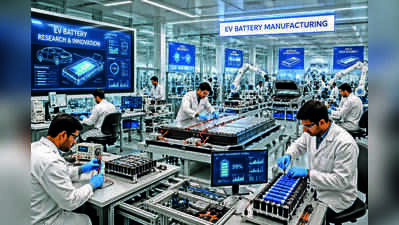
Tamil Nadu’s electronics story is stepping into its next phase, with newer manufacturing units, vendors and favourable global winds set to create an ecosystem of advanced electronics systems for automotive and other industrial applications. TN has long been home to auto and electronics makers. Yet India’s domestic value addition remains below desirable levels. As vehicles and devices get smarter (connected, software-defined and autonomous) and electric powertrains come to dominate the market, key electronics components and sub-systems become crucial.Global developments, national missions to drive electric vehicle (EV) and electronics localisation and a concerted push from the centre to promote cluster-based economic activity are together creating the perfect opportunity for TN. Two SIPCOT industrial parks, Pillaipakkam near Sriperumbudur and an upcoming one at Manalur, in Tiruvallur district have both been approved under the union govt’s electronics manufacturing clusters (EMC 2.0) programme. With a cumulative investment of about `1,012 crore, they come with common facilities and create a vendor ecosystem and clustering.The state government aims to develop them by tapping the existing original equipment makers (OEMs) base of auto, particularly electric vehicles and emerging areas like solar, to move up the value chain by making crucial components, from motor controller units and battery systems to printed circuit boards and sensors. Pillaipakkam cluster, spread over 379 acres, houses Ashok Leyland’s battery pack unit, a Hyundai Kefico unit, which makes electric-vehicle control systems including motor control units; a unit of Bharat Innovative Glass Technologies, the JV of Gorilla Glass maker and Apple supplier Corning; US-based First Solar’s module unit, Kone Elevators and others. Some 92% of the land has been allotted and the cluster has drawn `5,813 crore in investment, according to Tamil Nadu govt sources.Electronics manufacturing clusters at Pillaipakkam cater to a wide range of sectors, including automotive electronics, industrial electronics, consumer electronics, telecom equipment and electronic components, said S Krishnan, secretary, ministry of electronics and information technology (MeitY). “The objective is to create a manufacturing-ready ecosystem that attracts both large anchor companies and MSMEs. Common facilities such as PCB and electronics testing labs can significantly reduce costs for MSMEs and component manufacturers by providing shared access to testing, validation and prototyping infrastructure. These facilities can make the cluster more attractive for companies supported under national initiatives such as India Semiconductor Mission 2.0, ECMS (electronics component manufacturing scheme) and MPMS (mobile phone manufacturing scheme), while also promoting localisation of the electronics supply chain,” he said.Beyond opening newer opportunities, catching up in electronics components can make the domestic supply chain resilient. Ashok Leyland is building a facility in Pillaipakkam to localise its EV battery pack production. Shenu Agarwal, MD and CEO of Ashok Leyland, earlier said the facility would enable the company to build advanced battery pack solutions and a domestic ecosystem. A local supply chain aids efficiency, safety and reliability, he added.The presence of auto, electronics and solar photovoltaic module facilities around Sriperumbudur-Oragadam and across the state, together with Pillaipakkam’s common facilities, which include an EV battery lab, a solar PV and electronics lab, a design centre for PCBs, prototyping and an SMT line, and an EMI/EMC lab, makes the cluster lucrative. This, along with the growing presence of electronics manufacturing (EMS) and component manufacturing, has helped TN garner one of the highest numbers of projects under union govt’s ECMS programme.It will complement the well-established manufacturing ecosystem in the Sriperumbudur region by strengthening local supply chains and encouraging component manufacturing alongside OEMs, Krishnan said. SIPCOT is currently in discussions with leading equipment suppliers to procure machinery and instruments with the cluster set to be fully operational by Nov 2027. “The common facilities are open to all eligible firms, and we expect more companies, including tier-II and tier-III suppliers, to set up in the surrounding areas,” said an official at the state industries department, on condition of anonymity.Ashok Chandak, president of industry body IESA, said clusters for electronics manufacturing and a concentrated ecosystem bring advantages in cost, talent and more. “Clusters naturally grow by securing one or two major anchor companies, which subsequently pull in smaller ancillary suppliers and SMEs. The Pillaipakkam cluster is expected to specialise in four primary areas – EV battery packs, energy storage, automotive electronics, elevators and escalators, and precision engineering,” he said. The mobile phone manufacturing programme and the push for domestic localisation in handsets will drive local production of high-value-added components, including displays, camera modules, batteries, PCBs and mechanical parts, he added.While several industrial parks have been retrospectively designated as sector-specific, only a few have been realised. What sets this initiative apart is the robust existing ecosystem combined with early momentum. Strategic cluster advantages can drive long-term competitiveness, but effective execution remains crucial. Another cluster proposed under EMC 2.0, at Manalur, is currently stalled due to an NGT legal challenge concerning its environmental clearance, which has been kept in abeyance. The govt has filed a civil appeal and is working to resolve the pending legal issues. Stakeholders TOI spoke to raised concerns about the lack of basic infrastructure in the region that’s creating enormous economic activity.