








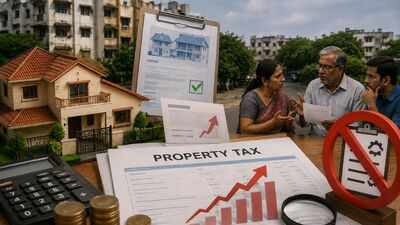
CHENNAI: A property-tax row in Chennai has revealed a problem that is not solely about whether the Greater Chennai Corporation (GCC) has increased tax rates or not. Some owners saw their assessments jump significantly after civic authorities identified properties they believed had been under-assessed, angering the public and eventually forcing the corporation to put the revision on hold.GCC said there was no blanket increase in property-tax rates. Instead amended demands were issued where property records were updated or previous assessments proved to be in error. The corporation’s rationale is that the exercise was to bring assessments closer to the actual state of properties, not to impose a citywide tax hike.But homeowners say the difference between a “tax hike” and a reassessment can be academic when the bill arriving at the door is several times higher.The controversy also illustrates how hard it can be for normal property owners to understand the calculation behind a civic tax demand. Many residents in a number of cases have asked how the corporation has come to the revised figure and why the previous assessment was wrong.This is particularly important because property tax is a recurring cost for a household. A big revision doesn’t just impact a homeowner once. If the new assessment is continued, the added demand could become a long-term financial liability.Public representations have led the GCC to suspend the revision, providing some immediate relief, but it does not resolve the basic assessment problem.The big question now is what happens to properties that were really cheap. Will their files be looked at individually? Will homeowners be provided with a clear breakdown of how their liability was determined? And will the corporation differentiate between bona fide mistakes and when residents object to the revised assessment?For property owners in Chennai, the episode is a reminder that the number on a tax bill can change even if the officially announced tax rate doesn’t.