








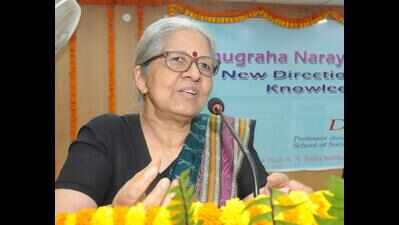
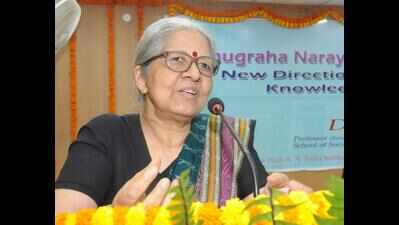
Patna: Fear and anxiety over disease, access to treatment and the quality of care must be addressed to make healthcare systems more effective, former Jawaharlal Nehru University (JNU) teacher Ritu Priya said on Thursday. She argued that India’s healthcare model has focused heavily on hospitals, insurance and medical interventions while neglecting primary healthcare, community participation and patient empowerment.Delivering the Anugrah Narayan Sinha Memorial Lecture at A N Sinha Institute of Social Studies on the theme “New directions for healthcare systems: knowledge, practice and policy”, Priya said modern societies were experiencing unprecedented health-related anxiety despite achieving the highest life expectancy in human history.She said healthcare systems worldwide face rising costs, widening inequalities, growing disease burdens and increasing distrust between patients and providers. Calling for a “liberative” and sustainable healthcare framework, she said future policy should be guided by economic viability, social justice and environmental integrity.Priya advocated stronger community participation and a continuum from self-care and primary healthcare to specialised treatment. Healthcare, she said, should be viewed as a “co-produced” system shaped by medical institutions, communities, families and individuals, with patients actively involved in decisions affecting their well-being.She added that non-communicable diseases, mental health disorders and antimicrobial resistance are increasing globally, alongside iatrogenesis, or illnesses caused by medical interventions.“Healthcare has become expensive all over the world. On one hand, people do not receive quality healthcare, and on the other, there is exploitation and extortion,” she said, pointing to overcrowded hospitals, resource shortages, violence against doctors and growing mistrust.Drawing on international and Indian data, Priya argued that improvements in life expectancy historically resulted more from better living conditions than medical advances alone. She said India invested heavily in medical colleges and tertiary institutions after Independence but neglected primary healthcare.Questioning the “medical industrial complex” of corporate hospitals, pharmaceutical companies, insurers and technology firms, she argued that insurance-led models cannot address structural weaknesses in healthcare delivery.“People focus on cure but not care,” she said, advocating greater recognition for nurses, physiotherapists, counsellors and community health workers.Earlier, Habibullah Ansari, associate professor and registrar (I/C) of the institute, said health should be viewed as complete well-being rather than merely the absence of disease. The lecture was chaired by Dr Madhumita Mukherjee of PMCH, while Bipul Kumar welcomed participants.