










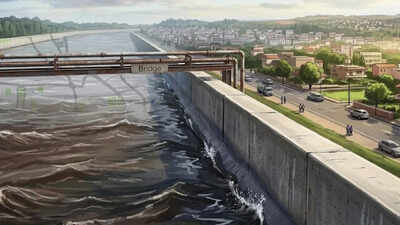
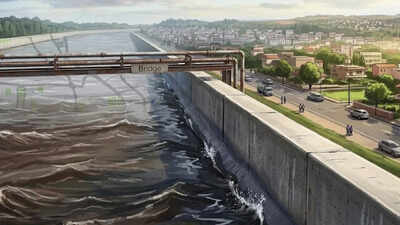
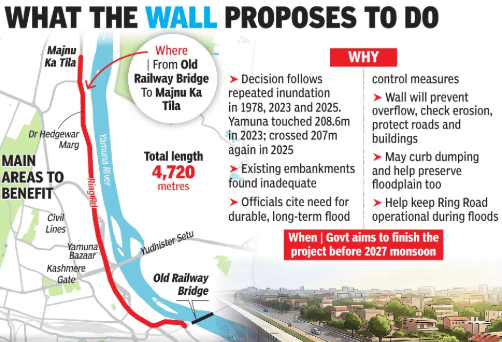
NEW DELHI: Delhi govt on Tuesday approved the construction of a 4.7-km-long flood protection wall along Yamuna river, which would act as a shield against flood waters entering the Ring Road and adjoining localities such as Civil Lines, Kashmere Gate and Yamuna Bazaar.CM Rekha Gupta announced that the barrier will be built along the river’s western bank between Majnu Ka Tila and the Old Railway Bridge, with the project slated for completion before the next monsoon season.
This project, expected before the next monsoon, is touted as a permanent fix for recurring floods.
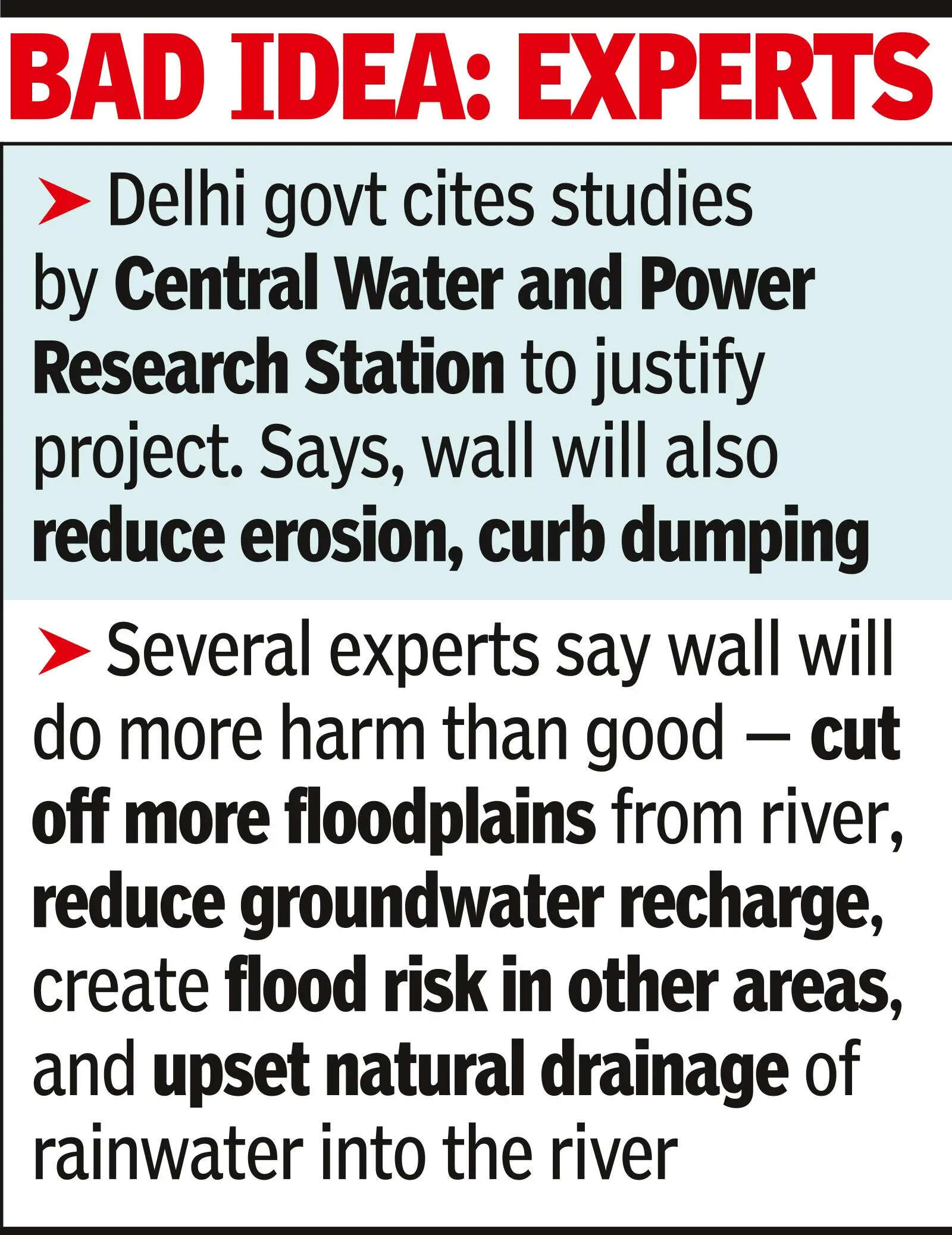
The initiative is being positioned by the govt as a “permanent solution” to the city’s persistent flooding woes. Experts, however, cautioned that preventing water from reaching floodplains can impact groundwater recharge and harm the ecology.The CMO said the wall will act as a safeguard against rising river levels and prevent water from entering low-lying areas. Areas such as Civil Lines, Kashmere Gate and Yamuna Bazaar have historically borne the brunt of floods, including major events in 1978 and more recently in 2023 and 2025, when water levels crossed danger marks and disrupted normal life.The govt has cited expert recommendations, including those from the Joint Flood Committee based on studies by the Central Water and Power Research Station, Pune, to justify the project. According to govt, the structure will not only control flooding but also reduce riverbank erosion and curb dumping along the floodplain. However, environmental experts have raised concerns about the potential ecological consequences of such an intervention.Bhim Singh Rawat, associate coordinator at South Asia Network on Dams, Rivers and People (SANDRP), said the Yamuna floodplains in Delhi are already heavily encroached and built upon, with areas such as Majnu ka Tila and the Tibetan colony located within the active floodplain. He said govt should ideally plan the removal of permanent encroachments in a phase-wise manner. “Creation of a concrete wall will further cut off a piece of floodplain from the river and has potential to aggravate flood threat and damages especially in downstream and eastern Delhi areas acrossthe river,” Rawat said.He added that the core problem was the non-transparent and unscientific operation of existing barrages. “The construction of barrages and bridges has already altered the natural flooding and meandering pattern of the Yamuna. Further disconnecting the river from its floodplain will only worsen the situation,” he said.
What the wall proposes to do
Instead, Rawat suggested that govt focus on ensuring accountable operation of barrages and addressing the rising riverbed levels in Delhi. “Attention must be given to managing sedimentation and undertaking measures such as dredging based on scientific assessment, rather than pursuing permanent construction on the floodplain,” he said As ITO barrage is currently serving no purpose and was among key reasons for aggravating 2023 flood damages, it is time govt starts planning its decommissioning which will benefit the river ecosystem in multiple ways apart from greatly reducing the floodingrisks and threats in Delhi, he said. Other experts echoed similar concerns, particularly about the impact on groundwater recharge. Another expert said that preventing water from entering floodplains could disrupt the natural replenishment of aquifers.“If water is not allowed to reach the floodplain, groundwater recharge will be affected,” he said and added that there is importance of maintaining the natural connection between the river and its floodplain.