








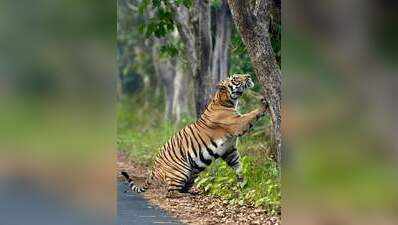
Bettiah: A tigress from Valmiki Tiger Reserve (VTR) in West Champaran may be shifted to West Bengal’s Buxa Tiger Reserve as part of a proposed conservation initiative to strengthen the tiger population in eastern India.The tigress is likely to be transported by air if preparations are completed. Sources said officials from Bihar and West Bengal recently discussed the proposal and the Bihar govt has agreed in principle to the translocation.However, VTR field director-cum-conservator Gaurav Ojha said the department had not received any formal communication regarding the proposal. “We have not received any such information or letter so far. However, discussions regarding the proposal are underway,” he said.Bihar forest and environment minister Ramchandra Prasad said he was not aware of the proposal, but noted the steady rise in VTR’s tiger population. He said the move could possibly be aimed at augmenting the tiger population in Buxa.Wildlife Trust of India director Samir Kumar Sinha welcomed the proposal, saying VTR’s recovery had reached a stage where its tigers could contribute to the gene pool of another place. He, however, cautioned that capturing a tiger for translocation could take time as VTR’s tigers are not highly habituated to human presence.Sinha also stressed scientific selection of the animal, citing the genetic distinctiveness of VTR’s tiger population. He said adequate breeding individuals and genetic diversity must be retained in VTR while strengthening suitable recipient landscapes such as Buxa.Sources said Bihar has also proposed that West Bengal provide two kunki elephants and two rhinos for VTR. Wildlife expert Abhishek said VTR does not currently have a resident rhino population, though rhinos from Nepal’s Chitwan National Park occasionally enter the reserve.Experts said greater cooperation between Bihar and West Bengal could strengthen conservation across the eastern Terai landscape, but stressed that any translocation should follow detailed assessments of animal health, genetics, behaviour and habitat suitability.