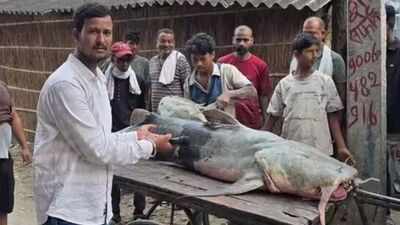










BETTIAH: As floodwaters flowing in from Nepal continue to spread across parts of Bihar’s Gandak basin, the state government has warned residents against eating or selling unfamiliar fish being found in inundated areas.The fisheries division of Bihar’s dairy, fisheries and animal resources department issued the advisory on Tuesday after reports of unidentified and unusual-looking fish surfacing in floodwaters, local water bodies and low-lying areas of West Champaran and Gopalganj.Officials said flooding can carry fish far from their natural habitats, sweeping them out of rivers, ponds and other water bodies. In the process, the fish may pass through heavily contaminated water and come into contact with drains, animal carcasses and other pollutants, increasing the risk of bacterial, viral and fungal contamination.The department has asked people not to consume, purchase or trade in any fish whose identity is unclear until experts confirm that it is safe for human consumption.“Do not consume any unidentified or unusual-looking fish. Until confirmation by the concerned department, an unfamiliar fish should not be considered fit for consumption,” the advisory said.Authorities also cautioned residents against identifying a fish as edible merely because it resembles a commonly consumed species. People who develop symptoms such as vomiting, diarrhoea, stomach pain, dizziness or breathing problems after eating fish from flood-hit areas have been advised to seek medical help immediately.Meanwhile, Wildlife Trust of India director Sameer Kumar Sinha said most of the unusual fish reported in the Gandak following the Nepal floods are believed to be Bagarius bagarius, popularly known as the goonch catfish and locally called “Gochita”.The species is a large freshwater catfish found in fast-flowing rivers in India, Nepal and parts of Southeast Asia. It is carnivorous, feeding on smaller fish, crabs and other aquatic organisms, and typically inhabits deep, rocky stretches of rivers with strong currents.While the fish is consumed by local communities, Sinha warned that it spoils rapidly after death and can become unsafe if eaten after deterioration. He urged people to follow the government’s warning and avoid taking chances with unfamiliar fish found in floodwaters.Bagarius bagarius is listed as a threatened species by the International Union for Conservation of Nature.