








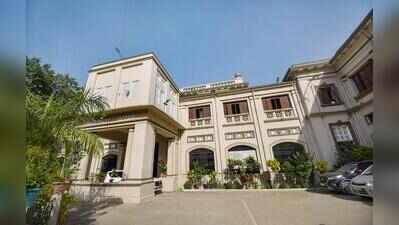
Patna: As Patna University (PU) celebrates its 110th Foundation Day on Thursday, it is also celebrating a rich legacy that has helped shape Bihar’s academic, political and cultural landscape. Founded on Oct 1, 1917, the institution, once known as the “Oxford of the East”, carries a history that stretches far beyond its classrooms and campus.“In its early decades, PU served as the examining and educational authority for Bihar, Odisha and the Kingdom of Nepal, giving it an influence that extended well beyond present-day Bihar,” said former head of PU’s ancient Indian history department, Jayadeo Mishra.The university’s history is embedded in many of its iconic structures. The administrative block of Patna College, PU’s oldest constituent college, is believed to have functioned first as a Dutch factory and later as an opium warehouse before becoming an academic institution. Literary connections add to its allure, with author E M Forster widely believed to have drawn inspiration from Patna College while creating the fictional Chandrapore College in A Passage to India.Royal patronage also played a significant role in shaping the university. Raja Devaki Nandan Prasad Singh of Munger donated Rs 1.75 lakh for the construction of Wheeler Senate House, completed in 1926, while the Maharaja of Darbhanga gifted Darbhanga House and contributed funds to promote Maithili studies.PU’s campus also sits atop layers of history. Historical accounts link Rani Ghat to an observatory from Akbar’s reign, while excavation during campus construction uncovered a terracotta ring well dating back to the Kushan period, around the second century AD.For decades, Wheeler Senate House, now Jayaprakash Narain Anushad Bhawan, served as the university’s academic and ceremonial centre. It hosted eminent personalities including Lord Mountbatten, Sarojini Naidu, Sardar Vallabhbhai Patel and Vijaya Lakshmi Pandit. Scientific luminaries such as Jagadish Chandra Bose, C V Raman, Meghnad Saha and Satyendra Nath Bose also enriched the university’s intellectual life.The building also witnessed defining political moments. Jawaharlal Nehru addressed a tense gathering there in 1946, with Jayaprakash Narayan helping calm the crowd. Nearly three decades later, in 1974, JP returned to the same venue to rally students during the movement that would reshape Indian politics.“Patna University is a living archive of scholarship, politics and public life,” said former head of PU’s economics department, Nawal Kishor Chaudhary. “The challenge is to preserve this extraordinary inheritance not only in books but also in the institutions, buildings and academic culture that sustain its legacy.”basant.pu@gmail.com