








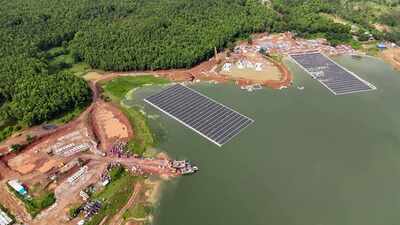
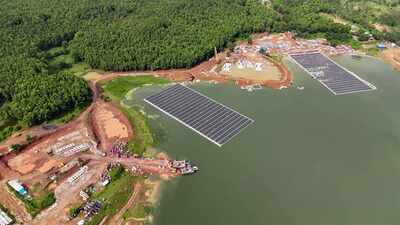
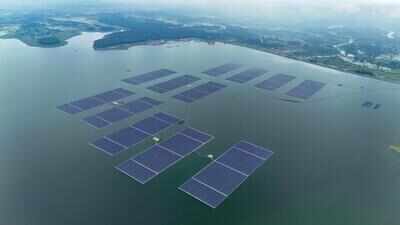
Ranchi: The vast sheets of solar panels floating on Getalsud dam are now powering homes and establishments in Ranchi, with the 100 MW floating solar photovoltaic plant beginning commercial supply at full capacity from Oct 2.Jharkhand’s largest solar plant, set up by Solar Energy Corporation of India Limited (SECI), is expected to generate 198 million kWh of electricity annually and cut carbon dioxide emissions by 1,90,650 tonnes every year.Navin Oraon, project in-charge and senior engineer at SECI, said the plant began commercial supply on Sept 2 with 50 MW. “Permission for commercial operation of 100 MW daily supply was granted from Oct 2,” he said.The power is being supplied to Jharkhand Bijli Vitran Nigam Ltd (JBVNL) under a 25-year power purchase agreement. It is being evacuated to the Sikidiri grid through the 132 kV double-circuit Getalsud-Irba transmission line and is feeding two key Ranchi grids — Namkum and Hatia.Officials said the project will strengthen supply to the city, which currently receives electricity through four grids: Hatia, Namkum, Kanke and Smart City.JBVNL Ranchi supply area general manager Manmohan Kumar said the daily demand currently ranges between 350 MW and 400 MW and can touch 450 MW during peak hours. “Electricity supplied from the solar plant is contributing to one-fourth of the total demand of the city, which will help in ensuring better and regular power supply,” he said.Kumar said the plant would become increasingly crucial as Ranchi’s power requirement is expected to touch 800 MW in the next 10 years. Six more grids are also planned to meet the growing load.“Currently, the annual load increase in the country is at 6% while that in Ranchi is 8-9% per annum. As the city grows, so does the demand for electricity,” Kumar said.Built by L&T over 172 hectares, the World Bank-backed project cost Rs 437 crore. It followed a 2019 memorandum of understanding signed between SECI and JBVNL and was cleared by the state cabinet in 2021.