





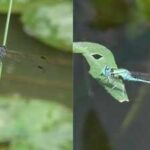



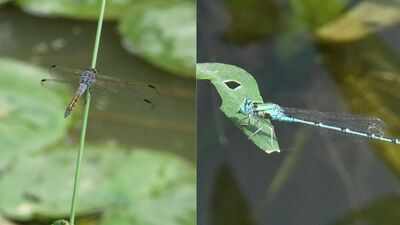
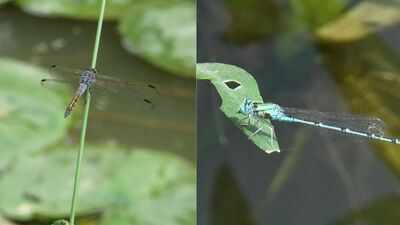
Delhi’s seven biodiversity parks host a surprisingly varied cast of dragonflies and damselflies, with 11,154 insects recorded in a recent survey. They are predators of mosquitoes and other insects and can contribute to natural biological controlBy Samin SayedaThey are easy to overlook. A flash of blue above a pond, a slender body resting on a blade of grass, a sudden dart across a marsh before disappearing into the vegetation. Yet across Delhi’s biodiversity parks, thousands of dragonflies and damselflies are quietly living out their lives, their presence offering clues to the health and character of the city’s remaining wetlands and water bodies.The recently concluded Dragonfly and Damselfly Survey recorded 11,154 individual dragonflies and damselflies across the capital’s seven DDA Biodiversity Parks. Conducted from September 17 to 19, the annual exercise brought together scientists, researchers, students and volunteers to document both the abundance and diversity of these insects.
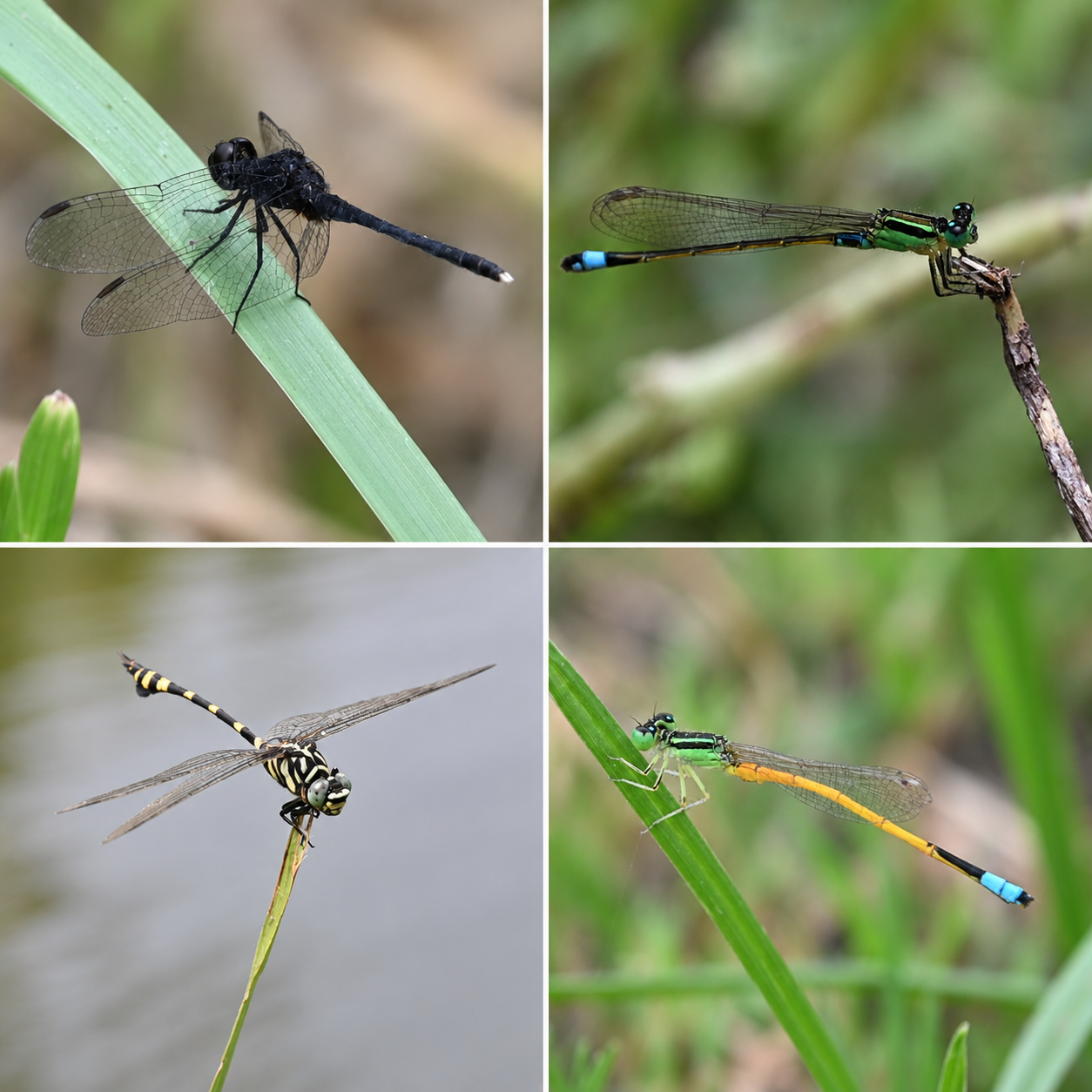
Some species stood out in this year’s survey.
Dragonflies and damselflies belong to the ancient order Odonata, a group that has existed for more than 300 million years – long before the dinosaurs appeared. Today, they remain closely tied to water, spending much of their lives as aquatic nymphs before emerging as the winged insects familiar around ponds, marshes and lakes.This year’s survey recorded 23 species at Yamuna Biodiversity Park, 22 at Kamla Nehru Ridge, 16 at Aravalli Biodiversity Park, 15 at Kalindi Biodiversity Park, 13 at Neela Hauz, 12 at Tughlaqabad and four at Tilpath Valley.The survey also added two new park records: the Yellow-tailed Ashy Skimmer at Aravalli Biodiversity Park and the Blue Grass Dart at Yamuna Biodiversity Park. The Yellow-tailed Ashy Skimmer was mostly found perching on dry twigs around ephemeral ponds, marshes and man-made tanks, while the Blue Grass Dart was recorded around water plants along lakes and marshes with well-developed vegetation.Dragonflies or damselflies?For the untrained eye, however, the two can appear almost indistinguishable. They belong to the same order but different suborders, and their bodies and wings offer some clear clues.“Dragonflies have unequal wings; the hindwing and forewing differ in shape. The body is bulky. They mostly lay their eggs in water. A dragonfly is a stronger flyer than a damselfly,” Dr Aisha Sultana, wildlife ecologist and a team leader in the survey, explains. “Damselflies have wings of equal shape and breadth. The body is slender and needle-like. They lay their eggs on plant tissues.”The survey combines data on both groups, capturing the diversity of an insect community that is far more complex than its fleeting appearances might suggest.When the numbers dipThis year’s survey paints a more complicated picture. The total number of individuals fell from 13,253 in 2025 to 11,154 this year. Entomologist Mohammed Faisal, who leads the survey, attributes part of the decline to changes in the availability of temporary water bodies.“During monsoon many ephemeral water bodies are formed in biodiversity parks particularly, those which are situated in the Aravali Ridge areas. They support these insects to complete their life cycle as their nymph remains in water. This year due to erratic rains few such water bodies formed resulting in a slight dip in their diversity and density,” he says.The decline in abundance, however, does not necessarily mean that Delhi’s parks supported less ecological variety.Abundance is not diversityKalindi Biodiversity Park recorded the highest number of individuals this year, with 4,234 across 15 species. Yamuna Biodiversity Park, meanwhile, recorded the greatest diversity, with 23 species among 1,156 individuals.That distinction is significant. A habitat can support large numbers of a relatively small number of species, while another may sustain a wider range of species in smaller numbers.Yamuna’s lead is particularly notable because Kamla Nehru Ridge had recorded the highest number of species among the seven parks for the previous three years – 25 in both 2023 and 2024, and 26 in 2025. This year, the Ridge recorded 22 species, one fewer than Yamuna.The differences reflect the ecological variety contained within Delhi’s urban landscape.Seven parks, different worlds“The numbers vary across parks because the landscape and topography differ,” says Sultana. “They can be viewed as landscape-scale indicators of the condition and seasonal functionality of the water bodies in Delhi’s parks.”She describes the parks as a “highly heterogeneous urban wetland network”.The Yamuna and Kalindi Biodiversity Parks contain floodplain wetlands, while Aravalli, Tughlaqabad and Tilpath Valley have seasonal water bodies. Together, they form a mosaic of permanent, seasonal and restored habitats, each supporting a different assemblage of species.“Delhi’s biodiversity parks are not isolated green patches,” Sultana says. “They are functioning as ecological refuges within a heavily modified urban landscape.”The dragonflies and damselflies found across them can therefore be seen as an ecological fingerprint of the city.Small insects, useful indicatorsTheir dependence on water makes Odonata particularly useful for understanding aquatic habitats. Pollution and changes in water quality can affect them at different stages of their life cycle, while their presence and diversity can provide clues about the condition of the ecosystems they occupy.The survey offers another way of looking at how different parts of Delhi respond to water availability, vegetation and changing urban conditions – and how much ecological variation persists within a megacity.The insects also play a less visible but practical role in urban environments. Dragonflies and damselflies are predators of mosquitoes and other insects and can contribute to natural biological control. Their presence may therefore have implications for managing insect populations and reducing reliance on chemical pest control.India is home to around 600 known species of Odonata. Delhi is known to have 51 species, most of which occur across the DDA’s seven Biodiversity Parks.The usual suspectsSome species stood out in this year’s survey.The Ditch Jewel was among the most frequently recorded, dominating the counts at Kalindi, Tughlaqabad and Neela Hauz Biodiversity Parks and featuring prominently at Yamuna and Kamla Nehru Ridge. The Coromandel Marsh Dart was among the most common species at Aravalli, while the Scarlet Skimmer was the most frequently recorded at Tilpath Valley.At Aravalli and Kamla Nehru Ridge, the Wandering Glider also featured prominently. The species is known for its remarkable long-distance migrations, with research suggesting that its migratory circuit can span roughly 14,000 to 18,000 kilometres, including flights across the Indian Ocean.Residents, travellers and migrantsThat raises a larger question about the insects found in Delhi: how many are residents, how many move locally between habitats, and how many are passing through as part of much longer journeys?“Most dragonflies and damselflies are associated with monsoon but these insects are very much there around us,” Sultana says. “During the drier months, they shift locally to nearby water resources.”Some survive unfavourable conditions as immature stages. Others can tolerate declining water levels or persist in muddy substrates, leaf litter or deeper parts of ponds until conditions improve. Some adults shelter in dense vegetation or shade, while certain species enter dormancy during the egg or larval stage.The Wandering Glider follows an even more extraordinary trajectory, migrating towards east Africa across the Indian Ocean in different stages of its life.“In parks we have recorded residents, local migrants and migrant species,” Sultana says.Each species, in other words, tells a different story about movement, water and survival in an increasingly urban landscape.A living network in the cityThe survey offers a glimpse into those stories, but also points to how much remains unknown. “Somewhere more effort is also needed in the survey,” Sultana says.For a city of more than 20 million people, the biodiversity parks offer rare spaces where such questions can still be asked. The insects may be small, but their presence connects ponds, wetlands, vegetation and seasonal water bodies into a living network that persists within the city.A dragonfly skimming across a pond may appear to be little more than a fleeting movement in the landscape. Look closer, and it becomes evidence of something larger: water that still sustains life, habitats that remain connected, and a surprisingly intricate natural world continuing to exist alongside Delhi’s concrete and traffic.(Samin Sayeda is a writer and editor, with a particular interest in wildlife, conservation and environment. All photos by special arrangement with Delhi Biodiversity Park officials)