





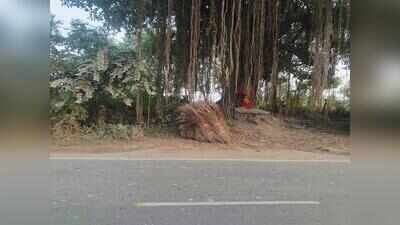
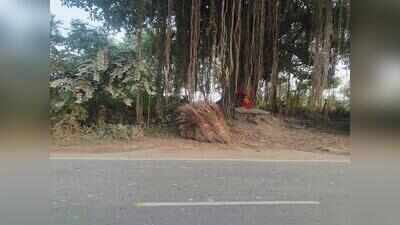
Motihari: Located barely 1km north of Kesariya’s famous and largest Buddha Stupa in East Champaran, the 1.63-acre Ranivas Mound is emerging as an important archaeological site, with initial excavations revealing traces of a residential structure dating to the Buddha era.The Centre recently declared the mound a monument of national importance and a prohibited area under the Ancient Monuments and Archaeological Sites and Remains Act, 1958, following a request from the Patna archaeological circle.The mound, also known as Ranivas, has yielded traces of rectangular dwellings featuring verandas, courtyards and an elegant gateway, according to Patna archaeological circle sources. Terracotta roofing material bearing a stupa motif and lines of inscriptions has also been found.Earthenware vessels in red and black, many decorated with intricate patterns, are among the discoveries. These include curved-lid vessels, bowls and other items of distinctive shapes. Decorative stone beads and terracotta artefacts have also drawn attention for their aesthetic appeal.The archaeological significance of the site was documented by Alexander Cunningham, the first director general of the Archaeological Survey of India, in 1861. Ranivas was later excavated under the guidance of Gautami Bhattacharya, superintending archaeologist at Patna, after being mentioned alongside the Kesariya Buddha Stupa in a report submitted to ASI.Dr P Ojha, a founder member of the Kesariya Buddha Site Development Committee, said locals had been demanding excavation for 15 years and hoped work would begin soon.