








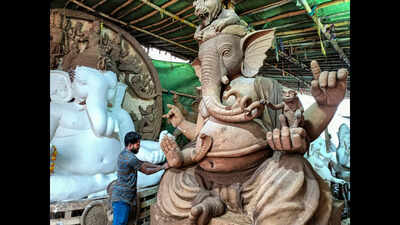
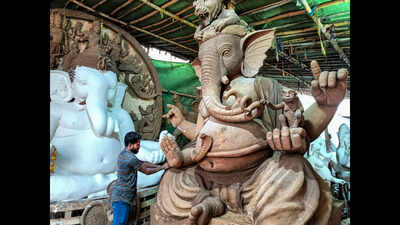
MUMBAI: For years, the story of a Ganesh idol has ended with visarjan. Across the state, a growing movement is trying to make that the point where the story begins again.In Pune, Megha Bedagkar dissolves her family’s idol on her terrace in a cotton-lined bucket instead of sending it to a lake. Once the water drains, she dries the clay and drops it at a collection centre, from where it returns to a sculptor’s workshop. It is a small act, but not an isolated one.In 2025, Punaravartan recovered over 76,000 kg of clay across Pune, Pimpri Chinchwad, Thane, Mahad and Mumbai, with Pune alone contributing 49,500 kg. Started in Pune in 2020 by eCoexist Foundation, the campaign now has nearly 30 partner organisations and is expanding this year to Vasai, Virar and Satara.The network includes environmental NGOs, civic forums, colleges and technical institutes, with IIT Bombay researching further uses for the recovered clay. But the campaign ultimately depends on thousands of households choosing to dissolve rather than discard.“Before starting the collection drive, we prepare a Google form to compile location details and send it to societies, groups, and NGOs,” says Lata Hiremath, a volunteer with Paryavaran Sanrakshan Gatividhi. “In Pune, there are around 60-70 collection locations.”Households are instructed to line a bucket with cotton cloth, immerse the idol, let it dissolve, remove floating debris, and bring only clay to collection centres.For artisans, the recovered clay also offers financial relief. Manisha Sheth, founder of eCoexist Foundation and director of Punaravartan, says traditional clay sculptors face pressure from the cheaper Plaster of Paris trade. Free raw material, Sheth says, can help them stay in the craft.Omkar Subhash Salunkhe, 26, a sculptor from Mundhwa, was the first artisan to test the recycled clay in 2020. He now uses tonnes of it each season and passes the savings to customers. A one-foot clay idol from him costs around Rs 1,500, against Rs 2,000-2,200 elsewhere.The campaign’s growth, however, has outpaced its infrastructure. Small-scale artisans can work with wet sludge, but cities such as Mumbai lack space for long-term storage. Turning sludge into dry and reusable clay requires processing infrastructure that volunteers cannot provide at scale.Pune and Pimpri Chinchwad have begun integrating clay collection into their post-festival operations. But activists say recovery needs to become part of immersion protocols. Until then, they warn, much of the idol waste will continue ending up in water bodies.