









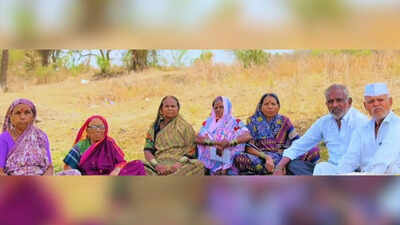
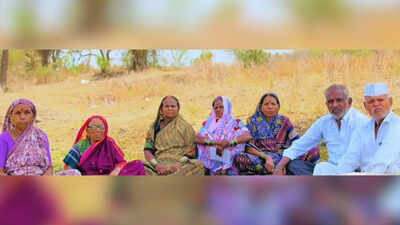
KOLKATA: Marking World Elder Abuse Awareness Day, HelpAge India launched its first-of-its-kind landmark study, ‘Climate Resilient Ageing – Ensuring Care, Dignity & Agency’ on Monday. The report presents urgent evidence on how climate change is reshaping ageing in rural India.The national study covered 2,224 older persons across 20 districts in 10 states—Andhra Pradesh, Bihar, Gujarat, Karnataka, Keralam, Madhya Pradesh, Maharashtra, Odisha, Tamil Nadu and Uttarakhand. Using the Intersectional Place Perspective framework, it finds that climate vulnerability is not determined by age alone, but by overlapping disadvantages linked to gender, impairment, mobility, poverty, living arrangements and location.The findings show that 78% of respondents experienced at least one climate-related hazard in the past three years. Heatwaves were most common, affecting 45%, followed by floods at 27% and droughts at 20%. More than one-third of those exposed reported moderate to severe impacts. The risks were especially acute for older persons living alone, widows, people aged 80 and above, and those with cognitive, communication or mental health difficulties.Heat stress emerged as a major concern. Among older persons affected by heatwaves, 90% stayed indoors and 81% increased water intake, yet 74% reported illness, 44% said existing health conditions worsened and 33% struggled to access healthcare. Poor housing intensified exposure, with 60% saying their homes were not fully safe, particularly kutcha or poorly ventilated dwellings.Health and economic insecurity further weaken resilience. Nearly half of respondents live with long-term impairments, mainly mobility difficulties at 32% and vision problems at 24%. More than half, 52%, cannot afford medicines. Government health services remain central, with Primary Health Centres used by 51% and government hospitals by 49%. Economically, 55% have no agricultural land. Pensions are the main income source for 49%, while 16% have neither work nor income; this rises to 21% among those aged 80 and above.Family remains the main support system, with 73% living with children or relatives and 94% of those needing care receiving it from family. Sons, spouses and daughters-in-law are primary caregivers. Yet migration is straining care: 18% of households reported a family member moving away for work, mostly sons. Older persons living alone face fragile arrangements; 38% depend on neighbours, 20% on distant family and 16% receive no care.Awareness of welfare schemes is high, including PDS at 93%, pensions at 71%, subsidised healthcare at 67% and housing support at 62%. However, access barriers persist: long waits, digital difficulties and limited application support.
- The study found that 78% of older respondents faced at least one climate-related hazard in the past three years, with heatwaves (45%), floods (27%) and droughts (20%) being the most common.
- Climate vulnerability among older persons is shaped by overlapping factors such as gender, poverty, disability, mobility limitations, living alone, widowhood, age 80+, and geographic location.
- Heat stress is a major concern, with 60% saying their homes are not fully safe; 74% reported illness during heatwaves, 44% saw existing health conditions worsen, and 33% faced difficulty accessing healthcare.
- Nearly half of respondents live with long-term impairments, mainly mobility and vision issues, while 52% reported being unable to afford medicines despite relying heavily on government health facilities.
- Family remains the main source of care, with 94% of those needing care receiving it from relatives, but migration and living alone weaken support systems; 16% of older persons living alone receive no care.
- Economic security is fragile: 49% depend mainly on pensions, 16% have neither work nor income, and access to welfare schemes is hindered by poor health, climate shocks, low education, digital barriers, delays and lack of application support.