








For many Mumbaikars, Ganpati flowers need not be discarded once the puja ends. As Ganeshotsav draws to a close, designers, artists and environmentally conscious devotees are finding creative ways to preserve nirmalya — turning flowers into fabric prints, keepsakes, décor and even natural dhoop.
From flowers to fabric and keepsakes
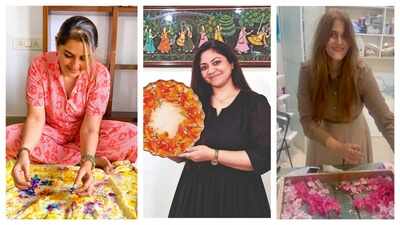
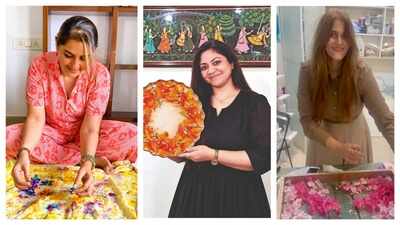
For designer and stylist Kin Bathija from Andheri, the idea came from seeing flowers used during the festivities being discarded. “I have always thought of this. Every year after Ganpati celebrations, my heart used to break seeing the puja and decoration flowers being discarded. They are a part of the prayers, rituals, celebrations and memories that make the festival so special. So, I decided to preserve those flowers and cherish them for a lifetime,” she says. This year, Bathija used the flowers to create a naturally dyed dupatta. She has also experimented with saris, handkerchiefs, stoles and cushion covers.Bandra-based author and designer Barkha Sharma created a tabletop using flowers from her Ganesh Chaturthi celebrations. “I created a tabletop during Ganesh Chaturthi. I wanted to preserve some of the puja flowers and realised this was a good way to do it,” she says.
A fragrant second life
Digital creator Aishwarya Sonawane has found another use for used puja flowers — turning them into homemade natural dhoop. She grinds the petals with coconut husks, tej patta, cinnamon sticks and kapur, then dries the mixture before combining it with sandalwood powder, ghee and gulab jal to shape dhoop cones.Whether pressed, preserved, turned into décor or made into dhoop, these flowers can live on beyond the festival — carrying memories of faith and celebration while finding a new purpose.
Turning nirmalya into art
For Dimple Limbad, a city-based art enthusiast, even a few flowers can become keepsakes. “I take the smaller puja flowers and arrange them in moulds meant to create coasters, earrings and showpieces, and then I seal them with resin,” she says.Artist and homemaker Shilpa Patil from Mulund takes a simpler approach – she dries and presses flowers from her family’s puja. “I researched online and found out all about pressing flowers. I am happy this allows me to keep some of these precious nirmalya flowers forever,” she says. She also sees an environmental reason for doing so. “The environmental reason for this is strong too. Official guidelines prohibit immersing flowers, garlands and decorative material in natural water bodies. So, I like preserving some of it instead of throwing it all into a nirmalya kalash.”
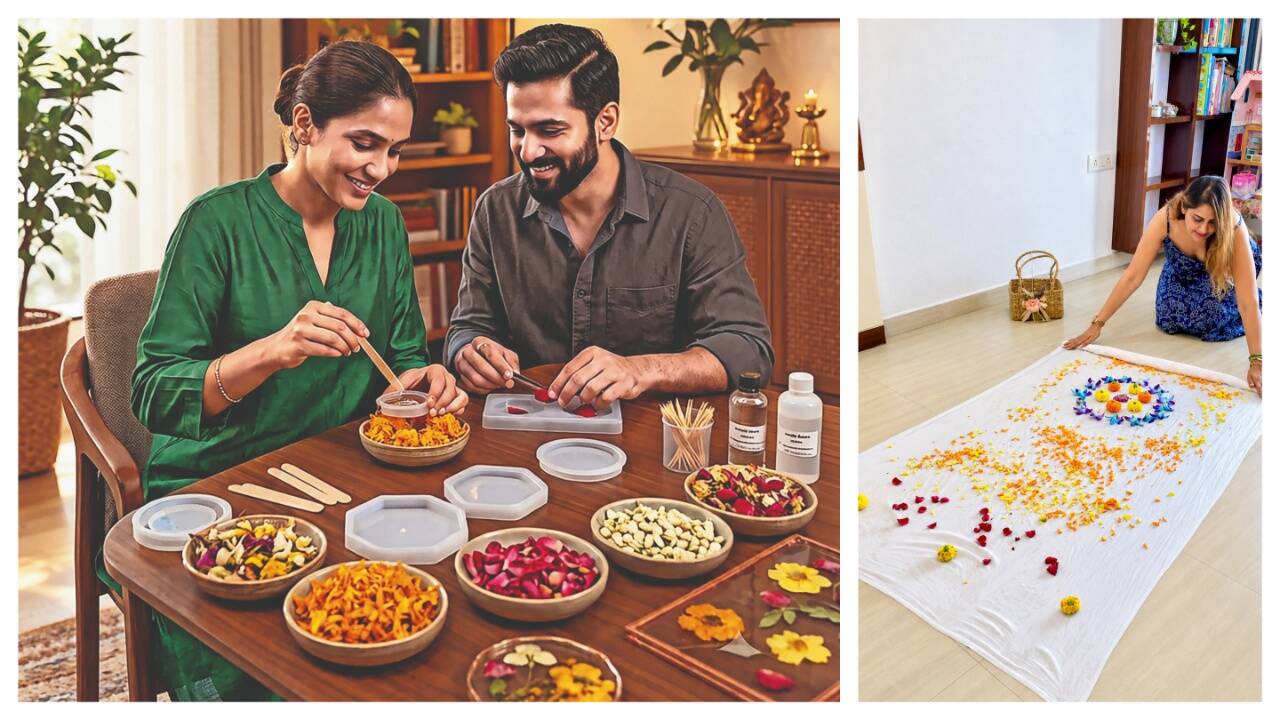
Turn your puja flowers into a floral-dyed dupatta
Kin Bathija shares her simple method…
- * Soak a mulmul dupatta in hot alum water for 10 minutes. This prepares the fabric for dyeing.
- * Place fresh puja flowers and petals on the dupatta, arranging them to create your desired pattern.
- * Roll it tightly, sushi-style, so that the flowers remain pressed against the fabric.
- * Tie it securely with thread and steam the roll for about 30 minutes.
- * Leave it aside for a day before unrolling it.
- * Peel away the flowers and petals, then dip the dupatta in salt water.
- * Wash and dry it to reveal your unique floral design.