







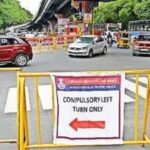

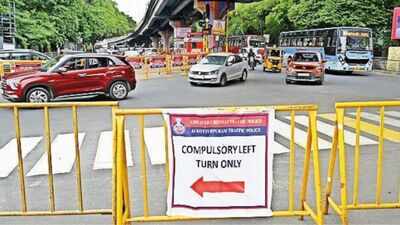
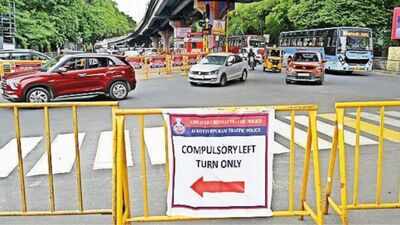
CHENNAI: The IIT Madras junction, notorious for traffic snarls, finally began breathing easy on Wednesday morning after traffic police introduced a new arrangement to streamline vehicular movement.Under the new system, motorists coming from Kotturpuram have been made to take a compulsory left and make a U-turn beneath the Madhya Kailash flyover to proceed towards Raj Bhavan. Vehicles coming from Madhya Kailash can now proceed towards Raj Bhavan without stopping or take a free right towards Kotturpuram.In the opposite direction, vehicles from Raj Bhavan heading towards Madhya Kailash can use both lanes of the IIT-M flyover, which has been converted into a one-way stretch.As part of the changes, the IIT-M junction signal has been removed for vehicular traffic. A 20-second pedestrian crossing has been provided every two minutes.The changes were implemented by Greater Chennai Traffic Police (GCTP) based on a traffic management solution suggested by film actor-director Suresh Menon, whose ideas of replacing signals with U-turns have been adopted at several locations across the city.Commuters said the removal of the signal had made a noticeable difference. “With the signal gone, vehicles are no longer blocking each other and I can proceed without much delay,” said Giridharan, who regularly travels towards Guindy.Preethi, a motorist from Taramani, said police should ensure that the IIT-M flyover continues to operate strictly as a one-way stretch for vehicles heading towards Madhya Kailash from the Raj Bhavan direction. Frequent and unannounced changes between one-way and two-way movement could confuse motorists and bring back congestion, she said.Several motorists said the changes were helping them save fuel and travel time and cross the junction with less frustration.While some motorists from Kotturpuram said the new system required them to take a detour via the U-turn beneath the Madhya Kailash flyover to reach Raj Bhavan, many felt the extra distance was preferable to being stuck at the junction for several minutes.Assistant commissioner of police (traffic) A Julius Christopher said the new arrangement had been introduced on a trial basis. “We will make it permanent if we receive positive feedback from motorists,” he said.