









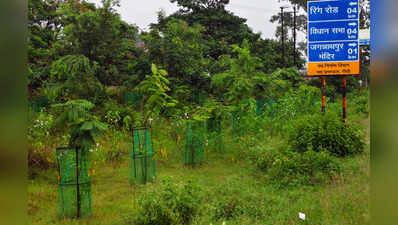
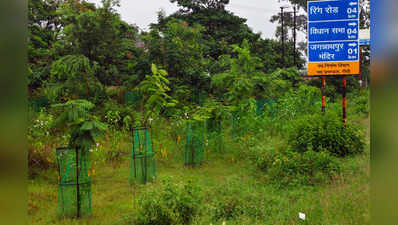
Ranchi: Jharkhand has emerged as one of the biggest recipients of central afforestation funds as India inches closer to meeting its 2030 climate target of creating an additional carbon sink of 2.5-3 billion tonnes ofcarbon dioxide equivalent through forest and tree cover.The Union environment ministry informed Parliament on Monday that the country had sequestered an additional 2.44 billion tonnes of CO2 equivalent through forest and tree cover by 2022. This puts India close to the lower end of its 2030 target.The estimate is based on India’s latest greenhouse gas inventory submitted to the UN Framework Convention on Climate Change as part of its biennial transparency report.Data tabled in Lok Sabha showed that Jharkhand received Rs 181.67 crore under the Compensatory Afforestation Fund Management and Planning Authority (CAMPA) over the past five financial years. It was the third highest allocation among states, behind Madhya Pradesh (Rs 358.3 crore) and Odisha (Rs 215.9 crore).The allocation underlines Jharkhand’s role in the country’s afforestation and climate mitigation efforts. The state has extensive forest resources that serve as carbon sinks and support a large tribal and forest-dependent population.At the same time, mining and allied projects have led to the diversion of forest land, making compensatory afforestation crucial to restoring degraded landscapes.Jharkhand also received Rs 23.18 crore under Nagar Van Yojana, which seeks to create urban forests and expand green spaces in cities.However, the Centre did not provide state-wise figures on increases in carbon stock, plantation survival rates or other ecological outcomes.Environmental experts have repeatedly cautioned that the number of saplings planted or funds allocated cannot, by themselves, indicate ecological gains. They have called for long-term monitoring of plantation survival, biodiversity, forest quality and carbon sequestration to assess the effectiveness of afforestation programmes.