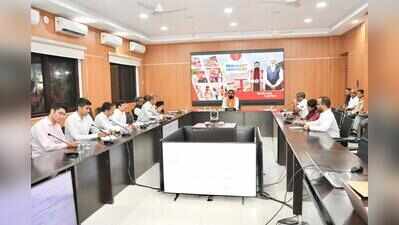








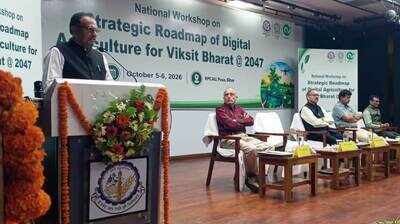
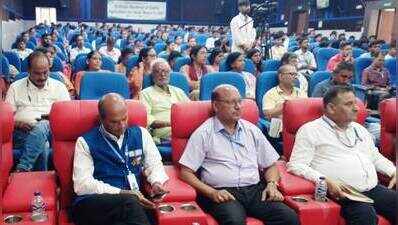
Patna: Agriculture cannot remain confined to traditional practices if India is to achieve its goal of becoming a developed nation by 2047, experts said at a two-day workshop on the StrategicRoadmapofDigitalAgricultureforViksitBharat@2047 that began at Rajendra Prasad Central Agricultural University (RPCAU) on Monday.Organised by the College of Agricultural Engineering and Technology in collaboration with IIT Ropar and ANNAM.AI, the workshop aims to develop a technology-driven roadmap for transforming agriculture through artificial intelligence, the Internet of Things (IoT), drones, GIS and big data applications.RPCAU vice-chancellor P S Pandey said digital agriculture was no longer a choice but a necessity. “For Viksit Bharat, agriculture must be smart, sustainable and technology-driven,” he said, stressing the need to take innovations developed in laboratories to farmers’ fields.Pandey said the collaboration with IIT Ropar and ANNAM.AI would help empower small and marginal farmers, reduce input costs and improve access to digital markets.Purnia University vice-chancellor Vivekanand Singh, the chief guest at the inaugural session, said technological intervention was essential to strengthen the rural economy. He urged agricultural institutions to ensure that digital innovations reached farmers at the grassroots instead of remaining confined to laboratories and campuses.More than 150 delegates, including scientists, experts, agri-startup representatives and students from across the country, are participating in the workshop. Discussions will focus on climate-smart and technology-driven farming, resource and crop management, horticulture, post-harvest management, and digital pathways for agri-business.RPCAU director of research A K Singh said data-driven farming and precision agriculture would shape the next phase of agricultural research, particularly in the field of climate-resilient agriculture.