








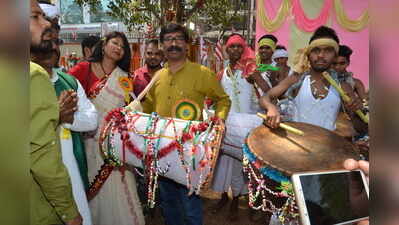
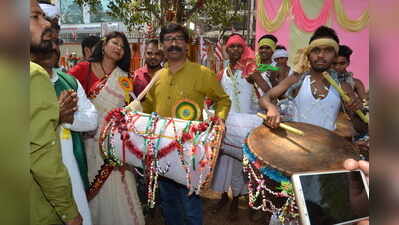
Gumla: A sound deeply woven into Jharkhand’s tribal identity has won recognition. The traditional mandar, a percussion instrument heard at folk performances, community gatherings and celebrations across the state, has been granted the GI tag by the Geographical Indication Registry, Chennai.The recognition covers mandars made across Jharkhand and acknowledges the instrument’s distinctive geographical, cultural and traditional association with the state. Gumla, however, was at the heart of the effort to secure the tag.The GI application was filed by Raidih Mandar Producer Company Ltd, a collective of artisans from Jarjatta village in Gumla, with support from the state govt and district administration. Though the GI status belongs to the state, the district played a key role in documenting and presenting the mandar’s unique identity.Intellectual property expert Satyadeep Singh, a visiting faculty member at National University of Study and Research in Law (NUSRL), Ranchi, who was associated with the application, described the recognition as a moment of pride for Gumla and Jharkhand.“The GI belongs to the whole state, but Gumla has earned the distinction of representing Jharkhand in securing recognition for one of its most cherished cultural symbols,” he said.The application highlighted the mandar’s distinctive design, use of local red soil and indigenous raw materials, traditional production methods, unique sound and links with Jharkhand’s tribal communities. Historical evidence included works of anthropologists Sarat Chandra Roy, Tarak Chandra Das and W G Archer, along with archival material from Patna Museum, Bihar District Gazetteer and other records.Former Gumla deputy commissioner Karn Satyarthi, who pursued the registration with predecessor Sushant Gaurav, said proving the instrument’s uniqueness was the biggest challenge. “People often confuse the mandar with instruments like the dhol or dholak, but it is distinctly different. One side of the instrument is made entirely of soil,” he said.Folk exponent Nandlal Nayak, who launched a campaign to conserve tribal art forms and instruments in 2003, called the mandar “one of the heartbeats of Jharkhandi music”.