








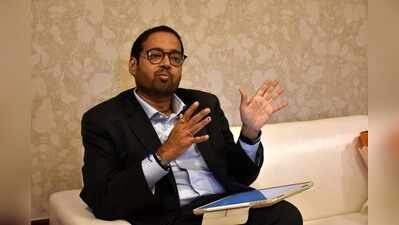
As Hindalco’s 77-year-old Muri refinery is in transition from a traditional alumina producer to a speciality materials hub, the company sees enormous potential for both Jharkhand and India in value-added manufacturing. Talking to TOI’s ASRP Mukesh, Saurabh Khedekar, CEO, Specialty Alumina, Hindalco, said that Jharkhand should be aggressive in drawing investments and ensuring competitiveness. Khedekar spoke on the transformation of Muri refinery, sustainability initiatives and why Jharkhand is well positioned to emerge as a major industrial destination. Excerpts:Q. After 77 years, where does Muri refinery stand today?A: Muri refinery is not just one of Jharkhand’s oldest industries; it is India’s oldest alumina refinery. From a modest capacity of about 6,000 tonnes per annum when it started, it has grown into a 400,000-tonne refinery over the decades. What is remarkable today is that the plant is undergoing a transformation. We are moving away from being merely a commodity alumina producer and becoming a speciality alumina manufacturer serving high-performance applications.Q. How is that important?A: The future of manufacturing lies in value-added products. Earlier, much of the alumina produced here was meant for aluminium manufacturing. Today, we are producing more than 20 grades of speciality alumina used in water treatment, ceramics, refractories, glass, detergents and several other sectors. This shift allows Muri refinery to become a technology and capability centre rather than just a raw material producer. It also creates demand for skilled manpower and advanced manufacturing processes.Q. How does Muri refinery contribute to Jharkhand’s economy?A: Its impact goes far beyond the refinery gates. The plant supports mining operations in Lohardaga, transportation networks, railway freight movement, maintenance services and a range of ancillary activities. The direct workforce includes management staff, workers and contract employees, but the larger ecosystem sustains thousands more livelihoods. Over the decades, the refinery has played a major role in shaping the economy of the Muri and its surrounding areas.Q. How significant is the refinery from a sustainability perspective?A: Sustainability is becoming central to our operations. One of our biggest achievements is the utilisation of red mud. Traditionally considered a waste product of alumina refining, we are now processing red mud for use as an alternative raw material in industries such as cement manufacturing. Similarly, fly ash from our captive power plant is also being utilised. The objective is to create value from waste and move towards a circular economy model. This is the future of global manufacturing, and Muri refinery is already moving in that direction.Q. What can Jharkhand do to attract more investment?A: Jharkhand is a resource-rich state with significant industrial potential. In our experience, govt has been supportive and responsive. However, there is scope for more aggressive promotion of the state as an investment destination. Several competing states proactively market themselves and offer tailored incentive packages for strategic industries. Such initiatives help lower investment costs and improve project viability. Given its mineral wealth and skilled workforce, Jharkhand can compete very effectively if the right ecosystem is created.Q. How do you view Jharkhand’s future as an industrial destination?A: We remain optimistic. The state has natural resources, talent and an established industrial base. If investments are encouraged and issues related to industrial competitiveness are addressed, Jharkhand can emerge as a preferred destination for advanced manufacturing.